





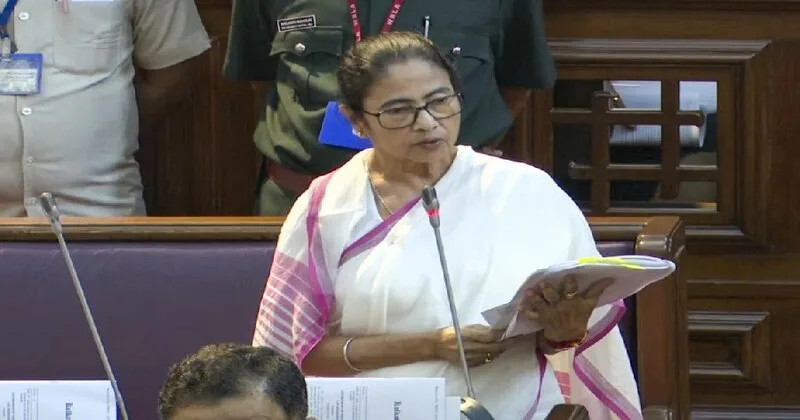
Just on the day before Vishwakarma Puja 2025, industry houses like UltraTech Cement, Electrosteel Casting Limited, Grasim Industries, Nuvoco Vistas and Dalmia Cement of West Bengal had knocked the Calcutta High Court because, the Government of West Bengal had drafted & passed a peculiar legislation that would effectively lead such businesses and industries to incur inadmissible losses, ultimately leading perhaps to their frustrated exit from the state.
The legislation apparently poses to increase the collection of the state revenue which inturn enables the government to spend more for social welfare by de-incentivizing the industries, thus slapping losses upon the industries too seems to be a priority.
West Bengal government, by passing ‘Revocation of West Bengal Incentive Schemes and Obligations in the Nature of Grants and Incentives Bill, 2025’, has stopped all incentives to the industries of the state. Not only stopped the industry incentives from now on, but also scrapped all such incentives granted in the past since 1993 retrospectively. This particular provision of retrospective de-incentivizing makes it apparent that the true intention of the West Bengal government is not only to de-incentivize industries but also to slap massive economic setback to them. Otherwise, the government would not have scrapped the incentives of the past period. What can be the true objective of pushing industries towards losses?
While the state legislature of West Bengal including the Chief Minister herself reiterate their complaints against the Government of India claiming that GOI to have deprived them from due remittances, West Bengal Government itself has hardly posed positive for revenue-growth. Between 2016 & 2021, a total of 21,521 industrial units including big, medium & small got shut down within the state of West Bengal due to non-clearance of environmental certification (as per a report by the state government itself) amongst which the number of big units were 271. Moreover, replying to a question from Bengal BJP MP Samik Bhattacharya, the Minister of State for Corporate Affairs, Road Transport and Highways of the Government of India informed the Rajya Sabha in July 2025 that 6,688 companies had relocated their registered offices from West Bengal to other states during the TMC regime between April 1, 2011 and March 31, 2025. All such data appear to indicate with sufficient clarity that the State is working steadily for effective de-industrialization of West Bengal. Legislature of such a state looks for GST compensation from the Central Government while displaying no practical inclination to promote industrial development & consequential revenue growth.
Signs & symptoms of urban naxalism appear clear in West Bengal as Mamata Banerjee came to power as the face of the Naxals. Defeating Buddhadeb Bhattacharjee of CPM perhaps appeared necessary to them as Bhattacharjee, going against a large section of his own party, tried to re-industrialize West Bengal through Singur & Nandigram. Data of massive industrial erosion during the TMC’s rule may be viewed as a faithful indicator of Naxal-domination within the state keeping Mamata Banerjee as the ‘face’, banking on her “people’s leader” image. Sluggishness & reluctance in building infrastructure like roadways, freight corridors, metro-connectivity, deep sea port & airport etc. are other such indicators displaying Naxal-domination and ‘Revocation of West Bengal Incentive Schemes and Obligations in the Nature of Grants and Incentives Bill, 2025’ too seems another massive push by the urban naxals for de-industrialization & Povertification of West Bengal.
It is also important to note the timing of passing such an anti-industry legislation. While PM Modi, in September, 2024 announced in New York that a semiconductor plant, ‘Durga Shakti’, would be established in Kolkata in a joint venture with the United States to establish a watershed arrangement for a new semiconductor fabrication facility in Kolkata, the anti-industry legislation got drafted within less than 6 months thereafter, apparently indicating resistance against any such plan of re-industrialization of Kolkata and larger West Bengal.
According to a statement of the White House in September last year, the Prime Minister of India and the US President discussed setting up of a new semiconductor fabrication plant in Kolkata focused on advanced sensing, communication and power electronics for national security, next generation telecommunications and green energy applications, with support from the India Semiconductor Mission as well as a strategic technology partnership between Bharat Semi, 3rdiTech and the US Space Force.
7 months later, in June 2025, West Bengal CM Mamata Banerjee took to her social media handle to thank Ms. Kathy Giles-Diaz, Consul General at the U.S. Consulate General in Kolkata wherein she wrote, “I am thrilled to share that Global Foundries, one of the world’s leading semiconductor companies, is setting up a fab-less centre for design and testing at the Kolkata Power Centre. We have already facilitated their operations by allotting 13,000 sq. ft. of space at the STPI IT Park in Sector V, Salt Lake. An additional 19,000 sq. ft. has been requested, and the process is underway.
Our government is also working closely with Global Foundries, startups, academia and industry stakeholders to develop a comprehensive power electronics ecosystem in Bengal. A joint internship programme with universities is being planned to benefit our students and nurture future talent.
Additionally, Santech Global Inc., a New Jersey–based high-tech firm specializing in semiconductors and nanoelectronics, has shown keen interest in setting up a major project in Kolkata. Discussions are ongoing to extend all necessary support. We are in the final stages of drafting the Global Capability Centre (GCC) Policy for West Bengal, which will further strengthen our state’s position as a hub of next-generation technology and innovation. These initiatives reflect our commitment to building a robust semiconductor ecosystem in Bengal, creating new opportunities, generating meaningful employment for our youth and positioning West Bengal at the forefront of India’s technological renaissance.”
While the Chief Minister exclaimed about the probability of a “technological renaissance” in Kolkata in June 2025, the Government under her leadership had already passed an anti-industry legislation in April 2025. Rationality of such contradictory gestures of the CM & her Government are difficult to explain in a positive way. Had the Government of West Bengal really looked for The Global Foundries Kolkata Power Center & other allied industries to grow well in Kolkata, why did it decide to adopt an anti-industry stance by revoking all industry incentives while West Bengal already lacked pro-industry reputation ever since the Left Front came to power in 1977? Industry antagonism could be the only logical explanation of such a legislation. The Urban Naxals behind Mamata Banerjee perhaps got it passed to resist re-industrialization of Kolkata by the initiative of the Government of India’s ‘Look East’ policy under the leadership of PM Modi.
Leader of the opposition of West Bengal, on the day before Vishwakarma Puja, addressed the press in Haldia & marked the ‘Revocation of West Bengal Incentive Schemes and Obligations in the Nature of Grants and Incentives Bill, 2025.’ as “draconian”, “unconstitutional” and “disastrous”. “This is a miscalculated blunder to drive out the few remaining industries from West Bengal. Mamata Banerjee Government is turning our state into an industrial graveyard, betraying businesses that trusted West Bengal and created jobs for our people. By revoking incentives with retrospective effect, TMC is scaring away investors and ensuring our youth are left jobless. This is not governance, it’s economic sabotage.” Wrote BJP leader & LoP Suvendu Adhikari in his social media handle.














Comments