





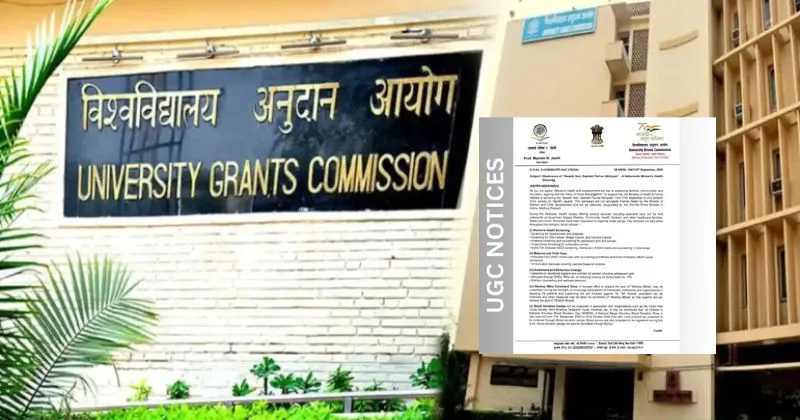
The University Grants Commission (UGC) has called upon all universities and colleges across India to extend their full support to the “Swasth Nari, Sashakt Parivar Abhiyaan”, a nationwide health campaign initiated by the Ministry of Health & Family Welfare. The initiative is running from 17th September to 2nd October 2025, and seeks to prioritise women’s health, strengthen maternal and child care, spread awareness on hygiene and nutrition, work towards the eradication of tuberculosis (TB), and promote voluntary blood donation. The campaign will conclude on Gandhi Jayanti, showing Mahatma Gandhi’s vision of a healthier and empowered society.
The Abhiyaan was launched by Prime Minister Narendra Modi in Indore, Madhya Pradesh, and is being organised simultaneously across states and union territories through Ayushman Arogya Mandirs, Community Health Centres, and other healthcare facilities. The Ministry of Women and Child Development’s annual “Poshan Maah” is also being observed during the same period, ensuring that issues related to women’s nutrition, adolescent health, and child care are addressed in a more coordinated and impactful manner.
As part of the Abhiyaan, a wide range of activities have been planned. These include screening services for women, covering hypertension, diabetes, oral, breast, and cervical cancer. Anaemia testing and counselling for adolescent girls and women will be given special focus, along with tuberculosis screening for vulnerable groups. In tribal regions, Sickle Cell Disease (SCD) screening, counselling, and distribution of SCD cards will also take place. Under maternal and childcare, the initiative will ensure antenatal check-ups, the distribution of Mother and Child Protection (MCP) cards, and timely immunisation services for children.
The campaign is equally focusing on awareness and behaviour change, with sessions on menstrual hygiene, balanced nutrition, and wellness counselling. Communities will also be sensitised on lifestyle changes, such as reducing cooking oil consumption by 10 per cent to improve long-term health outcomes. Another major component is the Nikshay Mitra enrolment drive, which encourages individuals, institutions, and organisations to adopt TB patients and provide them with nutritional, medical, and emotional support. This is seen as a critical step in achieving the government’s vision of a “TB Mukt Bharat” (TB-free India).
A nationwide blood donation campaign is being organised during this period, in collaboration with the Indian Red Cross Society, Akhil Bhartiya Terapanth Yuvak Parishad, and other organisations. With 1st October observed as National Voluntary Blood Donation Day, the government aims to collect one lakh units of blood through camps held across the country. In addition, blood donors will be encouraged to take an online pledge via the MyGov platform, reinforcing the spirit of voluntary participation.
In its circular, the UGC emphasised that Higher Education Institutions (HEIs) have a vital role in ensuring the success of this Jan Abhiyaan. Universities and colleges have been asked to disseminate campaign messages widely through their platforms, mobilise students to register as Nikshay Mitras, and encourage student participation in blood donation drives. Institutions have also been urged to organise health camps, awareness sessions, and outreach programmes in collaboration with local healthcare facilities, thereby connecting academic communities with grassroots health initiatives.
The UGC highlighted that women’s health and empowerment are central to the progress of families, communities, and the nation as a whole, in alignment with the government’s long-term vision of Viksit Bharat@2047. With the active involvement of students, faculty, and healthcare professionals, the “Swasth Nari, Sashakt Parivar Abhiyaan” has the potential to become a landmark campaign in advancing women’s health and building stronger, healthier families across India.












Comments