





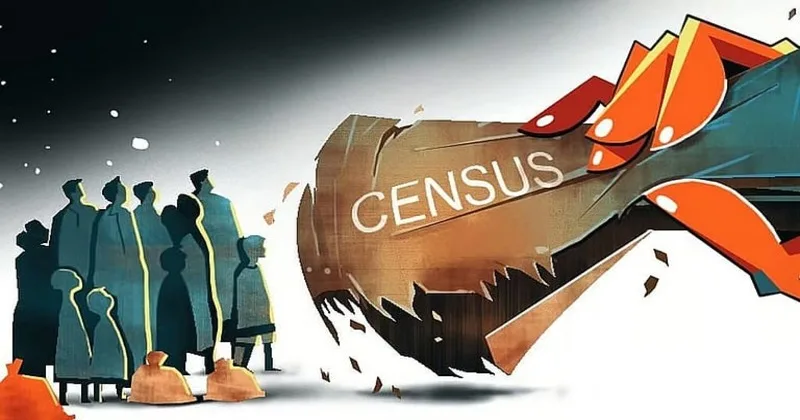
Bengaluru: The Karnataka government’s ambitious caste census, touted as a milestone exercise after nearly a century, has now run into severe opposition with the Brahmin community and opposition parties condemning what they call a “deliberate attempt to divide Hindus” under artificial sub-castes.
In Gadag, members of the All Karnataka Brahmin Mahasabha launched both online and offline protests after discovering that the survey listed questionable sub-castes such as “Brahmin Christian” (S No. 209), “Brahmin Mujawar Muslim” (S No. 883), and “Vyas Brahmin Christian” (S No. 1384). According to them, such categories do not exist and are nothing but an attempt to mislead people and fragment Hindu society.
“There are no Brahmin Muslims and no Brahmin Christians in our community. These entries are fake and must be removed immediately,” said Venkatesh Kulkarni, president of the Mahasabha’s Gadag district unit. “If the government does not drop these fabricated columns, we will launch a strong protest across the state.”
Kulkarni and his associates submitted a memorandum to the Backward Classes Commission, insisting that classification must be done on the basis of economic criteria rather than concocted caste divisions. “People believe Brahmins are universally advanced, but the truth is many Brahmins remain poor and marginalized. We are losing equal opportunities due to such misrepresentations,” the memorandum stated.
A political flashpoint
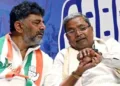
The controversy has now spilled into state politics. Senior Congress leader and former minister RV Deshpande has written to Karnataka Backward Classes Commission chairman C.S. Madhusudan, warning that the survey risks scattering the true Brahmin population across multiple confusing sub-groups.
For instance, the current survey lists Brahmin-related entries under several separate codes: 210 (Brahmin), 477 (Hoysala Karnataka), 802 (Madhwa Brahmin), 1216 (Smarta Brahmin), 1227 (Srivaishnava), 1228 (Srivaishnava Brahmin), and 209 (Brahmin Christian).
“This classification not only distorts our demographic strength but also weakens our socio-economic representation,” said a community leader from Bengaluru. “We have been demanding a unified count as ‘Brahmins.’ Fragmenting us into dozens of sub-categories is nothing but an attempt to diminish our numbers and our rightful representation.”
Sources estimate that there are 42 lakh Brahmins in Karnataka, including 15 lakh in Bengaluru alone. Traditionally, they have been divided into three major sects Smarta, Madhwa, and Srivaishnava. But community leaders allege that the census is arbitrarily expanding the list and thereby diluting their collective identity.
Manufactured castes raise alarm
The caste census has also added 107 new categories to the 1,400 castes already listed. Many of these names, critics say, have never appeared in any official list of any commission. Some of the controversial inclusions are Kuruba Christian, Madiwala Christian, and Vokkaliga Christian.
The BJP has stepped into the issue, accusing the Congress government of deliberately inserting fabricated castes to encourage religious conversions and disrupt Hindu unity. A delegation of BJP leaders, including former minister Sunil Kumar, MP P.C. Mohan, state vice president Hartalu Halappa, opposition chief whip Doddanagouda Patil, and OBC Morcha president Raghu Kautilya, met the Backward Classes Commission chairman and demanded that the process be halted until the anomalies are corrected.
“It is unacceptable to rush through a flawed survey during the Dussehra vacation. Surveying two crore households in 15 days is neither practical nor credible. This is nothing but political drama aimed at dividing Hindu communities,” said Sunil Kumar.
The BJP has further warned that such arbitrary inclusion of “Christian versions” of Hindu castes could dangerously distort Karnataka’s social fabric.
Census under cloud
The socio-educational survey, popularly referred to as the caste census, is being conducted after 95 years in Karnataka. While the government claims it is aimed at better social justice and welfare planning, critics argue that its present form is an ill-conceived exercise that risks deepening divisions among Hindus rather than ensuring equity.
Community representatives insist that classification should not treat an entire caste as backward or forward, but rather assess individuals and families on the basis of economic conditions. They argue that the government’s current approach is unscientific, misleading, and unconstitutional.
“As per Article 15(4), an entire caste cannot be treated as backward. The census should focus on actual socio-economic status, not on imaginary caste divisions,” said Kulkarni.










Comments