





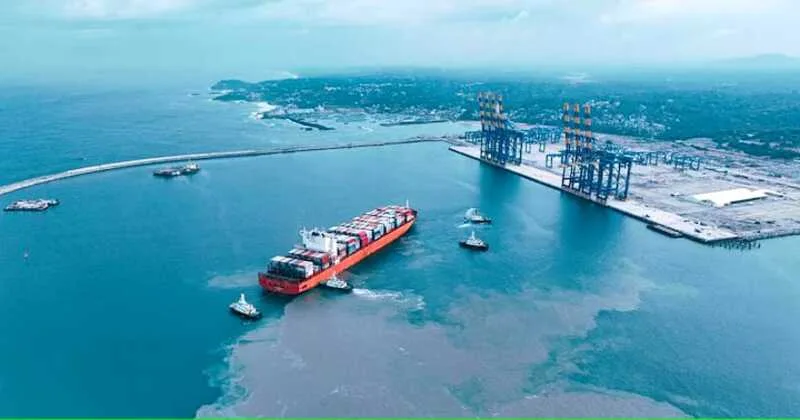
Vizhinjam International Port, hailed as the pride of India, is scaling new heights as it moves towards full-fledged port operations. From November 1, Vizhinjam will officially begin handling domestic cargo, marking its transition into a comprehensive gateway for India’s exports and imports. Until now, the port has been functioning primarily as a transshipment hub, but this development signifies its entry into the next stage of growth. Already recognised as the fastest-growing deep-sea transshipment port, Vizhinjam is set to play a transformative role in India’s maritime trade.
This progress follows the receipt of customs clearance, while the final leg of road construction linking Vizhinjam to the national highway is nearing completion, with just 300 meters left to be built. The launch of Gateway Cargo operations will amplify the port’s benefits in local markets, particularly in the agricultural and fisheries sectors, where export volumes are expected to rise. With Vizhinjam’s connectivity, goods can now reach Europe, America, and Africa in less than half the current time.
The arrival of the Mediterranean Shipping Company’s Jade service, which connects to European nations, along with new cargo links to Africa, further boosts Vizhinjam’s strategic relevance. More international cargo ships are expected to call at the port in the coming months, expanding its profile as a global shipping hub. In addition to trade, Vizhinjam’s growth is anticipated to open new avenues for tourism.
The port’s benefits will extend beyond Kerala, as neighbouring states such as Tamil Nadu and Karnataka will also gain from its cargo handling and road connectivity. At present, goods unloaded from large ships are carried to other ports on smaller vessels, but Vizhinjam’s upgraded facilities will eliminate this dependency. Since the start of commercial operations on December 3, the port has already reached its initial handling capacity of 1 million TEUs within nine months. More than 470 ships have docked so far, processing over 1.02 million containers. Preparations are already underway for the inauguration of the second phase of construction, which will boost the port’s capacity to 4.5 million containers.
Financially, Vizhinjam has delivered remarkable results. Revenue from cargo movement has already surpassed ₹450 crore within just eight months of operations. As of last month, 448 ships had anchored at the port, handling 9.77 lakh containers. Considering that India manages between 20 to 25 million containers annually, the significance of Vizhinjam’s role becomes clear. Currently, about a quarter of this trade is routed through foreign transshipment hubs such as Colombo, Singapore, and Salalah, which can berth mother ships up to 400 meters long. This dependence leads to a loss of approximately $220 million in foreign exchange each year.
Vizhinjam now has the capacity to handle 1.5 million containers, with the potential to surpass 3 million after the completion of its next development phase in 2028. Expansion plans include extending the existing 800-meter berth to two kilometres, allowing four mother ships of 400 meters each to dock simultaneously. With these advancements, Vizhinjam International Port is firmly positioning itself as India’s premier transshipment hub, ready to reshape the nation’s maritime trade and global connectivity.
















Comments