





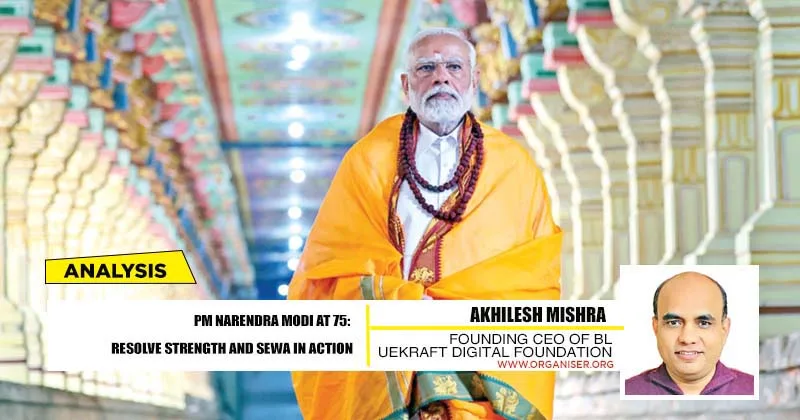
Prime Minister Narendra Modi, as he turns 75 on September 17, is not merely an incumbent who endured; he is a leader who has outlasted fashions, outpaced fatigue, and crucially outgrown the limits others set for India. A question many often ask, becomes even more pertinent at this important personal landmark: what explains Modi’s longevity. My answer: a rare fusion of personal discipline, experiential learning turned into policy choices and participatory governance that has helped him forge a lasting ‘coalition of aspiration’ which has changed how Indians think about themselves and therefore how India acts in the world.
Converting Complexity into Successful Missions
Modi’s greatest strength is the ability to execute at scale. He insists on pilots, feedback loops and relentless iteration-habits forged in years of ground-level work. This experiential method allows him to convert complex public goods into executable missions. Financial inclusion, universal sanitation, infrastructure boom, digital revolution, manufacturing self-reliance, and now deep-tech bets follow the same arc: prototype, pressure-test, scale. Voters may disagree on ideology; they seldom disagree on delivery.
Consistency Matters
Unlike conventional politicians, who reinvent themselves every election, Modi’s arc is a straight line: nation-first, inclusion through empowerment, dignity of the last citizen, and an abiding respect for civilisational self-confidence. Consistency, often unfashionable in elite salons, has proved invaluable in a vast, diverse democracy. When voters can predict your compass, they cheer your course-corrections. Longevity follows trust, and trust follows constancy.
Equally distinctive is Modi’s refusal to convert personal grievances into public policy. He himself comes from back-breaking poverty. Yet, his own childhood poverty never made him bitter against the rich. On the contrary, Modi has been the biggest champion in independent India for wealth creators and entrepreneurs.
Modi’s personal life is austere, almost algorithmic in routine. Early mornings, spartan habits, an obsessive work ethic. In a country fatigued by excuses, an example is oxygen. The young, especially first-time urban and rural voters, hear not a politician’s voice but lived reality: you, too, can attempt the improbable.
Participatory governance or Jan Bhagidari as Modiji calls it, is not wallpaper in this model; it is scaffolding. From crowd-sourced ideas and digital grievance redressal to mass missions that recruit millions – Swachhata (Clean India), Startup India, COVID-19 vaccination, Viksit Bharat (Developed India), Renewable Energy – the citizen is recast from passive beneficiary to co-author. Co-authorship creates ownership. Ownership creates patience. Patience creates longevity. Longevity seeds persistence. Persistence breeds success.
Championing Bharat’s Sanskriti
Perhaps Modiji’s most under-appreciated achievement is cultural: he has altered the country’s millennium old diffidence. Indians have moved from collecting participation certificates to demanding a place on the podium. The grammar of national ambition has shifted from “somebody should” to “we will.” That psychic upgrade matters more than any single metric because it compounds across classrooms, factory floors, labs, and startups. Modi has instilled the belief in over a billion Indians that ‘This is Our Time’. That we may face hardships, that we may marginally falter sometimes, but if we persist, we can achieve whatever we want. That we can change the course of history. Modi lasts because he epitomises the spirit of the ordinary Indian to do extraordinary deeds.
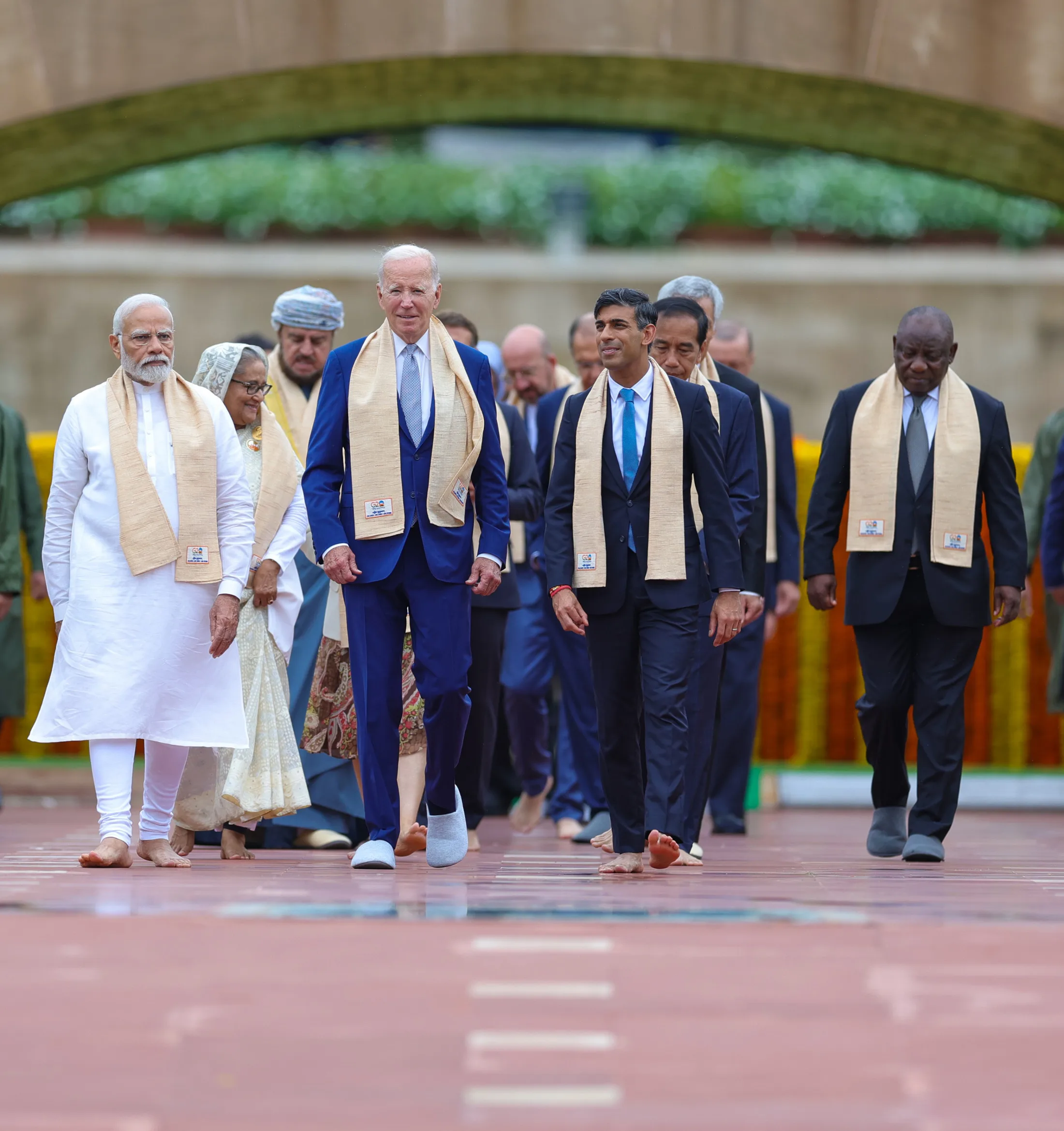
Foreign policy flows from this domestic self-belief. India’s external posture – strategic autonomy without strategic ambiguity – draws credibility from delivery at home. Energy security is hedged with principled positions; deeper ties with the United States, Europe, Russia and key Middle East players; stable relations in the extended neighbourhood; a definitive voice at multilateral tables that speaks for the Global South without outsourcing India’s interests.
Democracies reward spectacle; development rewards stamina. Modi’s politics, all his life, is hinged on compounding – or Amrit Prayas – of doing the small things, right, day in and out, and over time those small changes affecting compounded mega impact. None of this produces instant confetti. All of it produces enduring dividends. Voters have repeatedly endorsed that trade: less drama, more delta.
Longevity in India requires building cross-cutting coalitions. Modi built one anchored in aspiration: poor households that experienced first-time dignity goods; lower-middle classes that value order, opportunity and more spending power; entrepreneurs with ‘ease of doing business’; and youth mainstreamed in the global opportunity runway. The beauty of this coalition is that it has no expiry date. Every success achieved becomes a stepping stone for the next aspiration while the credit accumulates in Modi’s bank.
The world is in churn. Supply chains rewired, technologies re-stacked, security assumptions rewritten, many governments in free fall in matured economies and emerging, distant theatres and nearer home. In such moments, countries with internal cohesion and external clarity gain disproportionate traction. Modi’s longevity offers that continuity. It tells investors, innovators, and partners that India will keep showing up on infrastructure, on reforms, on rules-based engagement and the largest democratic market in the world – long enough for plans to mature.
But what if one had to summarise these innumerable qualities of Modi, reflected and imbibed over a lifetime? My answer would be just three qualities: Resolve, Strength and Sewa. Consider the resolute manner in which he has dealt with the current USA administration. Or the steadfast, lifelong conviction in India’s civilisational values, his organisations ideological moorings. Or a life spent in Sewa of the nation and its people, prioritising that above everything else. Looking back, it could not have been any other way, given Modi’s early initiation into the sanskar of the Rashtriya Swayamsevak Sangh.
A final personal note. I am from the generation that has seen India transform from a peripheral sub-regional player to one which the current USA administration believes is key to resolving a European war. This transformation in India’s character is closely intertwined with Modi’s national ascent. That is why Modi has lasted. And that is why India’s rising stature is not a seasonal story but a structural one. A leader’s greatest legacy is not a monument or a metric; it is a mindset. By teaching a billion people that podiums are also for them, not only for others, Narendra Modi has already changed the country. The world is learning to adjust to that new Indian default: ambitious, persistent, relevant and here to stay.







Comments