





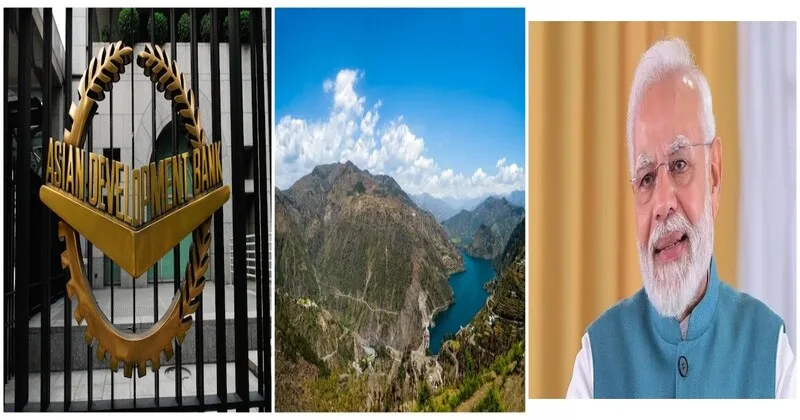
The hills of Uttarakhand carry two different images today. On the one hand there are broken roads, houses under the mud and shops left in ruins following floods and landslides that has destroyed half of the state. On the other hand, there is a new resolve supported by a tie-up between the Government of India and the Asian Development Bank (ADB).
At a time when people are counting their losses and wondering about the future, the signing of a $126.42 million loan agreement has injected fresh hope. This funding is important for the Tehri Lake region, to revive tourism and to rebuild it in a way that is safer, greener and more inclusive.
Turning a lake into a lifeline
The agreement officially titled the Sustainable, Inclusive and Climate-Resilient Tourism Development at Tehri Lake Area Project was signed by Juhi Mukherjee, Joint Secretary at the Department of Economic Affairs and Kai Wei Yeo, Officer-in-Charge at ADB India Resident Mission.
“This loan is about positioning Uttarakhand as a diversified as all-weather tourism destination,” Mukherjee said by focusing on Tehri Lake a priority for development. Yeo added that the project would be “a model for sustainable tourism,” with the lake as its offer jobs and climate support.
For years, Tehri Lake has been a subject of debate. The Tehri Dam has displaced entire villages but also gave the region a hydropower boost. Now, government wants to transform the man-made reservoir into a thriving tourism hub an example of how damaged or altered landscapes can be turned into lifelines.
The timing of this initiative could not be more urgent. Uttarakhand tourism industry has been declining from repeated natural disasters. Heavy rains and flash floods have wrecked pilgrimage routes, eroded roads and forced hotels and homestays to shut down.
Industry bodies report that tourist numbers have decreased by over 80% after major floods in recent years. For countless guides, shopkeepers, drivers and homestay owners, it has meant months without income. “We are having the best season after the pandemic,” says a hotel owner in Rudraprayag. “But the floods swept away everything.”
Prime Minister Narendra Modi responded with a relief package of Rs 1,200 crore, covering housing, road repairs, schools and ex-gratia payments for the affected families. Yet everyone knows that immediate relief is not enough. Uttarakhand future depends on bringing tourists back with the assurance of safety and improved facilities. That is exactly what the ADB-supported project is designed to do.
What the Project Brings to the Table
The initiative is ambitious in scope. It will directly benefit 87,000 residents and an estimated 2.7 million annual visitors to the Tehri Lake region
Areas on which Asian Development Bank has focused
Stronger infrastructure: Roads, walkways and facilities that can withstand floods and landslides.
Nature-based solutions: Using ecological methods to stabilize slopes and manage water, reducing risks.
Community empowerment: Training local institutions to manage tourism better.
Inclusive design: Ensuring accessibility for persons with disabilities and creating services led by women and youth.
Disaster preparedness: Setting up women-led risk management units in villages to respond quickly in emergencies.
The most notable feature is the livelihood matching grant program, which will give a support to small tourism enterprises run by women, young people and local entrepreneurs. In a state where big hotels often overshadow small players, this move could help distribute the gains of tourism more equitably.
Government’s Bigger Tourism Push
The ADB loan ties neatly into Prime Minister Narendra Modi broader plan to reimagine Uttarakhand economy through tourism. Over the past few years, the government has been working on all-weather roads for the Char Dham Yatra, building ropeways to Kedarnath and Hemkund Sahib and developing 50 new tourist destinations with a strong push for winter tourism.
The Vibrant Villages Programme is aimed at reviving abandoned border hamlets through homestays, eco-log huts and cultural tourism. The larger idea is to ensure that tourism is not confined to a few months of pilgrimage season but continues all year, giving steady income to local communities.
A Balancing Act of Economy With Nature
The Himalayas are fragile and unchecked construction has often worsened disaster risks. Environmentalists warn that while infrastructure is necessary, it must be designed with care to avoid ecological damage.
That is why the emphasis on climate resilience and nature-based solutions in the ADB project is critical. By blending modern engineering with ecological safeguards, the project seeks to ensure that growth does not come at the cost of Uttarakhand environment.
For the people of Tehri Garhwal, this project is more than a development scheme it is a chance to rebuild and restart their lives. A young rafting guide sees the scope of promise in new jobs in adventure tourism. Women’s organizations see homestays and tiny enterprises becoming acceptable and encouraged. Villagers, the worst sufferers in disasters are being trained to organize themselves to handle disaster relief.
The signing of the ADB loan is a reminder that even in the face of destruction, their exists opportunities for renewal. For Uttarakhand the task is not only to repair what was lost can be built through tourism model that is resilient, inclusive and respectful of nature.
With the help of government vision and international support, the Tehri Lake project could become a turning point for people of Uttarakhand. It is a chance to show the world that development in the Himalayas can be both people-friendly and planet-friendly.















Comments