





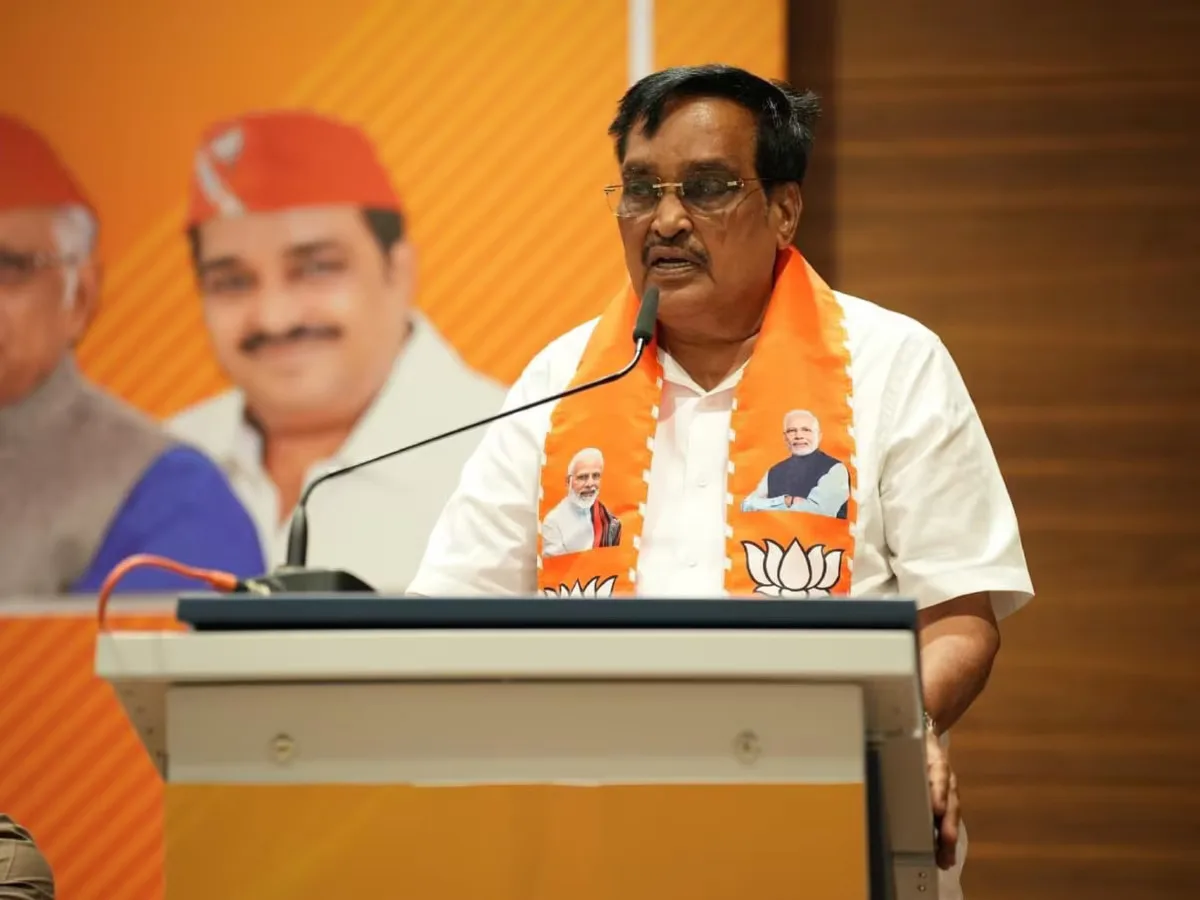
Union Jal Shakti Minister CR Paatil on September 15 confirmed that the government is actively working to divert water from rivers under the Indus Water Treaty, which India suspended following the April 22 terror attack in Jammu and Kashmir’s Pahalgam that killed 26 people, mostly tourists.
Speaking at the Aadhar Infra Confluence 2025, Paatil said, “We are making every possible effort so that very soon this water is diverted, and the states facing scarcity in our country get water. Farmers there will prosper, and people’s water problems will be resolved.”
The minister emphasised that since the issue has international implications, the move is being implemented under the guidance of Prime Minister Narendra Modi and with the involvement of the Home Ministry and the Ministry of External Affairs. “This will bring a major advantage to the country,” he added.
Highlighting the success of the Namami Gange programme, Paatil pointed out that despite nearly 60–70 lakh devotees taking a dip during the Kumbh, the river remained clean due to effective sewage treatment.
“From Haridwar to Bengal, 211 sewage treatment plants are operational. Within the next one to one-and-a-half years, major drains in Kanpur and Varanasi will also be fully treated, further improving the quality of Ganga water,” he said.
He also mentioned the deployment of AI-powered technology that helped remove water hyacinth from the Yamuna within just 45 days.
On India’s water conservation scenario, the minister revealed that while the country receives around 4,000 billion cubic metres (bcm) of rainfall annually, the requirement is about 1,120 bcm, projected to rise to 1,180 bcm by 2047. However, India’s total storage capacity stands at only 750 bcm despite having 6,500 dams.
Paatil argued that building new dams is no longer always feasible, pointing out the 25-year timeline and Rs 25,000 crore cost per dam, alongside land acquisition and environmental concerns.
“Can we afford to wait 25 years for water?” he asked.
Despite such challenges, Paatil noted that in just eight months, 32 lakh water conservation structures were built across 611 districts with public participation and without any expenditure from the ministry. Telangana topped the initiative, followed by Chhattisgarh, Rajasthan, Madhya Pradesh, and Gujarat.
The minister concluded that the government’s multi-pronged approach, diversion of treaty water, river cleaning, AI-based interventions, and community-driven conservation would help ensure water security for future generations.













Comments