






On September 15, India marked National Engineers’ Day, commemorating the birth anniversary of Sir Mokshagundam Visvesvaraya (1861–1962), the legendary engineer, statesman, and nation-builder whose pioneering contributions laid the foundation of modern India’s industrial and technological progress.
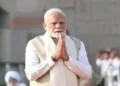
Prime Minister Narendra Modi led the nation in paying homage, describing Sir MV as an extraordinary visionary whose “brilliance left an indelible mark on India’s engineering landscape.” In a post on X, the Prime Minister also extended warm greetings to the engineering fraternity, acknowledging their role in driving innovation across sectors and shaping the vision of a Viksit Bharat.
Today, on Engineers’ Day, I pay homage to Sir M. Visvesvaraya, whose brilliance left an indelible mark on India’s engineering landscape. I extend warm greetings to all engineers who, through their creativity and determination, continue to drive innovation and tackle tough…
— Narendra Modi (@narendramodi) September 15, 2025
Union Home Minister Amit Shah echoed these sentiments, calling engineers the torchbearers of India’s technological rise. “Your vision, innovation, and dedication are fast advancing India to the pinnacle of technological progress. On the Jayanti of Bharat Ratna M. Visvesvaraya Ji, I bow to the legendary engineer who set us on this transformative path,” he said. Union Health Minister J.P. Nadda added that engineers’ relentless ideas and creativity keep “India moving forward and make our growth story stronger every day.”
Greetings to all the engineers on #EngineersDay. Your vision, innovation, and dedication are fast advancing India to the pinnacle of technological progress. On the Jayanti of Bharat Ratna M. Visvesvaraya Ji, I bow to the legendary engineer who set us on this transformative path. pic.twitter.com/C6gtzqnclz
— Amit Shah (@AmitShah) September 15, 2025
Fondly known as Sir MV, Mokshagundam Visvesvaraya’s contributions extend far beyond the dams and irrigation systems he designed. His legacy is inseparable from India’s journey of economic transformation. Among his landmark achievements were the irrigation system for the Deccan plateau, the flood control system for Hyderabad in 1909 conceived in response to the devastating 1908 Musi flood and the iconic Krishnaraja Sagara Dam over the Kaveri river near Mysore, completed in 1938.
These engineering marvels not only controlled natural disasters but also turned once drought-prone regions into thriving agricultural and industrial zones. Hyderabad and Mysore, today celebrated as economic powerhouses, owe much of their transformation to Sir MV’s vision.
As Dewan of Mysore (1912–1919), Sir MV oversaw a period of unprecedented industrialisation. He was instrumental in establishing the Mysore Soap Factory, Bhadravati Iron & Steel industry, Mysore lamps, Mysore chemicals, State Bank of Mysore, Mysore University, Hindustan Aeronautics Limited, and the Mysore Chamber of Commerce. His emphasis on technical education led to the founding of the Government College of Engineering in Bengaluru (1917), one of India’s earliest engineering colleges. Later, in 1945, he donated his retirement benefits to set up the Sri Jayachamarajendra Occupational Institute, training skilled manpower for Bharat’s rapidly industrialising economy.
Sir MV was not just a genius engineer but also a man of unmatched professional ethics. Anecdotes from his life highlight his frugal discipline and integrity he carried two sets of stationery, one for official work supplied by the government and another bought at his own expense for personal use. His unwavering devotion to the engineering profession saw him accept official assignments even at the age of 90.
His journey from studying under streetlights and tutoring children to fund his education, to becoming the “Father of Modern Mysore State”, remains an inspiration to generations. Deeply rooted in his culture, Sir MV also established the Kannada Parishat to promote the Kannada language, symbolising his balance of modern engineering with cultural pride.
Sir MV’s philosophy was summed up in his legendary response to Mahatma Gandhi’s critique of industrialisation. While Gandhi warned “Industrialise and perish!”, Sir MV firmly retorted, “Industrialise, or perish!” His works, including Constructing Bharat, Nation Building: A Five-Year Plan for the Provinces, and Prosperity Through Industry, laid down his vision of a technologically advanced and economically strong Bharat.
His achievements earned him recognition both in Bharat and abroad. In 1915, the British Empire knighted him as Knight Commander of the Order of the Indian Empire (KCIE). Post-independence, in 1955, the Government of Bharat honoured him with the nation’s highest civilian award, the Bharat Ratna. Today, his name lives on in Visvesvaraya Technological University (VTU), Karnataka’s prestigious state university dedicated to engineering and technology.














Comments