






The Central Election Commission is preparing to launch the Special Intensive Revision (SIR) of the electoral rolls in Kerala as well. In view of this, the Chief Electoral Officer (CEO) of the state has called a meeting of political parties on the 20th, ahead of the process that will soon begin. Chief Electoral Officer Ratan U. Kelkar assured that there is no cause for concern over the exercise and emphasized that the process would be carried out with transparency and simplicity. He said that the SIR is intended to ensure inclusion of all eligible voters and removal of ineligible names from the rolls. “The process will follow clear steps. Ineligible names will be removed and all eligible persons will be included,” he explained.
The new exercise will be conducted on the basis of the 2002 electoral rolls, which will serve as the baseline for comparison. The rolls of 2002 and 2025 will be digitally compared at the office of the Chief Electoral Officer on the 15th. Following this, booth-level officers (BLOs) will carry out the comparison at their respective booths before September 12. Once the schedule is received from the Centre, forms will be distributed to individuals listed in the 2002 rolls to ensure their continued enrollment. Importantly, these individuals will not be required to submit any additional documents.
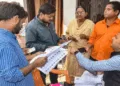
For voters who were added to the electoral rolls after 2002 and who wish to re-enroll, the provision of any one of twelve documents, including Aadhaar, will be required. Non-resident voters will also be able to complete the process online. The entire exercise is expected to be completed within three months, Kelkar noted. He added that the revision will involve a door-to-door enumeration by BLOs, ensuring accuracy and inclusivity in the preparation of the new voter list.
According to a study conducted by two BLOs in Palakkad, nearly 80 percent of the voters from 2002 are still present in the 2025 rolls, suggesting that the SIR can be effectively implemented in Kerala. Kelkar stressed that non-resident voters should not be worried, as online facilities would ease their participation. “If the BLOs are satisfied with the verification, there is no difficulty. The process is designed to be straightforward, and online options are available for convenience,” he said.
All individuals included in the 2002 voter list will be required to sign the enumeration form as part of the process. This, Kelkar explained, is aimed at reaffirming their presence and ensuring the list’s authenticity. The SIR, he added, is distinct from the Summary Revision of Rolls (SSR), as the latter is only a routine update while the former is a comprehensive verification intended to ensure accuracy by revisiting the base list.
Through door-to-door verification and cross-checking of documents, the SIR will help eliminate duplicate entries and remove ineligible names. “The entire process is meant to strengthen the accuracy of the rolls by including all eligible voters and excluding those who are not. It will be transparent and simple. There is no need for any apprehension,” the Chief Electoral Officer reiterated.
Kelkar underlined that the exercise would draw lessons from the last SIR conducted in 2002 and build upon it. In Kerala, the exercise will largely revolve around comparing the 2002 base list with the current 2025 rolls to create a new, error-free voter list. With this, officials hope to address issues such as duplication and outdated records while ensuring that every eligible citizen in the state is duly registered.












Comments