






Betcha can’t eat one”, this was the early campaign slogan of potato chips maker Lay’s in the 1960s, which was later revised to “Betcha can’t eat just one”, and now it is “Betcha Can’t Pick Just One.” The core messaging of this campaign has always been that once someone starts eating these processed potato chips, they rarely stop. Of course, one can argue that it is about the tasty flavour of this product. However, one can also argue that it is a kind of trap, making people obsessed with this taste, which is low in nutrition and also harmful to the body. No wonder this obsession is turning into obesity. In January 2025, a batch of Lay’s potato chips, manufactured by Frito-Lay brand, was recalled in the United States after the Food and Drug Administration (FDA) announced that it could pose some fatal health risks associated with this batch of products. According to the FDA, anyone with sensitivity or allergy to milk may be at risk of exposure to the health hazards associated with consuming these potato chip batches. Consuming these Lay’s potato chips could cause “serious adverse health consequences or even death,” reported NY Post, quoting the FDA.
Irony died a thousand deaths when the most hypocritical slogan for Nestlé Maggi, “2 Minute Noodles”, which highlights its fast preparation time. Can any healthy food be prepared in two minutes? Of course, not. The major setback Nestlé’s Maggi noodles faced in Bharat was in 2015, when tests revealed excessive levels of lead and Monosodium Glutamate (MSG) in the product, leading to a nationwide ban and, as a result, the recall of its product. And then it had to update its advertisement slogan, with “ Hamari Maggi Safe Hai,” to win people’s trust.
The most shocking news was reported in April 2024 by United Kingdom-based newspaper “The Guardian”, which reported, “Nestlé, the world’s largest consumer goods company, adds sugar and honey to infant milk and cereal products sold in many poorer countries, contrary to international guidelines aimed at preventing obesity and chronic diseases.” Also, Public Eye’s analysis revealed that all Cerelac baby cereal products examined in Bharat contained added sugar, averaging nearly three grams per serving. Notably, while Nestlé products sold in developing countries contained added sugar, the company offered sugar-free infant nutrition products in European countries.
According to the report, Public Eye and IBFAN’s investigation highlighted significant differences in sugar content between Nestlé’s products marketed in low-income and middle-income countries and those sold in Switzerland. this reveal the filthy mindset of Nestlé for developing nations? Do European children deserve better health than those of developing nations? In particular, two of Nestlé’s best-selling baby-food brands in developing nations contained high levels of added sugar, contrasting with sugar-free products in Switzerland.
Accelerating faster ageing
A recent study involving over 22,000 Italian adults suggests that consuming a high amount of ultra-processed foods is associated with faster biological ageing. Biological ageing gives a more accurate picture of our body’s health than simply looking at age in years and can be influenced by lifestyle choices.

US: Sitting on an Obesity bomb
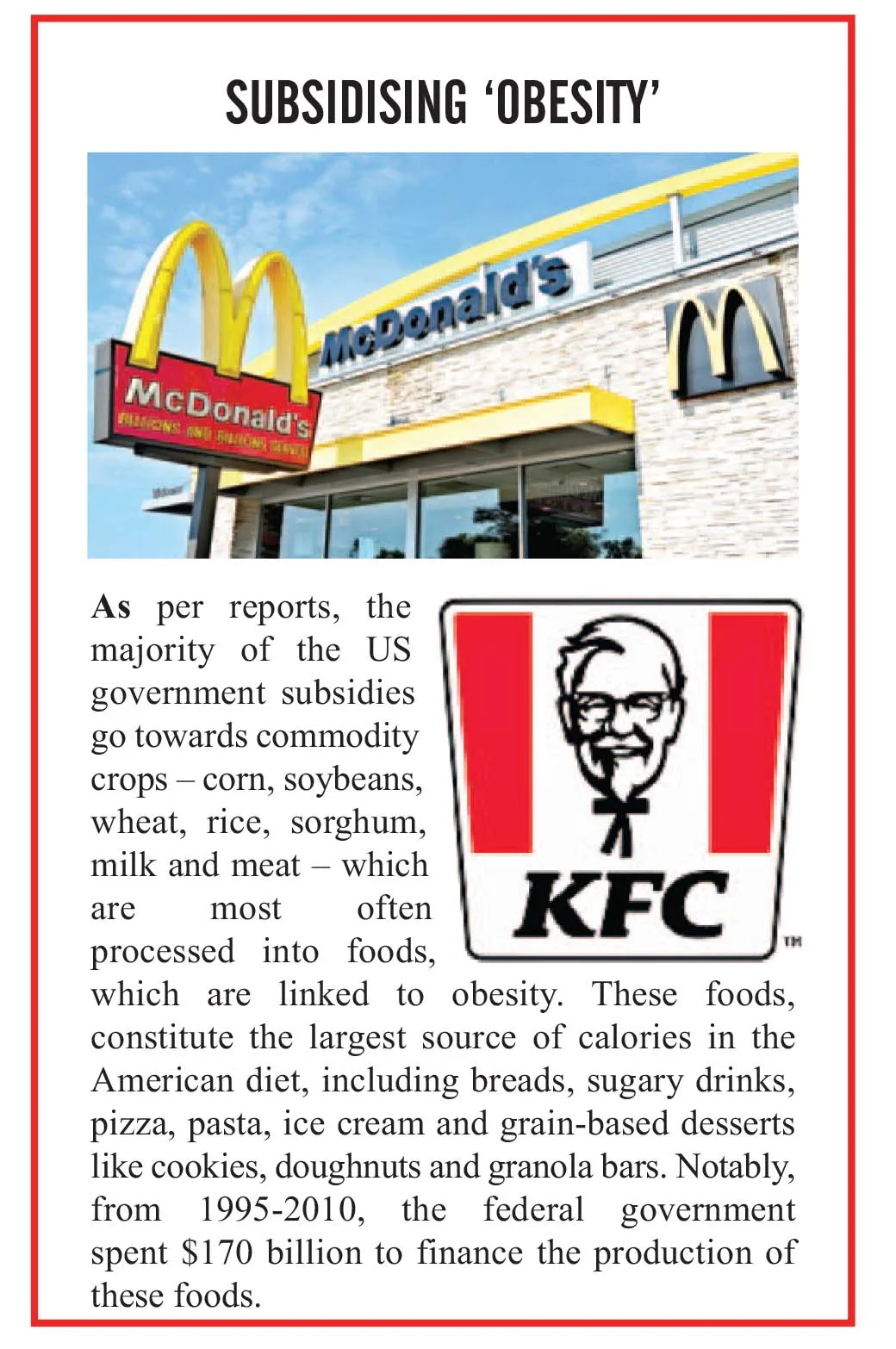
The concept of Fast food is first said to have originated in the United States. It was primarily not for the masses, but for those working in factories who needed a quick energy boost. In 1940, two brothers, Richard and Maurice McDonald, opened a small restaurant in downtown San Bernardino designed to target labourers or workers looking for a quick meal. Today, the same McDonald’s is worth billions of dollars. Later, Burger King, Taco Bell, Carl’s Jr., and KFC, etc. also opened their outlets. According to the National Restaurant Association, the US fast food sales were estimated at $490 billion in 2023. The revenue of McDonald’s alone was $25.49 billion in 2023.
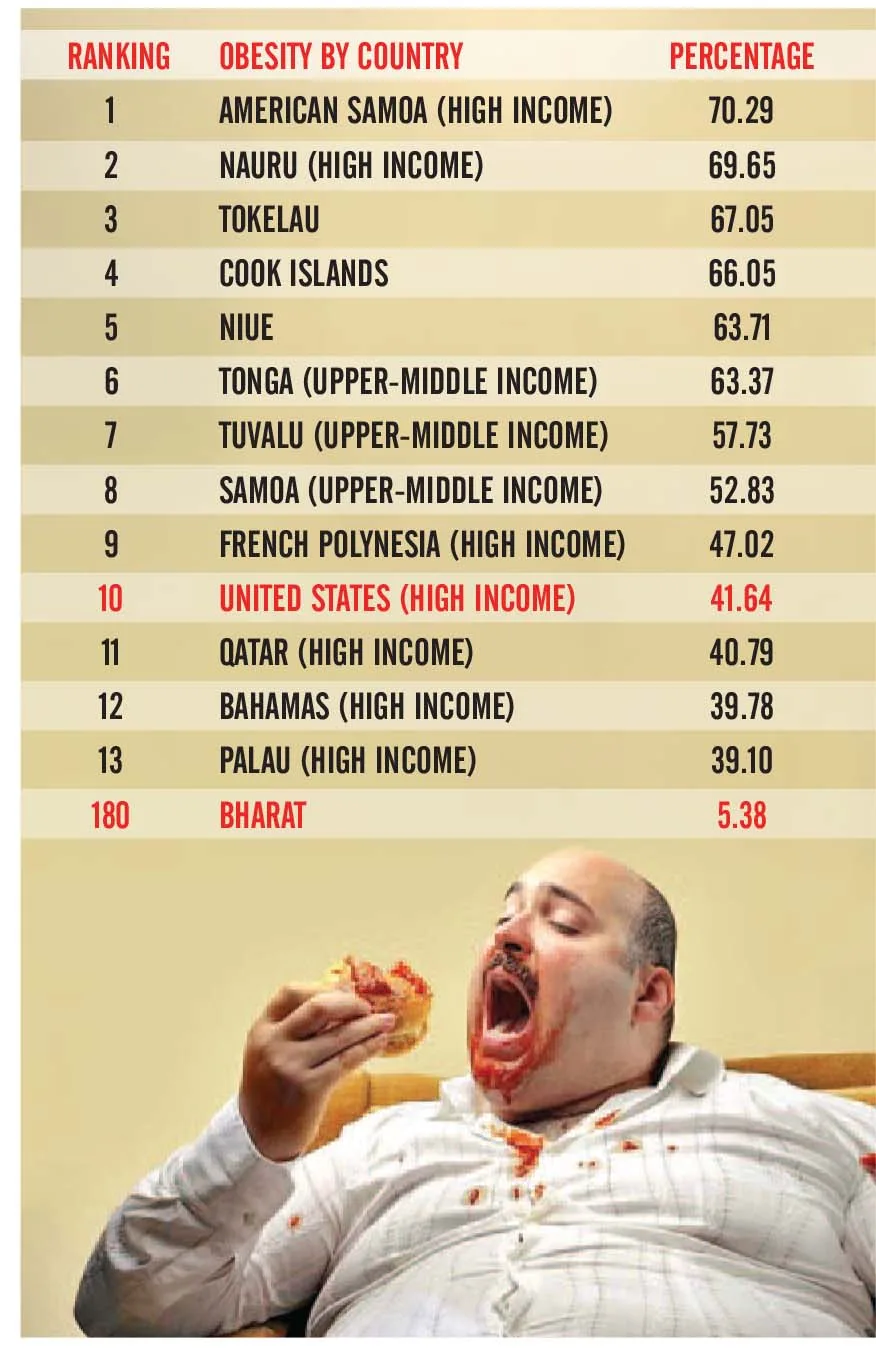
According to the US’s the National Institutes of Health (NIH), ultra-processed foods, including snacks, processed meats and soft drinks, now dominate the food systems of high-income countries. Almost two-thirds, which is more than 60 per cent of energy in purchases by households in the US, comes from such foods.
Between 2013 and 2016, 36.6 per cent of US adults consumed fast food regularly. The most interesting data is that the percentage of adults who were habituated of fast food decreased with age. In the US, 44.9 per cent aged 20–39, 37.7 per cent among middle-aged adults aged 40–59, and 24.1 per cent among older adults aged 60 and over. This pattern was observed by age for both men and women. Among all adults who consumed fast food, the higher percentage was of men with 37.9 per cent and women with 35.4 per cent.
However, according to medical experts, after eating these meals, one has energy, but the energy lasts only a short period of time, and the person becomes hungry much sooner. They then have to eat again, and this cycle repeats itself. As a result, people tend to gain extra fat very quickly.
Making people diabetic
A report published in 2017 by US’ National Health and Nutrition Examination Survey revealed that approximately one-half of US adults consumed at least one sugar-sweetened beverage on a given day. Notably, a single can of cola contains 37 grams of added sugar, equivalent to almost 10 teaspoons (tsp). However, according to the World Health Organisation’s (WHO) 2015 recommendations, consuming more than 6 tsp (25g) of added sugar daily is not suitable for one’s health. The most frightening is that a 2015 study by the US Government revealed that consumption of Sugar-sweetened beverages (SSBs) attributed 184,000 global deaths each year.
The Dangerous collusion
According to Academic Research and Publishing (AR&P), two of the most influential industries responsible for the growing obesity and health crisis in the United States are “Big Food andBig Pharma.”
The pharmaceutical industry has capitalised on the resulting health epidemic, pushing a never-ending cycle of medications that manage symptoms rather than address root causes
The report further says, “These industries have made significant contributions to the health situation in the US and the Western world. They have done this through deceptive marketing, and distorted research which have led to widespread metabolic disease, obesity, and a dependency on pharmaceuticals. At the heart of this crisis is a narrative that was strategically crafted to shift attention away from sugar as the primary culprit behind rising rates of obesity, heart disease, and diabetes. This misinformation campaign has resulted in generations of Americans consuming ultra-processed, high-sugar diets while avoiding healthy sources of natural fats, with skyrocketing healthcare costs. Meanwhile, the pharmaceutical industry has capitalised on the resulting health epidemic, pushing a never-ending cycle of medications that manage symptoms rather than address root causes.”
Having said that, in Bharatiya kitchen, food preparation is considered a spiritual act. It symbolises spiritual nourishment and Ayurvedic principles that impact the value of food. As Prime Minister in his Independence Day speech called on people to reduce oil and unhealthy food consumption as part of adopting healthier diets to promote wellness and to address diet-related health problems, which Rashtriya Swayamsevak Sangh Sarsanghchalak Dr Mohan Bhagwat also emphasised during his three-day lecture series at Vigyan Bhawan on August 26-28, it is the duty of every Bharatiya to follow healthy diet to protect Bharat from Obesity. The fact is, if our body is natural, it must be served food that is cooked naturally, not artificially.















Comments