





For the first time since its transition to a republic, Nepal has witnessed a youth-led revolt that has unseated both the prime minister and the president of an allegedly corrupt government. What began as protests against a sudden social media ban spiralled into a nationwide uprising, leaving 19 people dead and hundreds injured. By September 9, Prime Minister KP Oli and President Ramchandra Paudel had resigned, plunging the country into uncertainty.
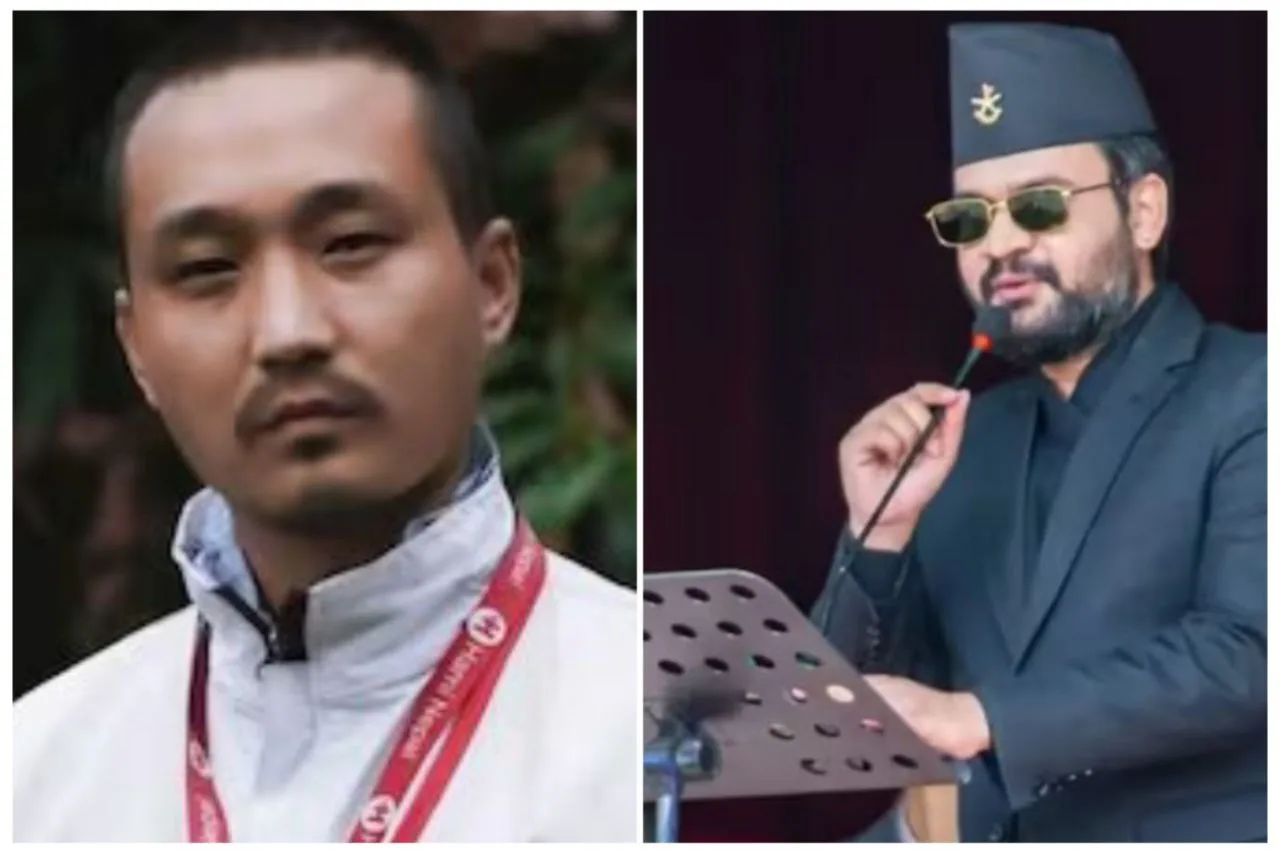
At the centre of this upheaval are two figures, Kathmandu’s 33-year-old mayor and rapper Balen Shah, and Sudan Gurung, the 36-year-old founder of NGO Hami Nepal. Together, they are being hailed by their supporters as champions of a new Nepal, and denounced by critics as dangerous opportunists backed by foreign influence.
Balen Shah: From rapper to Mayor, Now a PM-in-waiting?
Balen Shah first rose to fame with his hard-hitting rap lyrics that attacked corruption and political stagnation. His song Balidan (“Sacrifice”) accused leaders of looting the nation and inspired many young Nepalis disillusioned with traditional parties. In 2022, he rode that popularity to victory in Kathmandu’s mayoral election.
When protests erupted this September, Shah’s words carried unusual weight. On September 7, he took to Facebook, praising the “willpower and purpose” of GenZ protesters while cautioning political parties not to hijack their movement. His post went viral, and the following day, thousands of teenagers and young adults poured onto the streets of Kathmandu and seven other cities.
As clashes escalated, protesters began projecting Shah as their interim prime minister. His social media pages were flooded with demands like “We want you as PM.” Although Shah later called on demonstrators to avoid damaging public property, his role as a symbolic leader of the uprising was cemented.
Shah’s visibility has not been limited to Nepal. He was featured in Time Magazine’s Top 100 (2023) and profiled by The New York Times. He has met US diplomats multiple times, fueling speculation of Western interest in his political rise. His nationalism, however, is complicated.
Sudan Gurung: The organiser behind the streets
If Shah is the face, Sudan Gurung is the engine of the protests. The founder of Hami Nepal, Gurung is credited with mobilising thousands of young people across the country. He turned Instagram into a command centre, posting “How to Protest” videos, and used Discord groups to coordinate everything from student rallies to aggressive tactics like petrol bombs.
Placards carried by demonstrators bore Hami Nepal’s branding, underlining Gurung’s organisational role. Leaked chats reportedly revealed calls to share violent protest images with international media and discussions of “Bangladesh-style regime change.”
Founded in 2020 as a disaster-relief NGO, Hami Nepal initially built credibility during floods and earthquakes. But its finances have raised eyebrows. Gurung has acknowledged that the NGO received nearly 200 million Nepali rupees from foreign entities, including Coca-Cola, Viber, Goldstar, and Mulberry Hotels. Earlier this year, Hami Nepal led an anti-India campaign following the death of a Nepali student in Odisha, further fueling suspicions of its political agenda.
Together, Shah and Gurung have become the twin symbols of Nepal’s GenZ unrest. For many young Nepalis they embody defiance against a corrupt establishment. But for others, they represent something more troubling: a scripted upheaval aimed at engineering regime change.
The parallels with Bangladesh are striking. Earlier this year, youth-led protests, amplified by NGOs and foreign media, led to the ouster of Sheikh Hasina and the installation of Muhammad Yunus as caretaker prime minister.
What next for Nepal?
As Oli and Paudel exit the scene, Nepal stands at a crossroads. Protesters are pushing for Balen Shah to assume leadership, while Gurung continues to wield influence through his NGO networks. Yet, the instability raises critical questions: Will Nepal’s fragile democracy withstand the pressure? Or is the Himalayan nation headed toward an experiment, with global powers pulling the strings?















Comments