





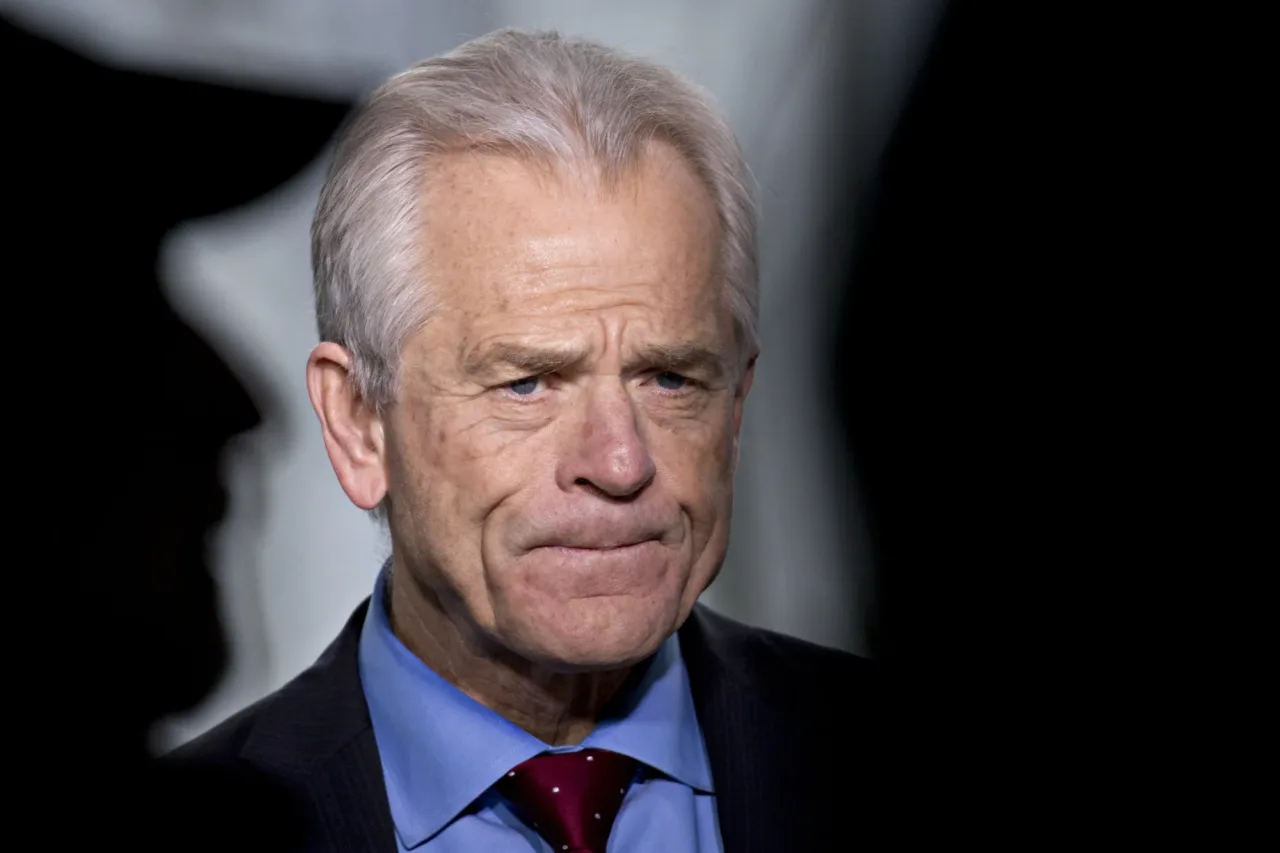
In yet another outburst, US White House trade advisor Peter Navarro attacked India over its purchase of discounted Russian oil and high tariffs on American goods. Posting a seven-part thread on X, Navarro claimed that “India’s keyboard minions are hijacking X’s Community Notes to bury the facts,” adding that Indian users were attempting to whitewash the truth about tariffs and trade.
Labelling India the “Maharajah of Tariffs,” Navarro wrote that New Delhi imposes some of the steepest trade barriers among major economies, which he said is costing “American jobs.” He further claimed India’s imports of Russian crude are driven purely by profit motives, funnelling revenues into Moscow’s war chest at a time when Washington is struggling to finance Kyiv.
Navarro doubled down in a television interview with Real America’s Voice, arguing that India had purchased almost negligible oil from Russia before the Ukraine war but shifted dramatically post-2022. “And then they go into this mode of profiteering with Russian refiners coming onto Indian soil and profiteering,” he said, accusing India of indirectly financing President Vladimir Putin.
According to him, American taxpayers are being forced to shoulder greater financial burdens for Ukraine’s defence because of India’s continued oil trade with Russia.
Navarro went further, threatening India with consequences if it does not bend to Washington’s expectations. “I think India must come around at some point. And if it does not, it’s laying down with Russia and China, and that won’t end well for India,” he said, linking India’s trade stance to broader global alignments.
He contrasted India with other US partners like the European Union, Japan, South Korea, the Philippines, and Indonesia, which he said had accepted American terms and realigned trade rules.
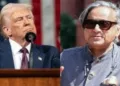
Navarro’s bitter tone is notably at odds with President Donald Trump’s recent remarks about India. Only a day earlier, Trump had praised Prime Minister Narendra Modi as his “very good friend” while announcing the resumption of trade negotiations between the two countries.
Trump expressed confidence that Washington and New Delhi could resolve trade disputes amicably and even described the process as “no difficulty” in reaching a “successful conclusion.” His focus was on expanding bilateral trade, which touched $192 billion in 2024, and strengthening India’s role in the Indo-Pacific strategy.
This split-screen, Trump extending friendship while his aide Navarro unleashes hostility, exposes a deeper dilemma within the American establishment: balancing political diplomacy with economic insecurities.
Notably, Navarro’s aggressive posturing looks less about tariffs or oil and more about America’s nervousness over the shifting global order. With Russia cementing ties with China and New Delhi maintaining strategic autonomy by continuing oil purchases from Moscow, Washington fears being sidelined in Eurasia.
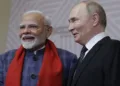
India, the world’s largest democracy, has resisted pressure from the West to cut energy links with Russia, instead prioritising affordable oil for domestic needs. This pragmatic approach, paired with growing India–Russia defence ties and the possibility of deeper coordination with China, is viewed in Washington as a challenge to US hegemony.
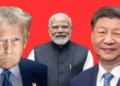
It is this fear of an India–Russia–China trio that explains the sharp divergence in tone, Trump courting Modi diplomatically while aides like Navarro adopt a confrontational stance.
From imposing sudden tariffs to threatening allies, Washington has in recent times often reacted with erratic policies when faced with strategic losses. Navarro’s rant fits this pattern, revealing not just frustration but also the urgency with which the US wants to pull India firmly into its orbit.
Yet, India’s foreign policy continues to emphasise multipolarity, deepening ties with the US on defence and technology, while refusing to cut historical bonds with Russia. The contrast between Trump’s warmth and Navarro’s ire is a reflection of America’s own split: between wooing India as a partner and pressuring it as a rival.










Comments