





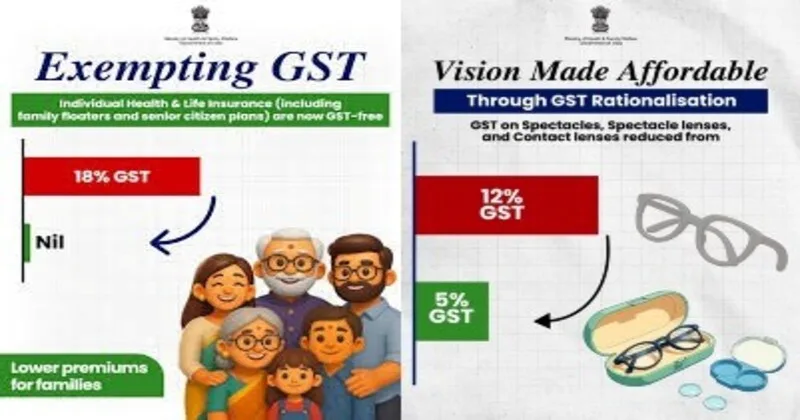
The Government of India has announced a comprehensive series of GST rationalisation reforms with the aim of lowering the cost of healthcare, increasing insurance coverage and enhancing preventive health. These reforms are announced under the agenda of “Affordable Healthcare for All” that coincide with vison of schemes like Ayushman Bharat, Poshan Abhiyaan and the Fit India Movement.
Hon’ble Prime Minister Shri Narendra Modi tweeted, “The Union Government had prepared a detailed proposal for broad-based GST rate rationalisation and process reforms, aimed at ease of living for the common man and strengthening the economy.” Union Health Minister, Shri Jagat Prakash Nadda also welcomed the reform, stating that “Reduced tax rates on several essential products will enhance ease of living, help families manage costs and bring relief to different sectors.”
Under the visionary leadership of Hon'ble PM Shri @narendramodi ji, the Union Government has announced the Next-Gen GST reforms to support ongoing growth and development.
Reduced tax rates on several essential products will enhance ease of living, help families manage costs, and… pic.twitter.com/5Jg7NeRo3a
— Jagat Prakash Nadda (@JPNadda) September 3, 2025
Medicines and Pharmaceuticals: Relief to Patients
The government has reduced GST on life-saving drugs from 12 per cent to 5 per cent or Nil, easing the financial pressure on patients with chronic diseases like diabetes, hypertension and cancer. Fees for the treatment and disposal of bio-medical waste have also been reduced to 5 per cent from 12 per cent.
Job-work in pharmaceutical manufacturing and production has been brought down to 5%, lowering cost of production and boosting India’s status as the “Pharmacy of the World.” This will not only make medicines accessible at lower cost to domestic patients but also world over, where India has a vital role in the supply of generic drugs.
Medical Devices and Equipment: Greater Access to Modern Care
The GST on medical-grade oxygen, gauze, bandages, diagnostic kits, surgical gloves, thermometers, glucometers and anaesthetics has been cut down from 12 per cent to 5 per cent.
This reform will reduce the overall cost of treatment for hospitals, clinics and diagnostic centres, especially in Tier-2 and Tier-3 cities, where affordability is a concern. By reducing the cost of modern diagnostic equipment and medical care, the reform will increase better services and accessibility.
Vision Care
For millions of Indians, particularly students and the elderly, vision correction is out of reach. The government lowered GST on spectacles, spectacle lenses and contact lenses from 12 per cent to 5 per cent.
This one step will help almost 10 crore Indians who do not have proper spectacles at present, improving productivity in schools and workplaces tremendously as well as quality of life for poor families.
Health Insurance: Extending Coverage Beyond Government Schemes
To promote greater insurance penetration, the government has exempted health insurance policies from the Goods and Services Tax. The exemption covers individual plans, family floaters and senior citizen policies.
The reform makes insurance premiums cost-effective, especially for the middle class. It also supplements the Ayushman Bharat PMJAY scheme by lowering out-of-pocket healthcare expenses. Almost 30 crore Indians lack health insurance and this reform will bridge that gap.
Nutrition and Holistic Well-being: Fortifying Families
Making affordable nutrition integral to preventive medicine, the exemption of milk and paneer under GST and lowering rates on dry fruits, diabetic foods, juices and milk-based drinks directly caters to daily household requirements.
These measures specifically help women, children and senior citizens so that balanced meals continue to be affordable for ordinary families. They encourage improved eating habits that counter lifestyle ailments.
Fitness and Preventive Health: Empowering Fit India Movement
Preventive health has been provided a fillip by lowering GST on gyms and fitness centers from 18% to 5%. It becomes affordable for youth and working professionals, in accordance with the vision of the Fit India Movement.
No Relief for Harmful Goods
The reforms strictly differentiate between products leading to health-positive and health-negative. The government has deliberately avoided lowering taxes on tobacco, pan masala and sugary beverages. These products have a strong link to cancer, obesity and diabetes, it will be continued to be taxed heavily to dissuade their use. This people-centric approach emphasizes the government’s determination to favour preventive health and curb the burden of non-communicable diseases.
India’s Increasing Healthcare Budget and Its Impacts on Citizens
India’s public health spending has seen a continuous growth in recent year and a clear indication of the government interest in universal healthcare by reducing GST. The health budget for 2019–20 was ₹62,398 crore. This increased to Rs 67,484 crore in 2020–21, followed by Rs 73,932 crore in 2021–22 that includes emergency steps for COVID-19. The rising trend continued with ₹86,200 crore in 2022–23 and Rs 89,155 crore in 2023–24. A rising to a budget estimate of Rs 90,959 crore in 2024–25 and government has spent Rs 95,957.87 crore on the health sector for this FY26. This constant increase indicates that health is still a priority area in national planning.
What is making this funding more efficient is the new GST reform package, which straightaway lowers the price of medicines, medical devices, health insurance, nutrition and fitness. Combing together increased public expenditure and decreased tax liabilities reinforces each other. What it implies is that an average Indian family while dealing with long-term diseases, purchasing glasses, purchasing insurance or availing hospital services will now see drastically lower costed products.
The effect is expected to affect all segments of society. Almost 10 crore needy Indians who require low-cost spectacles will benefit from cheaper GST on vision care. Approximately 40 crore citizens who have chronic conditions such as diabetes, hypertension and cancer will have medicines become more affordable. Almost 30 crore uninsured people will be motivated to buy health policies at cheaper rates. While that is happening, millions of children, women and elderly citizens will be able to afford more nutritious food and hospital care if required. Clinics in small towns will save money on equipment and therefore be able to perform better.
Over 60 crore Indians, half of the country population is likely to gain directly from these initiatives. For a typical household this means cheaper medicines, improved insurance cover, healthcare services and improved nutrition, thus bringing health within true reach and affordability.
The GST rationalisation is a balanced, citizen-focussed policy towards health. By reducing taxes on medicines, devices, insurance, nutrition and fitness, while denying relief on harmful products, the government has made a clear distinction between those products that enhance health and those that destroy it.
With the health budget to Rs 90,959 crore for 2024–25, these steps signal a proactive step towards building a more robust Ayushman Bharat, Fit India and Universal Health Coverage vision. GST reduction is a mean of affordable treatment and a healthier safer future.
















Comments