




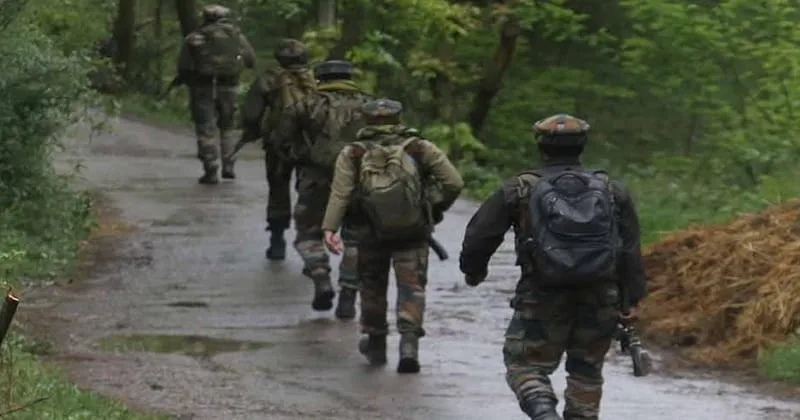
When we think of the Indian Army, the images that often dominate our minds are those of resolute jawans standing guard at snow-clad heights, or heroic soldiers fighting valiantly in Kargil and Galwan. Yet, there is another dimension to the Army—less visible but equally profound—its humanitarian, developmental and nation-building face. Over the decades, the Army has quietly transformed communities caught in militancy, insurgency, and geographical isolation.
One shining example of this humane endeavour is Operation Sadbhavana—launched in J&K at the height of militancy. It was not a military operation, but a mission of compassion. The objective was simple: win the trust of the people by addressing their social and developmental needs, particularly women and children who bore the heaviest burden of terrorism.
A Ray of Dignity in Baramulla
I recall with deep pride, how this author’s Ardhangini, Captain Meera Siddhartha Dave, then a young officer of the Indian Army, spearheaded such a project in Baramulla. It was a time when the region was steeped in fear, and women had been reduced to victims of violence and economic despair. Through Op Sadbhavana initiatives, she worked relentlessly to create livelihood avenues for Kashmiri women—be it through vocational training centres, handicraft cooperatives, or micro-enterprise programmes.
What Capt Meera, offered was not charity, but empowerment. Women who had lost their husbands or sons to terrorism, who were struggling to keep their families afloat, suddenly found a purpose and a means of sustenance. More importantly, they regained their dignity. This was the Army in its noblest role—not just defending borders but protecting the very social fabric of Bharat.
This humane face of the fauj has never been limited to Kashmir alone. From insurgency-hit Nagaland to the floodplains of Assam, from earthquake relief in Gujarat to tsunami rehabilitation in Tamil Nadu, the Army has time and again proven that it is the steel spine of our Republic. And today, that tradition continues in the remote tribal belt of Arunachal Pradesh.
Sarli: A Village at the Edge of India
Sarli is a small border village in Arunachal Pradesh, with a population of barely 1,500. Situated some 350 km from the state capital Itanagar, it lies in a region where rugged terrain and poor connectivity make life a daily struggle. Schools are few, coaching centres non-existent, and opportunities extremely limited. Yet, the children of Sarli have dreams as lofty as the mountains that surround them. Many aspire to join the armed forces, inspired by the Army personnel they see posted in their area.
But inspiration alone is not enough. In a country where urban children spend lakhs on coaching for competitive exams, how can children from such remote hamlets even hope to compete? The gap is structural, not of talent. This is where the Indian Army’s Spear Corps decided to intervene.
Operation Mentorship: Coaching at the Frontier
In May 2024, the Spear Corps launched a year-long mentorship programme for children of Sarli and neighbouring settlements. The focus was the Sainik School entrance exam, a stepping stone for many aspiring to one day join the National Defence Academy and serve the nation.
Thirty-three students, from Classes 5 and 8, were chosen for the programme. Over the next eleven months, they underwent rigorous training—88 classes, 18 mock tests, and regular counselling sessions. But the mentorship was not confined to academics alone. The Army took the children on Integration & Motivational Tours, arranged interactions with the Hon’ble Governor of Arunachal Pradesh, and exposed them to Army centres and premier schools. Officers and soldiers alike became teachers, role models, and guardians.
The Army also shouldered all logistical hurdles—escorting children to Itanagar for the exam, helping with paperwork, ensuring proper documentation, and even covering expenses. What urban children get easily, the Army painstakingly created for these children in the frontier.
The Miracle of Milli Yabi
The results were nothing short of miraculous. Out of the 33 children trained, 32 cleared the national-level written exam conducted by the National Testing Agency. And on 18th August 2025, came the big breakthrough—12-year-old Milli Yabi, daughter of a farmer and a Grihini, secured admission to Sainik School East Siang.
For the people of Sarli, this was no ordinary achievement. It was a moment of collective triumph. Milli was not just her parents’ daughter—she became a symbol of possibility for the entire community. For the first time, families in Sarli could envision their children competing with the best in India, stepping into institutions that had earlier felt beyond reach.
The Army expects 4-6 more students from the same batch to be selected in subsequent rounds. But even beyond numbers, the impact is profound. The mentorship programme instilled confidence, discipline, and ambition among the children. Parents, who had once reconciled to a life of agricultural drudgery for their wards, now nurture bigger dreams.
Beyond Coaching: Nation-Building in Uniform
This initiative of Spear Corps is a microcosm of the Army’s larger role as a nation-builder. It demonstrates that nation-building does not happen only through grand policies in Delhi, but through small, consistent efforts at the remotest edges of Bharat.
What makes this effort special is its practicality. The Army did not build castles in the air; it removed concrete barriers—lack of coaching, lack of transport, lack of documentation, and lack of exposure. By addressing these gaps, it ensured that talent found a fair chance to shine.
The Army has described the initiative as part of its Nation First approach. But in truth, it is more than that. It is Rashtra Pratham in action—the idea that the soldier is not only the guardian of territory but also the nurturer of citizens.
Echoes of RSS Thought: Raksha and Rachna
For long, the Rashtriya Swayamsevak Sangh (RSS) has emphasised that true nationhood is sustained not merely by raksha (defence) but also by rachna (constructive work). The Indian Army’s initiatives in Baramulla and Sarli reflect this civilisational truth. A society survives not by the sword alone, but by the soul that wields it with compassion.
When a Kashmiri widow in Baramulla regains dignity through livelihood, or when a tribal girl in Sarli finds her way to Sainik School, the nation’s spirit is strengthened just as surely as its borders. These victories may not be written in war diaries, but they are engraved in the collective memory of Bharat.
The Road Ahead
Milli Yabi has just begun her journey. Ahead lies rigorous training, academics, physical conditioning, and a disciplined life at Sainik School. But what she represents is far larger. She is proof that mentorship and guidance, even in the remotest corners, can unlock extraordinary potential.
The model devised by Spear Corps in Arunachal Pradesh deserves to be replicated nationwide. Whether it is Ladakh, Nagaland, or Rajasthan’s Thar desert, every borderland has bright children waiting for an opportunity. If the Sarli model is scaled up, Sainik Schools across the country could see a wave of talent from India’s most neglected corners.
The Soldier Beyond the Battlefield
The Indian Army has always carried dual responsibilities—defending Bharat from external aggression and nurturing Bharat from within. From Operation Sadbhavana in Kashmir to Operation Mentorship in Arunachal, the soldier’s compassion has been as impactful as his/ her courage.
In these stories, we find the essence of the Army’s ethos: a commitment to protecting both bhumi and bhavishya—the land and the future.
So, the next time we salute our soldiers, let it be not only for their bravery at Kargil or Galwan, but also for their silent victories in classrooms, vocational centres, and villages. Because it is in these quiet victories that the dream of Ek Bharat, Shreshtha Bharat truly comes alive.













Comments