





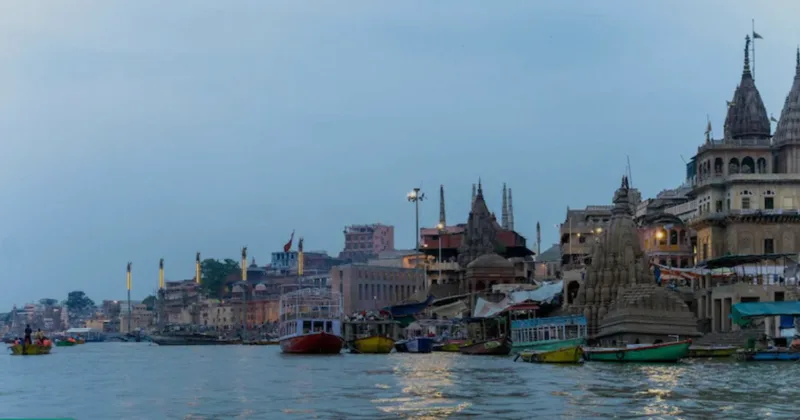
Varanasi, cherished for centuries as India’s spiritual heart, is now evolving into a center of economic transformation. The city, adorned by the grand and newly revitalized Shri Kashi Vishwanath Dham, is attracting not only millions of pilgrims but also growing attention as a center of development. Recent economic data highlights this shift, showing that the district’s annual per capita income has climbed to Rs 1,03,334, showing a robust 12 per cent increase over the previous year. This increase has placed Varanasi among the most economically dynamic districts of eastern Uttar Pradesh.
The ripple effects of this growth are visible across the region. Districts such as Chandauli, Ghazipur, and Jaunpur have also recorded healthy income gains. Officials attribute this momentum to a mix of strategic investments in modern infrastructure, agricultural innovation, industrial expansion, and service-sector opportunities, all of which are reshaping the socio-economic profile of Purvanchal.
Tourism is playing a pivotal role in powering Varanasi’s economic growth. Within a span of just one year, the city witnessed a remarkable surge in footfall, with total visitors rising by nearly 19 per cent from 8.94 crore in 2023 to more than 11 crore in 2024. The upswing is particularly striking in the international segment, where arrivals shot up by almost 35 per cent, thanks to improved air and road connectivity that has made Kashi more accessible than ever before.
Adding to the momentum are new initiatives such as river cruise services, upgraded hospitality facilities, and modern tourist amenities, which have enhanced the city’s profile as a global destination. This expansion in tourism has not only reinforced Banaras’s place on the world map but also generated fresh employment opportunities and business growth for local communities.
Agriculture, another cornerstone, is undergoing a quiet revolution. The introduction of advanced crop varieties like ‘Kashi Sahishnu’ okra, which promises 20-23 per cent higher farmer income through disease resistance and lower costs, has already begun to transform rural livelihoods. With over 30 Farmer Producer Organisations (FPOs) engaged in exports, agricultural produce from Varanasi is reaching international markets in increasing volumes. More than 1,000 tonnes of perishables were exported in 2024-25, compared to negligible numbers just a few years ago.
Adding further momentum to rural prosperity, the Indian Institute of Vegetable Research (IIVR) has reached out to more than 44,000 farmers, equipping them with modern and organic farming techniques. A noteworthy aspect of this initiative is the active involvement of women farmers, reflecting a growing inclusiveness in agricultural development.
At the same time, Varanasi’s growth narrative is expanding beyond agriculture and tourism. The industrial and services sectors are steadily expanding, with new opportunities emerging in small-scale enterprises, digital connectivity, and modern infrastructure projects. Backed by a district-level action plan tied to Uttar Pradesh’s ambitious $1 trillion economy vision, the city is strengthening its district domestic product (DDP) across all major sectors. This strategy has already propelled Varanasi into the top ten districts of the state in terms of economic output, a league it now shares with hubs like Prayagraj and Gorakhpur.














Comments