






A natural patriot, despite being born into a poor family, climbed to the helm of global world order to make the Bharat nation great again in all respects, and as he turns 75 on September 17th, it is time to reflect on every moment he spent constructing the nation. His energy, passion and commitment to social and national causes are admirable. The great personality who never gives up, even after receiving harmful criticism, insults and unjustified blame. Youths over the world should study and examine this outstanding personality to learn how future generations should prepare themselves for the growth of a nation with robust physical, mental and spiritual health at the age of 75. He is still in better shape than a 25-year-old.
PM Modi’s childhood views and dreams differed significantly from those of typical children of his age. Perhaps it was influenced by Vadnagar, which was once a thriving hub of Buddhist scholarship and spirituality centuries ago. As a child, he felt a tremendous desire to make a difference in society. He was deeply affected by Swami Vivekananda’s books, which formed the groundwork for his spiritual path and spurred him to follow Swamiji’s ideal of making Bharat a Jagat Guru.
The influence of RSS on Prime Minister Modi’s personality
Narendra Modi joined the RSS early in life, but his search for role models extended beyond books to real-world experiences with outstanding leaders who exemplified nation first attitude, service and humanity. ‘Vakil Saheb’ brought him to the RSS, where he met many major personalities and luminaries, profoundly affecting his thinking and personality. Despite never having met M.S. Golwalkar, also known as ‘Guruji,’ PM Modi stayed in the same room at Hedgewar Bhawan where Guruji previously lived.
At the age of 17, he left his home to travel across Bharat. For two years, he traveled across Bharat’s vast landscape, exploring different cultures. He returned home a transformed man, with a clear vision of what he intended to do in life. He moved to Ahmedabad and joined the Rashtriya Swayamsevak Sangh (RSS). RSS is a nationalist organisation dedicated to Bharat’s social and cultural regeneration. Narendra Modi had a difficult routine in Ahmedabad from 1972, when he became a Pracharak with the RSS. His day began at 4.30 a.m. and lasted until late night. In the late 1970s, a youthful Narendra Modi joined the struggle to restore democracy in Bharat, which was under emergency rule.
He met a variety of RSS leaders who contributed significantly to his intellectual and spiritual development. PM Modi observed their daily routines, discipline and unwavering dedication to Seva and drew vital life lessons. The period spent with Balasaheb Deoras during the Morbi dam dispute in 1979 was particularly formative and pivotal. He witnessed firsthand how Sangh’s principles were applied in the real world. Other major people, including Eknath Ranade, Rajju Bhaiya, and Anantrao Kale, showed PM Modi the power of spirituality, education and grassroots engagement. K.K. Shastri, another key guru, inspired him with the values of a Karmayogi—someone who works ceaselessly without expecting anything in return. Shastri’s example of working 18-hour shifts inspired PM Modi’s discipline and leadership. PM Modi’s connection with the RSS provided him with numerous experiences that molded his life philosophy. His adherence to the Sangh’s values, commitment to public service and rigorous work ethic are the result of the lessons taught by these mentors.
His RSS grooming has resulted in his habit of waking up at 4.30 a.m. and his workaholic temperament, which allows him to work for 18-20 hours per day. How to reach a consensus after debating in depth arose from his training in attending day-long sessions that discussed diverse ideological concepts and how to reach a consensus through dialogue and discussion. Many of his thoughts on nation, humanity, and Dharma are influenced by mentors such as Deendyalji Upadhaya, the RSS ideologue who introduced the notion of Integral-humanism.
You can be a leader even if you don’t read. Modi Ji still makes time for reading. He has authored many books on various themes of national importance. One of the main habits is that a Pracharak values time and is prompt. This behavior is one of Modi ji’s most successful and productive habits. He sleeps for only four hours and adjusts his sleeping habit. If he is traveling abroad, he adjusts his time zone accordingly to avoid jet lag. PM Modi has a clear understanding of the purpose, mission and goal of life.
Modi Ji, known as Pracharak, is always willing to make any sacrifice for the sake of the nation. His core – The ethos ‘Pal Pal, Kan Kan’ for the nation demonstrates how dedicated he is to the nation. Modi ji is one of the finest orators Bharat has witnessed since freedom. He can connect with the people, know their pulse and communicate in their own language. He begins the addressing, greetings in the language of those he is addressing. The Pracharak-Modi is a role model for the society and nation, who has sacrificed his personal and familial elements of life for only one thought, one point of dedication. He works full-time for the nation. He does what the nation wants him to do. As a result, he has no choice in terms of work or Working field. He is focused on one task, mission and goal.
Significant accomplishments as BJP leader, Chief Minister and Prime Minister
Despite continuing to hold several duties within the Sangh during the 1980s, Narendra Modi emerged as an Organizer exemplar with his organizing abilities. Modi’s life took a new turn in 1987, when he began working as the Gujarat BJP’s General Secretary. In his first duty, Modi led the BJP to victory in the Ahmedabad Municipal Corporation elections for the first time ever. He also guaranteed that the BJP finished second to the Congress in the 1990 Gujarat Assembly elections. In the 1995 Assembly elections, Modi’s organizational skills enhanced the BJP’s vote share and the party won 121 seats.
Narendra Modi’s effort to make Vibrant Gujarat is a shining example of growth and governance was not easy. It was a long journey with numerous difficulties and challenges. If there is one consistent quality that Narendra Modi has displayed over the last two decades, it is his strong leadership in the face of adversity. Narendra Modi’s approach to governance has long been seen as above politics. Modi never let political conflicts get in the way of tackling development issues. As PM, Narendra Modi is working as India’s Prime Minister in his third term, his approach to administration and governance is noteworthy for its consistency.
PM Modi’s Pancha-Amrut convergent governance system represents the zenith of his “Minimum Government, Maximum Governance” vision. Leading foreign organizations have noted that under Prime Minister Narendra Modi’s leadership, Bharat has reduced poverty at an unprecedented pace. According to the findings of NITI Aayog’s most recent study, ‘Multidimensional Poverty in Bharat since 2005-06’, around 25 crore people have emerged out of multidimensional poverty in the last ten years. This amazing accomplishment is due to the government’s extraordinary efforts to address all aspects of poverty.
Today, Bharat is home to the world’s largest healthcare program, Ayushman Bharat. Ayushman Bharat, which serves over 50 crore Bharatiya, delivers high-quality and affordable healthcare to the poor and neo-middle class.
The other major achievement was keeping the anti-national forces sponsored by deep state global market forces and the opposition at bay for 11 years. He has not let the deep state overtake the state. PM Modi’s second major achievement is propelling the economy to new heights despite fierce opposition from both open and hidden sources. Modi’s third greatest achievement has been to keep the opposition in their place for three consecutive terms. He has given them no freedom in taking over the corridor of power. Abrogation of article 370, Shri Ram temple are other few key achievements.
International diplomacy and the perspectives of international leaders and experts about Prime Minister Modi
PM Modi is not just powerful, but also a man of enormous conviction. PM Modi’s excellent character has helped him become highly renowned around the world. People today clearly perceive Bharat as a much stronger and important nation, capable of playing a much larger role internationally than it has in the first 66 years following independence.
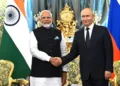
Global Outreach: PM Modi’s extensive overseas trips and diplomatic endeavors helped improve Bharat’s global profile. His meetings with other leaders and engagement in international platforms such as the G20 and BRICS established Bharat as a prominent participant in global affairs.
Investment and Trade: Some international investors and governments saw beneficial results from efforts to attract foreign direct investment and expand trade links with diverse countries. PM Modi also used cultural diplomacy, such as the International Day of Yoga and hosting foreign leaders at events like the “Howdy Modi” rally in the United States, to boost Bharat’s soft power.
Nationalism and Identity: PM Modi’s leadership was connected with a type of Bharatiya nationalism, which some observers said contributed to the shift in India’s identity and politics.
Global response to outbreak: Prime Minister Narendra Modi’s government received praise for its handling of the COVID-19 outbreak. The worldwide response to Bharat’s crisis handling skill and helping the world by supplying Vaccines and medicines made a positive world view about the Indian government.
Views by international celebrities
Barack Obama
India’s reformer-in-chief
Narendra Modi grew up helping his father sell tea to feed the family. Today, he is the leader of the world’s largest democracy, and his life story—from poverty to Prime Minister—reflects India’s energy and promise for growth. Determined to inspire other Indians to follow in his footsteps, he has outlined an ambitious plan to alleviate severe poverty, enhance education, empower women and girls, and unleash India’s actual economic potential while addressing climate change. Like India, he straddles the ancient and modern—a yoga practitioner who engages with Indian citizens on Twitter and envisions a “digital India.” When he visited Washington, Narendra and I went to the Dr. Martin Luther King Jr. memorial. We discussed King and Gandhi’s teachings, as well as how our countries’ diversity of backgrounds and faiths is an asset that must be protected. Prime Minister Modi believes that over a billion Indians living and flourishing together can serve as an inspiration to the rest of the world.
McKinsey CEO Dominic Barton
Narendra Modi has turned India into a magnet.
John Chambers, former Executive Chairman & CEO, CISCO Systems
“He (Modi) possesses courage. He gets up every day thinking about your country’s destiny. I believe it would be a significant risk not to give him the opportunity to finish that ambition.
Mark Zuckerberg, CEO, Facebook
“I am profoundly grateful for Prime Minister Modi’s dedication to Digital India; for India to continue advancing, it must establish itself as a leader in the digital realm.”
Paul Jacobs, former Executive Chairman, Qualcomm
“We align with Prime Minister Narendra Modi’s vision to convert India into a digitally empowered society and knowledge-based economy.”
Paul Polman, CEO, Unilever
“I don’t want to get into politics, but what the Indian prime minister is attempting to accomplish has two components: big ideas, Smart India, Made in India, and Swachh Bharat.” These are enormous declarations, and he can only hold himself accountable, so he raises the bar for himself. So the question is, how quickly can he get the entire country behind him. However, the idea of what you are attempting to do through some efforts is correct and beneficial to the economy. We support many of these projects because they benefit us.
We hope that the enduring energy, passion, devotion, valor, and strength of Prime Minister Modi continue to serve the nation for many more years.












Comments