






“सर्वं खल्विदं ब्रह्म तज्जलनिति शान्त उपासित”
All this is Brahma. Everything comes from Brahma, everything goes back to Brahma and everything is sustained by Brahma.
The line from the Chandogya Upanishad (Verse 3.14.1) is a simple reminder of the infinite forms and cycles. On Anant Chaturdashi we live this teaching. Neighbourhoods carry an idol to water and an old-world fold itself into the new with calm ritual certainty. Across regions and eras this day teaches a moral of the finite returns to the infinite and by doing so it binds people into a continuing civilisation.
Cycles of Time and Faith: Vishnu’s Protection and Ganesh Visarjan
In many cities of western India today is the day of Ganesh Visarjan which means processions, music and a last journey for this year of Bappa’s murti, that is carried to pond or sea. In the river basin the household ritual is quieter but more intimate. Families tie the 14-knot Anant sutra on the arm to invoke Bhagwan Vishnu’s protection. Together they are form the faces of teachings offering, surrender and renewal.
The scriptural roots are not new it has been in the Vedas and Upanishads, that teaches cycles, yajña and the patience of time. In the Puranic world, the texts like the Bhāgavata Purāṇa, give us the imagery of the cosmic and the eternal Vishnu on Ananta, the serpent of endlessness. Ritual grew out of these very sensibilities, a household vow, a village feast, the communal letting-go. That spiritual practice that stepped into the public sphere.
Devotional transformation of culture into National Movement
This sense of cyclicality did not remain confined to mandirs. Centuries ago, Chhatrapati Shivaji understood that public worship was a means of forging resolve and identity. Ganapati images and mandirs festivals were not only means of celebration, they were public acts that knitted soldiers and civilians together. Shivaji’s patronage of cultural rites united a polity by culture as much as force. That is the first continuity of devotion directed toward unity.
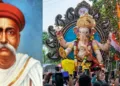
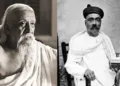
Two centuries later, Lokmanya Bal Gangadhar Tilak transformed that devotion into a national instrument. He did not invent worship, he democratised it. By turning household Ganesh puja into Sarvajanik Ganeshotsav Mandal, he created cultural institutions that were spaces for music, speeches and collective purpose. From Shivaji’s fort to Tilak’s mandal this ritual became a deliberate means to shape public life.
It also reflects Social Significance such as
Community Bonding: The festival fosters a spirit of togetherness, encouraging people to unite and celebrate.
Cultural Awareness: It promotes local traditions, art forms and cultural practices, allowing younger generations to learn and participate.
Boost to Local Economy: The festival creates opportunities for local artisans, vendors and businesses, especially in decorations, food and cultural performances.
Devotion and Ecology: Balancing Tradition with Sustainable Practices
In the present scenario of Democratic Society, devotion now comprises of administration also for preserving sacred practice while protecting the individuals. There are challenges which are practical and ecological in nature. For decades Plaster of Paris idols, synthetic paints and thermocol decorations have harmed water bodies. Studies and reports by the Central Pollution Control Board has documented use heavy metal and chemical runoff after mass visarjans harms the water bodies which are pious in our culture.
Over the last decade the central and state governments have built rules and infrastructure to keep devotion clean, safe and sustainable. Environment and water quality are a primary concern. The Central Pollution Control Board revised guidelines to limit the use of non-biodegradable materials and to encourage traditional clay idols and natural paints.
In Mumbai, the Brihanmumbai Municipal Corporation (BMC) has set up 288 artificial visarjan ponds, up from 204 last year so that over 60,000 idols were immersed there instead of in the sea or lakes during the first visarjan phase alone. Nearly 48% of the total idols were submerged into these environmentally friendly ponds. This multilevel operation involved over 20,000 police officers, drone monitoring and AI-enabled crowd-management systems, maintaining both ritual safety and environmental sensitivity.
In Surat, the civic body prepared for immersing 76,000 idols distributed across 20 artificial ponds, the water of the visarjan ponds will be treated after use and sent for reuse. In Thane, 19,567 idols will be immersed over one and a half days, with 7,781 made of traditional shadu clay and more than 15 tons of floral waste processed into compost.
Policy Shifts and Artisan Support
Artisans are now offered subsidies to make eco-idols. Goa doubled its subsidies recently and several state schemes now provide per-idol support and courts and pollution boards tightened rules on PoP and chemical paints. They balance with care and love towards sacred rivers amidst the rituals is important. The National Mission for Clean Ganga (Namami Gange) works with the district administrations to develop special visarjan ghats and after-visarjan collection centers on the Ganga River, which limits the direct discharge and thus enables a safer waste management system.
There is a human cost and a human renewal in these shifts. Artisans who once crafted PoP idols now switching to clay under schemes like ODOP. Civic volunteers learn crowd management and first-aid programmes for scheduled visarjans to avoid mismanagement. A potter once dependent on PoP now sells natural idols to both homes, mandals and municipal staff. These small personal shifts give social texture to the spiritual, this is how civilisation continues.
The festival still teaches the ancient lesson. When a murti is lowered into water or a thread is knotted at a child’s wrist, nothing dramatic happens except a quiet interior change. A shared memory, a communal meal and civic trust arises inside. The mantra “Sarvam khalvidaṃ brahma” echoes in practice where forms are transient, the spirit continuous.
Anant Chaturdashi is not regional festival anymore, it is widely celebrated across the globe. It is a civilizational journey of Bharat where we celebrate, rehearse humility and take responsibility for the world we share. The sphere of festival is crystal clear that comprises care of nature to individuals, thus maintain ecosystem for all. Household vows become ritual under Shivaji, civic formation under Tilak and care for vasudhaiv in modern day of Bharat. Across these shifts, unity prevails across time, space and society. In bowing to Ganapati Bappa and tying Bhagwan Vishnu’s knot, we do more than perform rites, we renew our civilisation’s rhythm and carry the eternal forward.













Comments