





The nomination of former Supreme Court [SC] Justice B. Sudershan Reddy as Opposition’s candidate for the post of Vice President has stirred a major political row with leaders from the Bharatiya Janata Party opposing his nomination and criticising the 2011 Salwa Judum ruling given by Reddy.
Launching a scathing attack on the Opposition’s VP candidate, Union Home Minister Amit Shah in a conclave recently alleged that the ‘Salwa Judum’ ruling delayed the eradication of Maoists, who were on the verge of being eliminated due to the tribal-driven movement.
“Sudershan Reddy is the person who helped Naxalism. He gave Salwa Judum judgment. If the Salwa Judum judgement had not been given, the Naxal terrorism would have ended by 2020. He is the person who was inspired by the ideology that gave Salwa Judam judgment,” Shah said, referring to the 2011 SC judgement on Salwa Judum, during a conclave.
Days after Shah’s accusation, Chhattisgarh Deputy CM Vijay Sharma too joined the fray, alleging that the decision was largely an academic one and not based on sound legal reasoning.
“People of Bastar still say that while the Supreme Court heard arguments from petitioners in Delhi and from the police, their own voices were never heard. The Court delivered a judgment without listening to those who were most affected,” he said.
Sharma highlighted that the movement was largely people-driven and against Naxals.
Sharma remarks arrived days before a group of Naxal-victims from Bastar held a press conference in the national capital, opposing the candidature of Opposition’s VP candidate.
The former Justice though have responded to the accusation over his 2011 ruling, stating that “The Salwa Judum judgment was not in favour of the Maoists. If it was, what has it not been challenged till now?” as quoted in media reports.
The opposition’s VP candidate has also received support from a group of 18 judges who in a letter while terming the Home Minister’s remarks unfortunate have said that a “prejudicial misinterpretation” of any verdict could have a detrimental effect on the judiciary.
“The statement of Home Minister Amit Shah, publicly misinterpreting the judgment of the Supreme Court in the Salwa Judum case, is unfortunate. The judgment nowhere supports, either expressly or by compelling implication of its text, Naxalism or its ideology,” read the letter further.
Though, another group of around 50 judges however expressed their “strong disagreement” with the letter issued by the 18 judges. The judges including former Chief Justices of India, P Sathasivam and Ranjan Gogoi, said the remarks from the 18 were part of a “predictable pattern…. to cloak political partisanship under language of judicial independence”.
“A fellow retired judge has chosen, of his own volition, to contest the election for the office of the Vice President. By doing so, he has stepped into the political arena as a candidate supported by the opposition. Having made that choice, he must defend his candidacy like any other contestant… in the realm of political debate,” the 50 judges said in their letter.
“To suggest otherwise is to stifle democratic discourse and to misuse the cover of judicial independence for political convenience. Judicial independence is not threatened by the criticism of a political candidate,” they wrote. The letter added “What truly tarnishes the reputation of the judiciary is when former judges repeatedly issue partisan statements.”
The Salwa Judum movement in Bastar
It was in the summer of 2005, when a section of locals eventually stood up against the so-called revolution of Maoists which by then had already thwarted peace in the otherwise calm and heavily forested landscapes of Bastar, realising that the violent movement of Naxals is only going to make their lives miserable.
The immediate causes according to reports were the Diktats issued by Maoists, banning collection of Tendu Patta leaves [crucial for livelihood for tribals], boycott of elections and a loot carried out by the Maoists in Bijapur tehsil of the then Dantewada district in May 2005 which resulted in detention of some villagers by police.
The string of unpleasant developments eventually led to unearthing of the long brewing frustration of locals against the Maoists with villagers of Bijapur block, deciding against allowing any sort of Naxal activities in their villages.
With no time, the news travelled in the nearby tribal belts, inspiring villagers from other localities to join meetings, rallies organised against Maoists under what was initially called the ‘Jan Jagran’ movement. A month later in a large gathering organised at Naimed village in June, the movement was named ‘Salwa Judum’ [Gondi translation of ‘Peace March’].
Frustrated with opposition of the villagers, Maoists responded with targeting of leaders of the Judum movement, with a large chunk of locals taking shelter into ‘Salwa Judum’ or the ‘relief’ camps.
Report indicates, existence of around two dozen such Salwa Judum camps with around 50k migrated civilians from nearly 600 villages in Bijapur and Dantewada districts in the year 2008.
As villagers settled in Judum camps, the hostility between Maoists and locals grew exponentially with intensified bloodshed in Bastar. The camps which were set up to provide safety from Maoist’s attack were guarded by volunteers from among the villagers who the government later appointed as Special Police Officers [SPOs].
One such relief camp was setup in the Errabore village of the then Dantewada district. In July 2006, the camp at Errabore came under a well-planned attack carried out by the Naxals, who ended up massacring over 30 civilians for taking a stand against the outlawed outfit.
Hundreds of members of Naxal group were part of the attack who alongside executing civilians, burnt down scores of houses in one of the deadliest attack carried out by the group. The incident had shaken the core of the villagers who had only stood up to set free their villages from the clutches of Maoists.
What unfolded in Bastar in years to come was spree of killings. According to official figure, the State witnessed extreme violence between 2005 to 2011 with over 700 security personnel killed along with 1019 villagers in Bastar. The fatalities on the Maoist’s side was relatively less with just over 400. This was the period when most of the audacious of attacks were carried out by the Maoist group, including the Tadmetala and the Rani Bodli attacks.
It is worth recalling here, that Maoist activities were on its peak after the formation of CPI [Maoist] in 2004, which came into existence following merger of two of the strongest Naxals organisations namely the Maoist Communist Centre of India [MCCI] and People’s War Group [PWG].
It was roughly estimated that around 180 districts were more or less affected by the Naxal’s violent movement in the early 2000. Bastar division of Chhattisgarh was considered to be the worst-hit and henceforth the strongest of the bastion of the outlawed group where the ultras had established their firm grip by creating alleged liberated zones.
These pockets were mostly disconnected with the mainstream where the Naxals used to run some sort of parallel government. Reports indicates that the Maoists in these pockets of Bastar then were not only in control of the administration but they were also effectively propagating Maoist literatures in such regions.
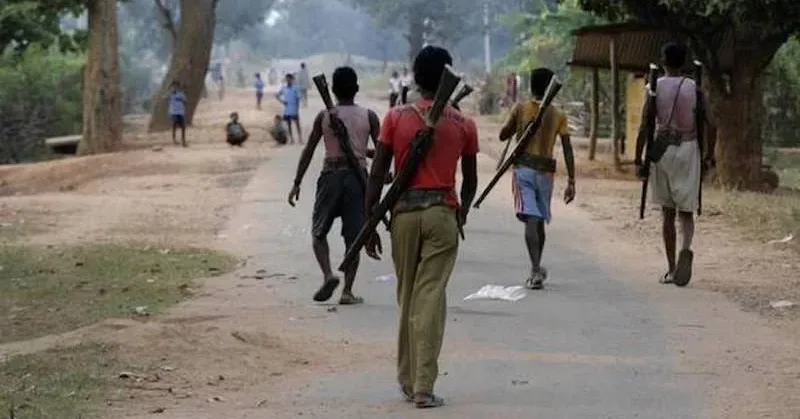
The state government in response to the attacks by Maoists appointed SPO’s or the Koya commandos, largely out of the safety concerns of the villagers who had taken shelter in camps. The SPO’s were given firearms for self defence and deployed to guard camps, gather intelligence and help in operations after training.
Opposition to Salwa Judum
The state’s appointments of the SPO’s in fight against the Naxals however did not bode well with a group of individuals who in turn approached the apex court, challenging the State’s move. The petitioners including historian like Ramchandra Guha and sociologist Nandini Sundar in their petition had argued that the move to appoint SPO’s was unconstitutional and violated fundamental rights. They further had alleged that the movement has led to human rights abuses.
The State responded by strongly backing the appointments, explaining that the SPO’s have not only thwarted numerous attacks on camps by Maoists but they have also proved to be instrumental in saving lives of jawans. The government further claimed that the appointments of the SPO’s were done on voluntary basis and priority were given to those who had suffered with the hands of Maoists. The state argued that the SPO’s were also given training and taught about human rights as well.
The apex court in its ruling given in 2011 however, disbanded the Salwa Judum. A bench of justices BS Reddy and SS Nijjar while delivering its verdict in Nandini Sundar vs State of Chhattisgarh noted that ‘It would be impossible for any reasonable person to accept that tribal youngster who may, or may not, have passed fifth standard, would possesses the necessary scholastic abilities to read, appreciate and understand the subjects being taught to them, and gain the appropriate skills to be engaged in counter-insurgency movements against the Maoists.’
The court’s verdict, as per some, was a major setback for Judum members who were left with no choice but to run for safety as they were now standing unarmed, identified and exposed to Maoist’s future attacks in days to come.
As the movement ended it had then reportedly forced a large chunk of tribal villagers [some estimate it to be around over a lakh] to move to other locations such as in bordering regions of Andhara Pradesh for their safety. This comes almost a year after violent activities carried out by the CPI[Maoist] in Bastar and other regions reached its prime [In 2010] as suggested by the government’s data.
The ultras on the other hand continued to target members, leaders of Salwa Judum even after the disbanding of the movement. Dozens of former members of the movement were haunted and killed brutally by Maoists.
This includes the brutal execution of senior Congress leader and a key figure of the Judum movement Mahendra Karma who along with other leaders were killed in the infamous Jhiram Ghati massacre in 2013.
The then Chhattisgarh government led by Chief Minister Raman Singh after the ban on Judum responded by passing the Chhattisgarh Auxiliary Armed Police Force Act, enabling the state to recruit tribal youths from the Maoist-affected districts and raise special units.
Government resolve to eradicate red terror
Almost a decade and a half since the disbanding of Salwa Judum, the on ground scenario in Bastar seems to be turning in favour of security forces who not only have managed to make significant inroads in Maoist’s bastion of Abujhmad and then in Kareguttala hills but have neutralised over four hundreds Maoist-insurgents in a span of 20 months.
The operations carried out by the forces in recent years were largely reported to be spearheaded by the personnel of District Reserve Guards [DRG], an all tribal unit of the police which has proved to be instrumental in containing the insurgency in Bastar’s Maoist affected areas, once identified as the de-facto liberated zone.
Experts opine that the State’s decision to raise special counter-insurgency units has turned out to be a game changer in containing the Naxal-insurgency in long turn given the fact that not only the local tribal youths were familiar with tackling the difficulties posed by the densely forested terrain, but they were also well aware of the tactics used by the Naxals. The inclusion of such units in counter-insurgency operations thus have led to notable successes in the ongoing war against the ‘red terror’ which the government has announced to eradicate by March next year.















Comments