





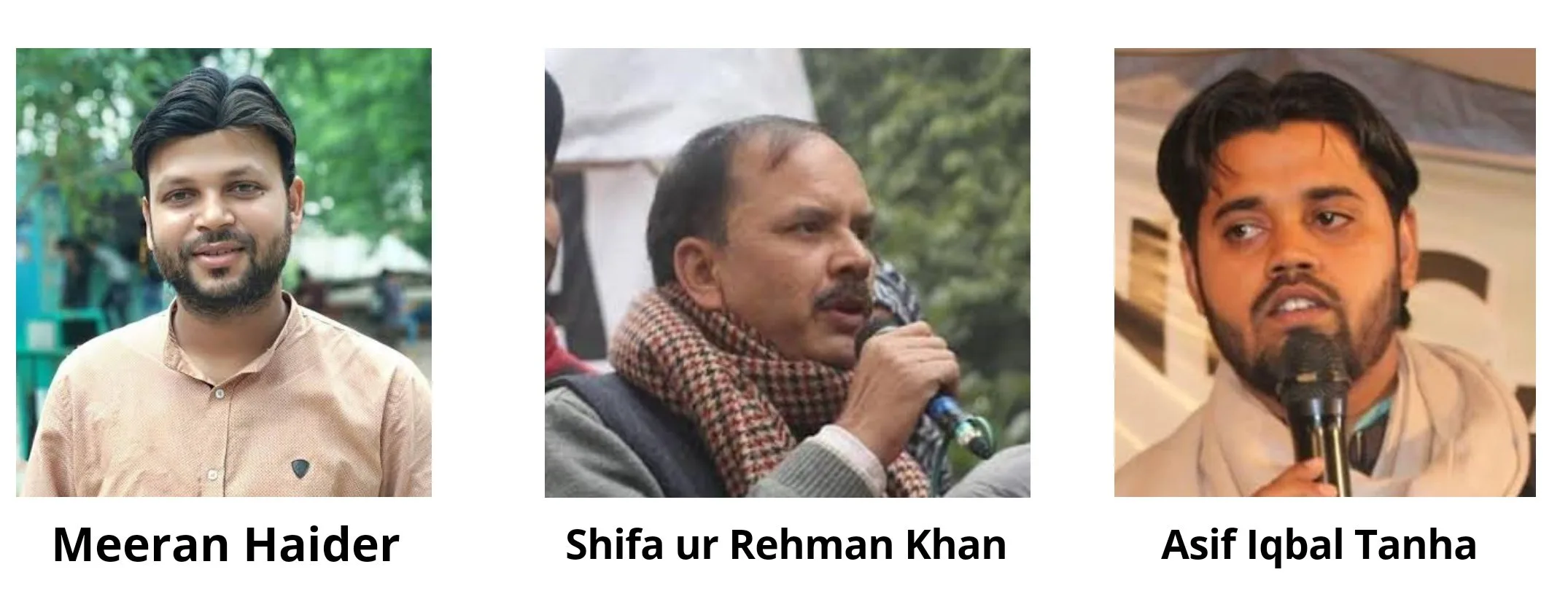
Delhi High Court on September 2, dismissed the bail pleas of Shifa-ur-Rehman, president of Jamia Millia Islamia’s Alumni Association (AAJMI), and Meeran Haider, a Jamia PhD scholar and youth leader of the Rashtriya Janata Dal (RJD). Both are accused in the larger conspiracy behind the 2020 anti-Hindu Delhi Riots.
The division bench of Justice Navin Chawla and Justice Shalinder Kaur noted that the allegations against the two, including fundraising, use of fake bills, and handling of protest sites, were far too serious to grant bail at this stage.
According to the prosecution, Rehman misused his position as AAJMI president to raise nearly Rs 8.90 lakh for sustaining anti-CAA protests that escalated into riots. Investigators claimed that fake bills were generated in AAJMI’s name to cover up the expenditure, and around Rs 7-8 lakh in cash was found from the office.
He was also accused of distributing money to ensure the participation of women and children at protest sites, in order to deter police action.
The court observed: “The possibility of misuse of position by the Appellant Shifa-ur-Rehman, being the President of AAJMI, cannot be ruled out at this stage.”
The High Court also took note of allegations against Meeran Haider, who was accused of spending Rs 2.33 lakh on managing protest sites and contributing funds to AAJMI, where multiple meetings of the Jamia Coordination Committee (JCC) were held.
He was also accused of delivering inflammatory speeches at the behest of co-accused Umar Khalid.
The bench said: “Appellant Meeran Haider is also alleged to have spent Rs 2.33 lakhs on riots and protest sites. They appear to have raised money in furtherance of the conspiracy.”
Rehman’s counsel argued that he was the sole earning member of his family, supporting an elderly mother, a disabled brother, two unmarried sisters, wife, and two children. Haider also sought bail on humanitarian grounds, claiming lack of evidence of direct involvement in violence.
The defence further argued that their alleged actions did not meet the legal threshold of a “terrorist act” under UAPA, and pointed out that other accused such as Asif Iqbal Tanha, Devangana Kalita, and Natasha Narwal had already been granted bail.
But the court held that the roles of Rehman and Haider were not comparable to those of others released, as they were key fundraisers and managers of protest sites.
The Delhi High Court noted that both Rehman and Haider played active roles in organising and financing protest sites, and were closely linked with other masterminds of the conspiracy.
On the issue of parity, the court stated: “The position and role of the present Appellants in the alleged conspiracy is placed differently than the co-accused persons in the entire sequence of events, allegedly being among the fundraisers in the conspiracy.”
The 2020 anti-Hindu Delhi Riots broke out between February 23 and 26 in Northeast Delhi, leaving 53 people dead and over 200 injured. Islamist mobs targeted Hindus under the pretext of anti-CAA protests. The violence claimed the lives of Delhi Police Head Constable Ratan Lal and Intelligence Bureau officer Ankit Sharma.
Delhi Police’s Special Cell registered FIR 59/2020, naming nearly 17 accused including Umar Khalid, Sharjeel Imam, Tahir Hussain, Khalid Saifi, Ishrat Jahan, and Gulfisha Fatima. Charges against the accused include provisions of the Unlawful Activities (Prevention) Act (UAPA) and the Indian Penal Code relating to conspiracy, rioting, and murder.
By rejecting the bail pleas of Shifa-ur-Rehman and Meeran Haider, the Delhi High Court reaffirmed that their roles in raising funds, generating fake bills, and managing protest sites placed them in a distinct and more serious category of accused. Their close association with the masterminds of the conspiracy, the court said, makes them ineligible for relief on grounds of parity or humanitarian consideration.














Comments