





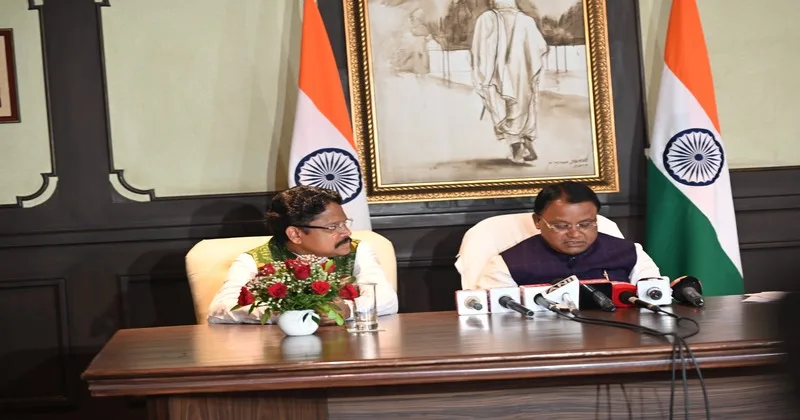
Bhubaneswar: Odisha Chief Minister Mohan Majhi on September 4 welcomed the landmark decisions of the GST Council, calling them a historic step that will directly uplift farmers, kendu leaf pluckers, small traders, and middle-class families in Odisha.
Addressing a press conference in New Delhi, Majhi emphasised that the reforms would accelerate the nation’s economic growth while also addressing the unique livelihood needs of Odisha, an agrarian state with lakhs of workers dependent on kendu leaves and agriculture.
Majhi said the reforms were aligned with Prime Minister Narendra Modi’s vision of a “Developed India by 2047” and stressed that comprehensive tax reforms were essential to achieving this ambitious goal. He noted that the Council’s decision to reduce GST rates on essential goods and services, along with exemptions for certain sectors, would relieve the financial burden on ordinary citizens, boost rural incomes, and create a transparent and inclusive economy.
One of the most significant announcements was the reduction of GST on kendu leaves from 18 percent to 5 percent. Majhi highlighted that kendu leaf plucking is a major livelihood source for lakhs of tribal and rural families in Odisha. He said the lower tax would increase sales, guarantee fair pricing, ensure timely payments from government agencies, and improve the economic conditions of workers in the unorganised sector. “For Odisha’s kendu leaf pluckers, this reform brings not just financial stability but also dignity of labour,” the Chief Minister remarked.
The Chief Minister also underscored the benefits for farmers, pointing out that Odisha, being predominantly agrarian, would gain considerably from reduced GST on agricultural inputs. The reforms cover equipment such as irrigation pumps, rollers, tractors, tyres, and raw materials for fertilizers. “This step will reduce input costs, ease financial burdens on farmers, and improve productivity, which in turn will strengthen national food security,” he said, adding that it would enhance rural incomes and contribute to the state’s agricultural growth.
Majhi further welcomed the exemption of health and life insurance services from GST, describing it as a much-needed relief for the middle class and low-income families. He said this measure would encourage families to seek insurance coverage, thereby improving healthcare access and security for millions. Additionally, the reduction of GST on life-saving medicines was described as a significant move that would make treatment more affordable, especially for the lower middle class.
The Chief Minister noted that rationalisation of GST slabs was another important outcome of the Council meeting. By eliminating the 12 percent and 28 percent categories and retaining only 5 percent and 18 per cent rates, the government has simplified the structure while making essential items cheaper. Majhi pointed out that over 150 daily-use items such as clothing and footwear below Rs 2,500, processed foods, dairy products, toothpaste, bicycles, umbrellas, shampoos, hair oils, shaving creams, packaged namkeen, and household goods would now be taxed at lower rates. Packaged paneer, pencils, erasers, maps, and atlases have been exempted altogether. “These reforms will reduce household expenses, particularly for middle- and lower-income families, and improve their standard of living,” Majhi said.
Other key reforms included the reduction of GST on packaged snacks and sweets from 18 percent to 5 percent, lowering of tax on cement from 28 per cent to 18 per cent to benefit the construction sector, and reduced tax on small cars, two-wheelers, and three-wheelers from 28 per cent to 18 per cent. Majhi observed that these measures would provide relief to homebuyers and the middle class, while also stimulating industrial growth.
The Chief Minister also hailed the simplification of start-up registration processes. The Council approved automatic approval of applications within three days for small entrepreneurs with a monthly tax liability below Rs 2.5 lakh. Majhi said this would encourage innovation, ease compliance for small businesses, and promote entrepreneurship in Odisha’s growing start-up ecosystem.
Odisha extends heartfelt gratitude to Hon’ble Prime Minister Shri @narendramodi Ji and Union Finance Minister Smt. @nsitharaman Ji for ushering in the historic Next-Generation GST reforms.
These reforms mark a transformative milestone for the nation , empowering MSMEs, creating… pic.twitter.com/WDXgJ8enuk
— Mohan Charan Majhi (@MohanMOdisha) September 3, 2025
He also welcomed the removal of Compensation Cess on most goods, except pan masala, bidis, and tobacco products, effective from September 22, 2025. Calling it a commendable decision, Majhi said it would reduce costs across industries and boost competitiveness.
Majhi concluded by reiterating Odisha’s full support for the reforms. “These historic decisions are not just about rationalising tax rates. They are about creating a free, transparent, and inclusive economy that uplifts farmers, strengthens small businesses, supports the middle class, and accelerates national growth. On behalf of the people of Odisha, I extend heartfelt gratitude to Union Finance Minister Nirmala Sitharaman and the GST Council for these transformative steps,” he said.
The new GST rates will come into effect from September 22, 2025, coinciding with the beginning of Navratri, marking a symbolic new chapter in India’s economic journey.















Comments