






Onam is the most important and widely celebrated festival in Kerala, observed with great enthusiasm by people of all religions. It marks the annual homecoming of the legendary King Mahabali, whose golden reign is remembered for peace, prosperity, and equality. Onam usually falls in August or September, during the Malayalam month of Chingam, and lasts for 10 days, ending with Thiruvonam, the most significant day.
Major Rituals and Traditions of Onam
Pookkalam (Floral Rangoli)
Pookkalam refers to the beautiful and colourful floral arrangements made on the ground at the entrance of homes during the 10 days of Onam. The word comes from “Poo” (flower) and “Kalam” (art or sketch).
It starts on the first day of Onam, known as Atham, with a small design and fewer flowers. With each passing day, the Pookkalam grows in size and complexity, ending with the grandest design on Thiruvonam, the main day.
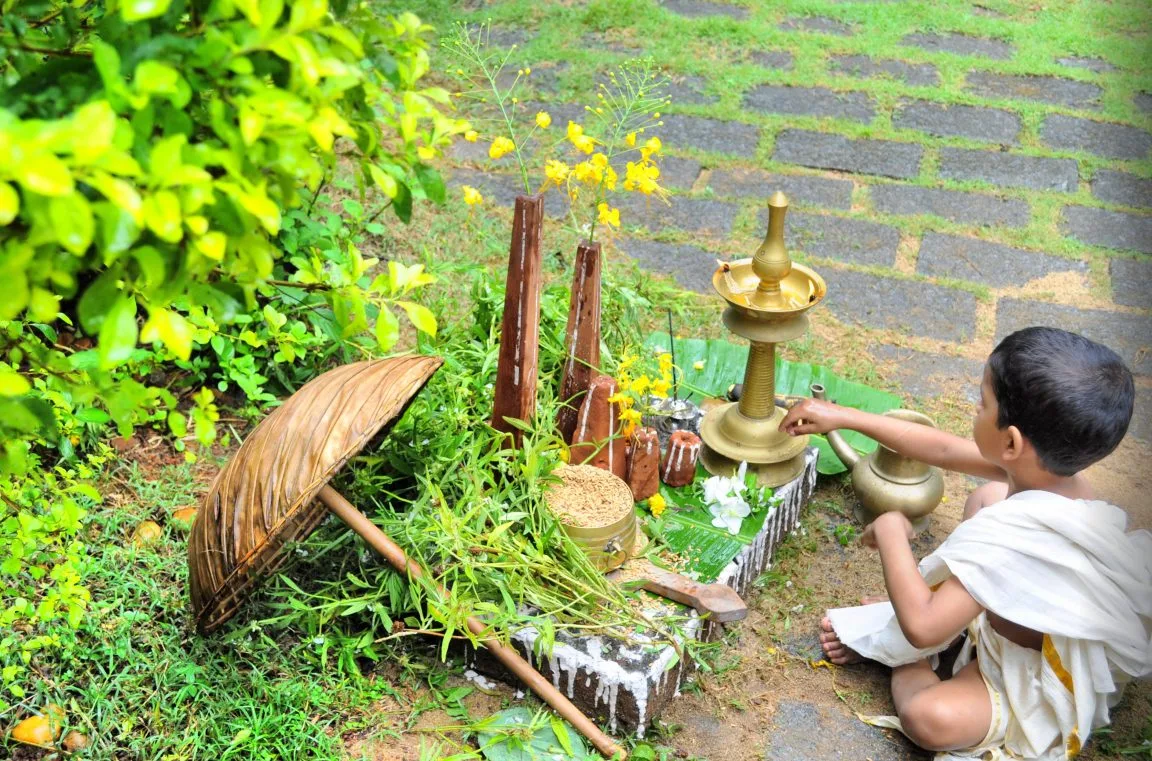
Flowers such as marigolds, hibiscus, thuba, tulsi, and chrysanthemums are commonly used. Making Pookkalam is a joyful, community activity involving family members, especially children and women. It symbolises prosperity, beauty, and is a gesture of welcoming King Mahabali into every home.
Onasadya (The Grand Feast)
Onasadya is a grand vegetarian feast prepared and served on Thiruvonam, the most important day of Onam. It is served traditionally on a fresh banana leaf and enjoyed sitting on the floor. The meal typically includes 20 to 30 dishes, showcasing the richness of Kerala’s traditional cuisine.
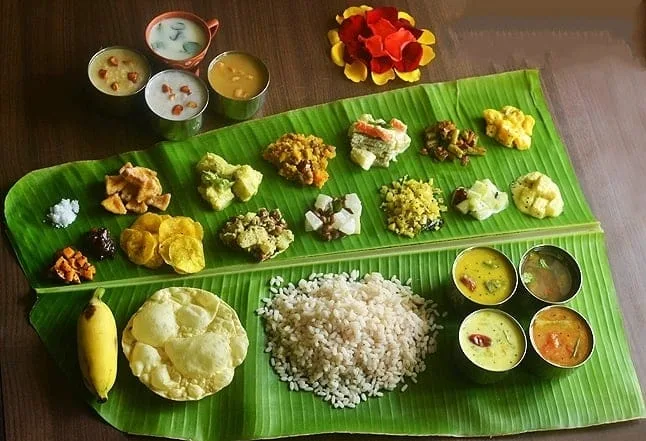 Common dishes include:
Rice (main item)
Sambar (vegetable stew with lentils)
Avial (mixed vegetables with coconut and yoghurt)
Thoran (stir-fried vegetable with coconut)
Erissery, Kaalan, Olan, Pachadi, Inji curry, Pickles
Papadam (crispy wafer), Banana chips, and Payasam (a sweet dessert made with milk, jaggery, or coconut milk). It’s not just about food, it reflects generosity, hospitality, and joy, and is often shared with neighbours and relatives.
Vallam Kali (Snake Boat Race)
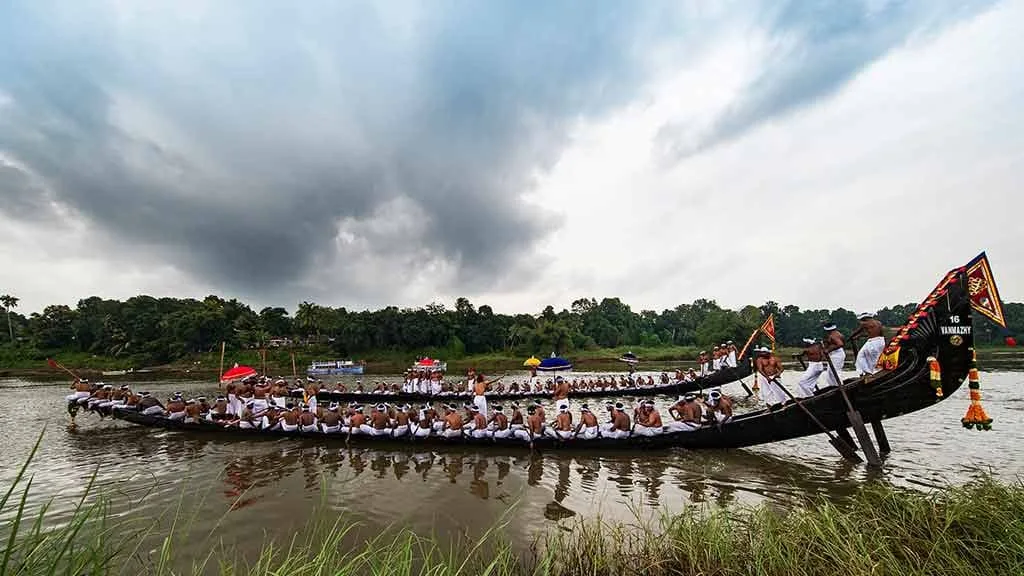
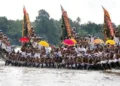
Vallam Kali, also known as the snake boat race, is one of the most thrilling and iconic events associated with Onam. Held mainly in the backwaters of Alappuzha, this race features long boats called “Chundan Vallams”, shaped like snake hoods. Each boat is about 100 feet long and carries around 100 rowers, all dressed in traditional attire. The rowers paddle in rhythm to energetic traditional songs and drumming, creating an electrifying atmosphere. The Nehru Trophy Boat Race, held during Onam, is the most famous of all. Vallam Kali represents team spirit, strength, tradition, and unity, and attracts thousands of tourists every year.
Pulikali (Tiger Dance)
Pulikali, meaning ‘Play of the Tigers’, is a colourful folk art performed mainly in Thrissur during Onam. Performers paint themselves as tigers and leopards, using bright yellow, black, and red body paint. With tiger-like movements and growls, they dance through the streets to the beat of traditional drums such as Chenda and Thakil. It represents the wild energy, bravery, and excitement of the Onam celebrations.
Pulikali is not just entertainment, it’s a centuries-old tradition showcasing Kerala’s vibrant folk culture.
Kaikottikali (Thiruvathira Kali)
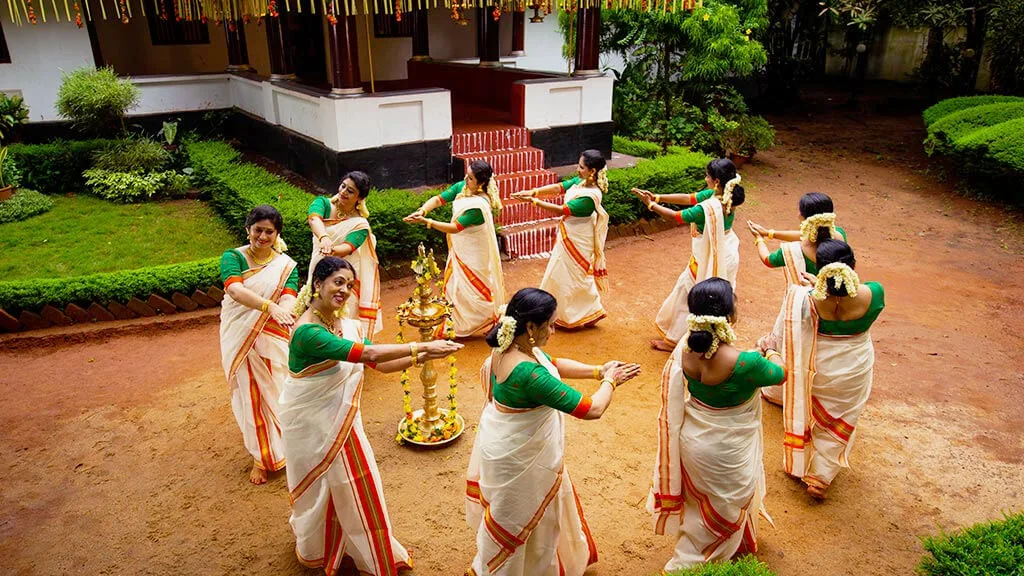
Kaikottikali is a traditional group dance performed by women during Onam, especially around the Pookkalam. Women wear Kasavu sarees (white or cream-coloured sarees with golden borders) and decorate their hair with jasmine flowers. They dance in a circular formation, clapping hands rhythmically while singing traditional songs. The dance is graceful and synchronised, often portraying stories from Malayalam folklore and belief. Kaikottikali symbolises joy, unity, femininity, and cultural pride.
Onakkodi (New Clothes)
Onakkodi refers to the tradition of wearing new clothes during the Onam festival. It is customary for families to buy new outfits for every member, usually worn on Thiruvonam day. Women typically wear Kasavu sarees, and men wear Mundu or Dhoti. Receiving or gifting Onakkodi is a sign of renewal, prosperity, and blessings for the year ahead. In many families, elders present Onakkodi to younger members as a gesture of love.
Mandir Visits
Visiting Mandirs is an important spiritual aspect of the Onam celebration. The most prominent Mandir associated with Onam is the Thrikkakara Mandir near Kochi, dedicated to Bhagwan Vamana, the fifth avatar of Vishnu. It is believed to be the capital of King Mahabali. Special pujas, processions, and cultural programs are held during the 10-day celebration. Devotees also offer prayers at local mandirs and participate in charitable activities. These rituals reflect gratitude, spiritual reflection, and the religious significance of Onam.
Thiruvonam – The main day of Onam
Thiruvonam, the 10th day of the festival, is the most sacred and widely celebrated. Key highlights include:
Early Morning Rituals: People wake up early, clean their homes, take a bath, and wear new clothes.
Pookkalam Completion: The most elaborate floral design is made on this day.
Onasadya Feast: Families and friends gather for the grand feast.
Cultural Programs: Traditional games like Uriyadi, music, dances, and skits are performed in communities and schools.
Prayers and Blessings: Many visit temples or conduct small rituals at home to seek blessings.
Onam is more than just a festival, it is a celebration of Kerala’s traditions, values, and spirit of unity. It reflects the harmony of culture and nature, family and community. Whether it’s the joyful dances, delicious food, or the spiritual meaning behind King Mahabali’s return, Onam continues to unite people in a shared celebration of love, equality, and abundance.











Comments