





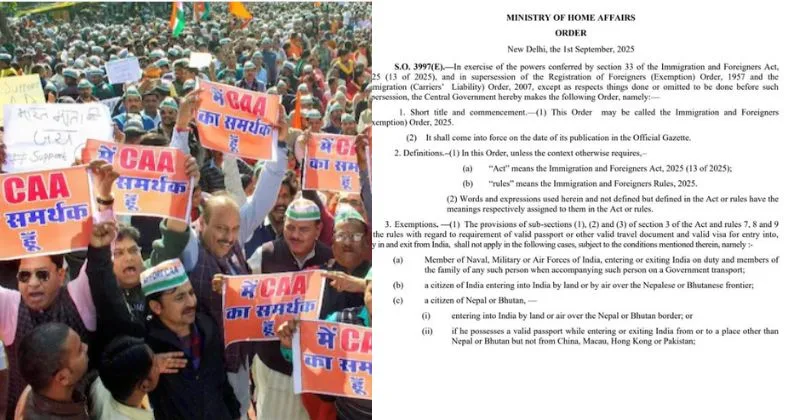
NEW DELHI – In a significant move offering relief to thousands of religious minorities, the Union Home Ministry has extended the cut-off date for entry into India under the Citizenship (Amendment) Act (CAA) and eased stay norms for refugees from Afghanistan, Bangladesh, and Pakistan. The new policy, issued under the recently enacted Immigration and Foreigners Act, 2025, allows Hindus, Sikhs, Buddhists, Jains, Parsis, and Christians who entered India on or before December 31, 2024, to stay in the country even without valid travel documents.
This decision effectively extends the protective umbrella of the CAA, which came into force in March of the previous year. While the CAA provided a path to citizenship for these minority groups who had migrated to India on or before December 31, 2014, the latest order addresses the legal uncertainty faced by those who arrived after this date. The new directive exempts these individuals from penalties for immigration violations, regardless of whether their passports or other travel documents were valid or had expired upon entry.
This policy comes after a long-standing appeal from various refugee associations. For instance, a refugee body representing groups from Bangladesh had urged the government to extend the cut-off date from 2014 to 2024, citing the continued influx of persecuted minorities. The new measure is expected to particularly benefit a large number of Hindu refugees from Pakistan who have been living in India without a clear legal status.
According to officials, the order particularly benefits Hindu and Sikh refugees from Pakistan who settled in border states like Rajasthan, Gujarat, and Punjab, as well as Afghan Sikhs and Hindus living in Delhi and other cities.
Refugee rights groups have welcomed the move, calling it a step toward humanitarian protection, though they also emphasized the need for clarity on whether these exemptions will eventually lead to citizenship.
The Immigration and Foreigners Act, 2025 consolidates and repeals previous legislations. While the new law generally introduces stricter penalties for those using forged documents or overstaying their visas, the Home Ministry’s exemption order creates a specific carve-out for these persecuted minorities. This highlights the government’s dual approach: to tighten general immigration controls while providing a humanitarian pathway for specific religious groups.
The government maintains that the CAA and its associated policies are a humanitarian gesture towardS communities facing religious persecution in their home countries.
















Comments