





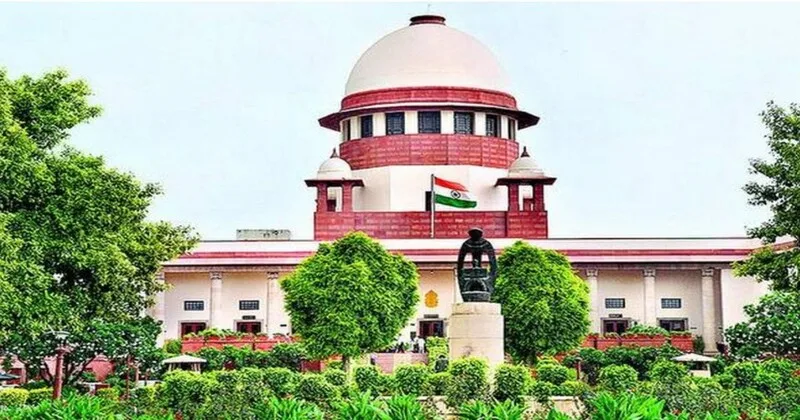
A five-judge Constitution Bench of the Supreme Court on September 2, held that instances of delay by governors or the President in granting assent to bills cannot, by themselves, justify the imposition of a fixed timeline. The bench, headed by Chief Justice of India (CJI) BR Gavai, stressed that the apex court’s role is to interpret the constitutional provisions, not adjudicate on state-specific disputes.
The remarks came during the sixth day of hearings on a Presidential reference seeking clarity on whether courts can direct the imposition of timelines under the Constitution. The bench also comprises Justices Surya Kant, Vikram Nath, PS Narasimha, and AS Chandurkar.
“The question is whether a general timeline (for governors and President) can be given under Article 142 of the Constitution,” the CJI observed, noting that Article 142 empowers the Supreme Court to pass extraordinary directions to ensure complete justice.
Advocate Abhishek Manu Singhvi, representing Tamil Nadu, elaborated on scenarios where bills “fall through.” He explained that if a governor, while exercising powers under Article 200, returns a bill to the assembly for reconsideration and the assembly does not resend it, the bill lapses.
However, Singhvi cautioned against governors withholding assent without returning bills, which he argued could indefinitely stall legislation. “Case-to-case interventions will not solve the problem,” Singhvi stressed, urging the court to consider a general timeline framework under Articles 200 and 201.
He warned that without limits, governors could effectively exercise a “pocket veto,” rendering legislatures powerless. “A delay of three to five years defeats the legislative process itself,” Singhvi said.
Solicitor General Tushar Mehta, appearing for the Centre, objected to reliance on state-specific delays, particularly Andhra Pradesh. “Since Independence, the Constitution has been taken on a joyride in some states. If we travel down that dirty path, we will have to place the full record before this court,” Mehta argued.
CJI Gavai, however, clarified: “We are not going into individual instances whether it’s Andhra Pradesh, Telangana, or Karnataka. We will only interpret the provisions of the Constitution. Nothing else.”
Advocate Kapil Sibal, representing West Bengal, argued that governors withholding assent undermines democracy itself.
“For the first time in history, this court would be asked to hold that the will of the people need not be implemented because a governor withholds assent, an unacceptable proposition,” Sibal said.
Sibal added that treating assent as discretionary would amount to a “breakdown of constitutional machinery.” He stressed that under Article 200, granting assent is a constitutional duty, not a matter of personal choice.
The hearing will resume on September 3. The Presidential reference, made by President Droupadi Murmu in May under Article 143(1), seeks clarity on whether the Supreme Court can mandate timelines for the President and governors in dealing with bills passed by state assemblies.
















Comments