





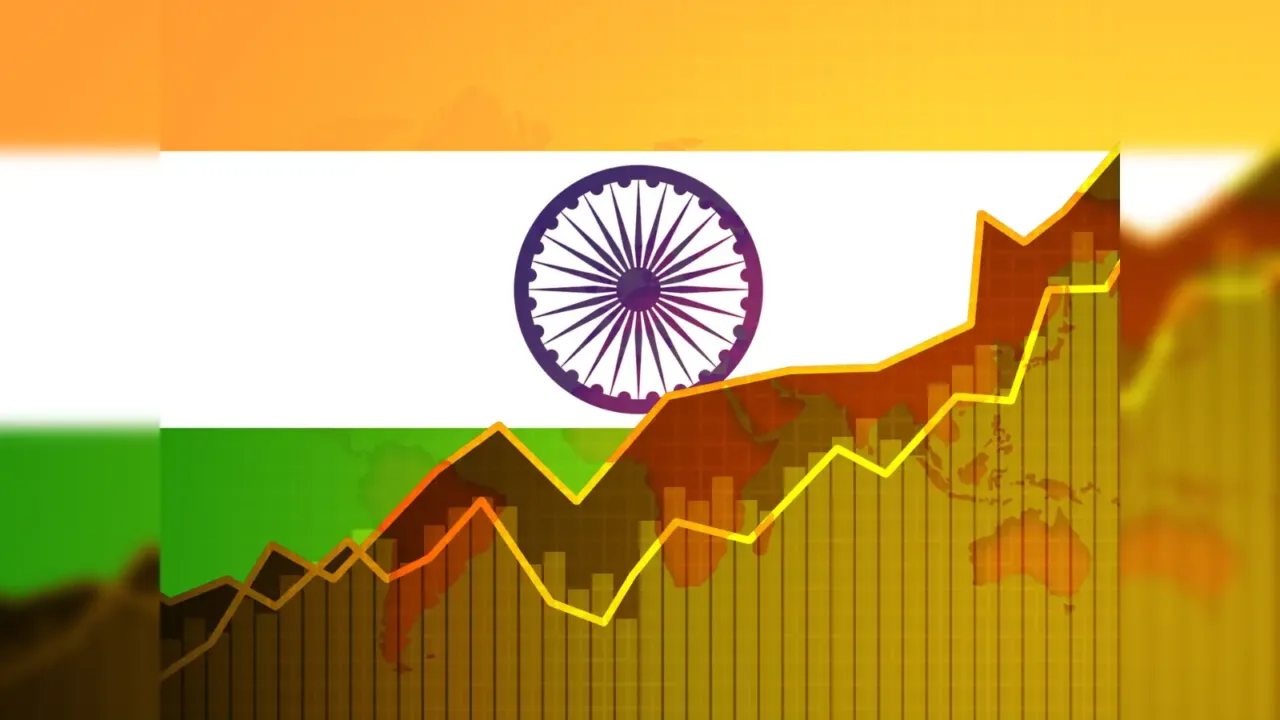
Indian economy expanded at a robust pace of 7.8 per cent in the April-June quarter of the current financial year (FY26), according to data released by the Ministry of Statistics on Friday. The figure is being seen as a major boost to the country’s growth story, as it represents not only a sharp acceleration from the 6.5 per cent recorded in the same quarter of 2024-25, but also a performance that has beaten most projections by economists. With this, India has once again reinforced its position as the fastest-growing major economy in the world, even at a time when most advanced and emerging economies are battling sluggish demand and financial uncertainties.
A strong recovery in agriculture acted as a key driver of growth. The sector expanded by 3.7 per cent, which is more than double the 1.5 per cent growth recorded a year earlier, when erratic monsoons had dampened farm output and rural demand. Analysts noted that better rainfall this year, coupled with improved sowing of key crops, has revived farm productivity. Since agriculture continues to employ a large share of India’s workforce, its revival has had a positive spillover effect on rural incomes and consumption patterns.
The manufacturing sector also played an important role in this momentum, recording a growth of 7.7 per cent. This reflects not just improved industrial production but also higher demand for goods ranging from automobiles and electronics to cement and steel. Construction, which is a labour-intensive sector with a direct link to infrastructure projects, expanded by 7.6 per cent, highlighting renewed private investment and government-driven infrastructure activity. Both sectors together have created a more optimistic outlook for job creation and wage growth.
The services sector, which makes up the largest share of the Indian economy, surged by 9.3 per cent, significantly higher than the 6.8 per cent seen in the same period last year. Analysts suggest that this expansion reflects robust growth in trade, real estate, and financial services, supported by rising urban consumption and better employment conditions in cities. In particular, the IT and digital services industries, along with hospitality and retail, have seen notable gains as consumer demand continues to expand.
Investment and public spending fuel growth
The data also showed Gross Fixed Capital Formation (GFCF), an indicator of investment, rising by 7.8 per cent, compared to 6.7 per cent in the previous year. This reflects stronger private sector investment and higher capital spending by the government. Notably, government consumption expenditure jumped by 9.7 per cent in nominal terms, more than double the 4 per cent growth recorded in the same quarter of FY25.
Infrastructure spending has been a major catalyst for this expansion. Large-scale projects on highways, railways, ports, and airports have not only boosted urban demand but also spurred growth in rural regions through job creation and better connectivity. While private final consumption grew at a relatively slower pace than last year, economists pointed out that rising rural demand, combined with government-led investments, has compensated for the moderation.
RBI and IMF remain optimistic
The April-June growth figure has exceeded the Reserve Bank of India’s (RBI) earlier forecast of 6.5 per cent. Despite global headwinds such as trade disruptions, high energy prices, and tariff tensions, the central bank has maintained its GDP growth projection for FY26 at 6.5 per cent, citing supportive domestic conditions and structural reforms.
RBI Governor Sanjay Malhotra expressed confidence in sustaining the momentum: “Above-normal southwest monsoon, easing inflation, rising capacity utilisation and favourable financial conditions are expected to sustain growth. Supportive monetary, regulatory, and fiscal policies, including robust capital expenditure, should further boost demand.”
International agencies have echoed this optimism. The International Monetary Fund (IMF) recently projected India as the only major economy expected to sustain growth above 6 per cent in FY26, even as global growth slows due to geopolitical tensions, slowing trade, and supply chain disruptions. India’s resilience, according to the IMF, lies in its strong domestic market, government reforms, and its increasing role as a hub for digital innovation and manufacturing.
Looking ahead
India’s growth trajectory remains firmly on track, powered by a combination of services expansion, public investment, and resilient agriculture. While challenges such as volatile crude oil prices, global trade tensions, and uneven export performance continue to pose risks, the country’s domestic consumption base and ongoing infrastructure push are expected to keep the momentum steady in the coming quarters.
For policymakers, the April-June performance provides renewed confidence to maintain the balance between fiscal discipline and growth-oriented spending. For citizens, especially in rural and semi-urban areas, the visible impact of better farm output, rising job opportunities in construction, and enhanced services activity could translate into higher incomes and improved quality of life.
With FY26 beginning on such a strong note, India is set not only to outperform global peers but also to strengthen its economic foundations for the long term, moving closer to the government’s vision of becoming a $5 trillion economy in the near future.













Comments