





In the long march of civilizations, language has been the first and foremost marker of identity. It is not merely a means to convey words, but the vessel that carries people’s memory, their values, their struggles, and their dreams. For Bharat, with its civilizational antiquity and spiritual depth, languages are not separate streams but sacred tributaries that merge into the vast river of national culture. To declare that all Bharatiya languages are national languages is, therefore, not a slogan but a truth born out of history, a truth that affirms our unity while celebrating our diversity.
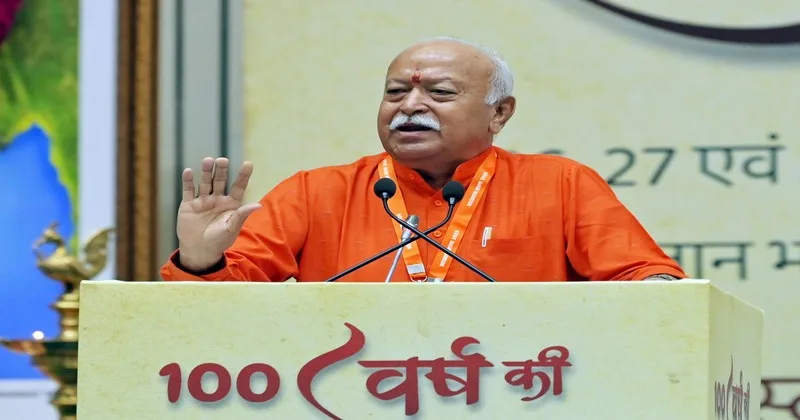
When Shri Mohan Bhagwat Ji, Sarsanghchalak of the Rashtriya Swayamsevak Sangh, emphasized that “All Bharatiya languages are national languages”, he was not merely making a linguistic observation , he was reaffirming a civilizational truth.
Language in Bharat has never been a mere instrument of speech. It has been a carrier of dharma, culture, art, philosophy and national identity. Each of our languages, whether it is Sanskrit, Tamil, Kannada, Assamese, Gujarati, Hindi, Kashmiri, or any other, language holds within it centuries of wisdom, literature, poetry and collective memory. Together, they form the unbroken flow of Bharat’s cultural journey.
Language: The shaper of civilization
Civilizations survive not only through land and power but through the continuity of language. The Vedas, the Upanishads, the teachings of Buddha, the poetry of saints like Kabir and Thiruvalluvar, the resistance songs of freedom fighters, all were nurtured in the lap of Bharatiya languages. It is through them that values of tolerance, unity, devotion and self-respect were transmitted generation after generation.
When we say that every Bharatiya language is a rashtra bhasha (national language), we are acknowledging that the unity of Bharat is not uniformity, but harmony in diversity. It is a cultural orchestra, where each language is a note in the grand raga of civilization.
The question of a link language
In practical matters of governance, education and communication, it is natural that a link language is needed. But such a link must arise from within Bharat itself, not be imposed from outside. To rely on a foreign tongue is to weaken our cultural roots, while to adopt an Indian language for national communication is to strengthen the bonds of self-confidence and swadeshi pride.
RSS’s vision: Language as integration, not division
The Rashtriya Swayamsevak Sangh has consistently held that no Bharatiya language is inferior to another. Each is a national language, each is a mother’s tongue and each deserves equal respect. Language should never be a source of conflict, because our civilization teaches us that plurality is strength, not weakness.
This vision of the Sangh is rooted in the belief that Bharat’s destiny will not be fulfilled through mere material growth, but through cultural resurgence. Language is the sacred medium of that resurgence.
As Bharat stands on the threshold of a new era, it is not power or prosperity alone that will define its strength, but the reaffirmation of its cultural soul. Our languages are the lifeblood of that soul, each one a thread in the sacred fabric of national identity. To honor every Bharatiya language as a national language is to honor Bharat itself.
As the Rashtriya Swayamsevak Sangh enters its Shatabdi Varsh, it once again reasserts this timeless commitment: Bharat is, and shall ever remain, one cultural and spiritual civilization, nourished by many tongues yet united by one soul.















Comments