





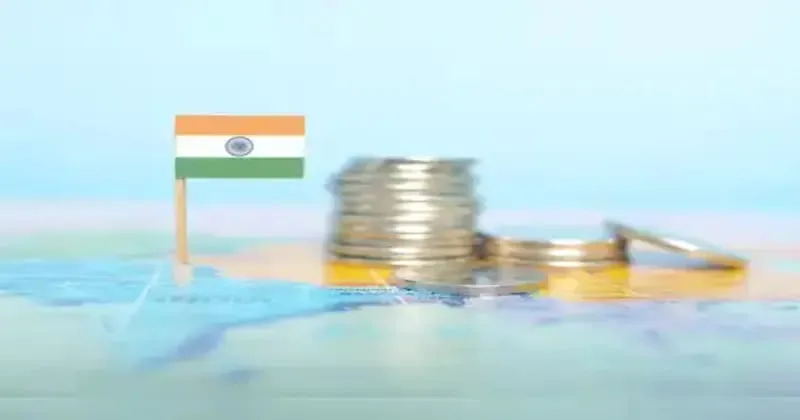
India is currently at a critical juncture in its developmental history. While the entire world is in the grip of recession and low economic growth, the Indian economy is performing best with foreign exchange reserves of 700 billion USD and a GDP growth rate of about 6.8 per cent per annum. Looking beyond these flat and drab-looking statistics, the Indian economic landscape is indicating an unprecedented stability, promise and positive outlook marked by technological progress, an efficient banking system with banks flush with funds, proactive and dynamic policy making and a well-discernible resilience in the wake of upheavals that are telling upon economies of almost all global nations. Indi’s demographic advantage in the form of a median age of just about 28.4 years gives it a unique position for rapid ascent.
The upheavals talked of above are also quite unprecedented in the global economic history of the past 107 years since the end of first world war. In an economically connected world, wars impact negatively not only the economies of warring countries but also the war-supporting countries. In the war between Ukraine and Russia, have seen a sharp adverse impact on the economies of the US, UK, France, Germany and Poland, who supplied arms and ammunition to Ukraine, not to talk of the supply and replenishment of Russian arms stock by China, Iran and North Korea.
During the course of this protracted war, we have also witnessed major conflagrations between Israel and Hamas, Israel and Iran and the short but serious skirmish between India and Pakistan. All these wars have squeezed the economies of countries directly or indirectly connected with these wars and also affected the economies of various other countries, which are heavily interconnected and interdependent in today’s world.
The world has witnessed the horrors of war and the terrible economic fallouts of war. These fallouts are evidenced in the great economic depression of the 1920s. Wars will always be followed by major periods of economic recession, and India needs to be prepared to chart out its way successfully to fast forward in these circumstances.
What India needs to do at the present juncture is take the following steps
Concentrate on indigenous R&D in all areas. The outlay on R&D in various sectors and domains of our industry may be enhanced to a mandatory minimum of 10 per cent of the net profits generated by business entities. Our R&D efforts should draw liberally from our rich scientific literature of yore.
The push for Make in India will need more sops and concessions for the MSME sector than the existing ones at present. MSME sector holds the key to boost-up of indigenous manufacturing.
Passage of the Land Acquisition Bill is still hanging in the balance after the efforts made by the Modi Government to pass it in 2015. The Bill could not pass because of severe opposition to it by MPs of the Opposition benches due to reasons that were anything but convincing or driven by true national interest. Passage of the bill was and remains crucial to Make in India.
Explore and create fresh international markets and Clients in South East Asia, Africa, Europe and Latin America for Indian products, particularly those adversely affected by the controversial Trump tariffs.
Make Free Trade Agreements with other European countries similar to the FTA done with the UK. India is the natural food basket of the world. Its potential in the area of processed, value-added foods and agricultural products needs to be tapped in a much bigger way.
Allocate a substantial budget for tapping oil and gas in the sea basin off the Andaman and Nicobar Islands, where initial exploration has revealed a treasure trove of almost 20 trillion USD worth of oil, which is sufficient to boost India’s economy fourfold.
Give impetus to the development of Hydrogen fuel cell technology, organic agriculture, aquaculture and the indigenous system of medicine. We need to allocate more funds to research in these areas as they hold tremendous potential for our economic growth on environment friendly lines.
Urgently prepare a plan for bureaucratic and administrative reforms. It is because of our archaic bureaucratic architecture that we have failed to give the desired push to the 100 Smart Cities work, which was blueprinted after so much fanfare in 2014-15.
Technology development is the economic watchword now. India is a gifted country due to its excellent agro-climatic conditions, rich alluvial soil, strategic geographical location, abundant mineral resources and largest pool of technocrats and possesses a natural advantage and edge over other countries. With the steps suggested above, we can be sure of India becoming the economic powerhouse of the world sooner than later.













Comments