






Prime Minister Narendra Modi has landed in Tianjin, China to witness the high-stake 25th SCO summit. Curtain rises for the summit amidst soaring geopolitical fissures and economic tensions. The tariff tussle rolled out by the US President Donald Trump is dicing out the global economic order and multilateral trade relations. The wars in West Asia and Europe are unable to seek a reasonable conclusion. Meanwhile, India is repeatedly being the victim of terrorism and extremist atrocities. The SCO summit summoned in China at such a critical scenario, when the geopolitical chessboard is trembling with numerous ruptures, global attention has been invariably tilted towards Tianjin in order to see what will be the answer of the SCO to these strategic riddles!
Most importantly, the summit can be deemed as a litmus test to see whether the multilateral forum abides by its core and founding principles of counter-terrorism, regional peace and security, in the wake of latest Pahalgam terror attack in Kashmir and India’s unequivocal anti-terror stance in the previous SCO meets held at China as a run up to the summit.
SCO: A forum to echo regional security and solidarity
Shanghai Cooperation Organisation(SCO) was established in the year 1996 in its preceding form of ‘Shanghai Five’ comprising Kazakhstan, China, Kyrgyzstan, Russia and Tajikistan. It was upgraded as SCO in the year 2001 with the inclusion of Uzbekistan. Since then, it is working as a multilateral security, political and economic alliance. The maiden summit was held in Shanghai, China in the year 2001. India and Pakistan were officially inducted into the forum in the year 2017 and Iran joined the coalition in the year 2021. It also has various nations in the observer status and as dialogue partners including Belarus, Magnolia, Armenia, Azerbaijan, Sri Lanka, Egypt, Saudi Arabia, Nepal etc. SCO aims to operate in the spirit of mutual trust, mutual benefit, respect to cultural diversity and leverage the development of the region with mutual cooperation in the domain of economics, trade, tourism, education, infrastructure etc.
The highlight of the SCO is that, its core objective apparently reiterates the commitment to combat regional terrorism, religious extremist and separatist activities thereby strive to establish regional peace, stability and security. In this direction, SCO adds significance to India’s strategic and security priorities. In the backdrop of the latest inhumane Pahalgam terror attack in Kashmir, the current SCO summit is of high vitality for India to take a vocal stand against terrorism and extremism and seek global approval in India’s efforts against terror atrocities. In the previous SCO meets held at China, Defence Minister Rajnath Singh, EAM Dr. S. Jaishankar and NSA Ajit Doval had taken a firm stance against terrorism. Thus, the SCO summit is a litmus test to to know the credibility of SCO and backing of the global nations in India’s counter-terrorism efforts.
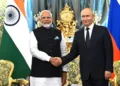
Prime Minister Modi is also anticipated to hold bilateral meetings with the Chinese President Xi Jinping and Russian President Vladimir Putin. All these talks, gain huge strategic significance amidst US President Donald Trump’s irrational tariffs on India for purchasing the Russian oil. Modi-Xi meeting will also be a significant propellant in the path of gradual restoration of Sino-India relations that has gained huge momentum in the recent days, post the Galwan clash of 2020 when the bilateral relations had hit an all-time low. These geopolitical developments in Tianjin might also irk US President Donald Trump. With this background, the strategic and political world, awaits for the solid statements emanating from Tianjin and to decipher how does the SCO script the strategic discourses of the fragile world order.












Comments