





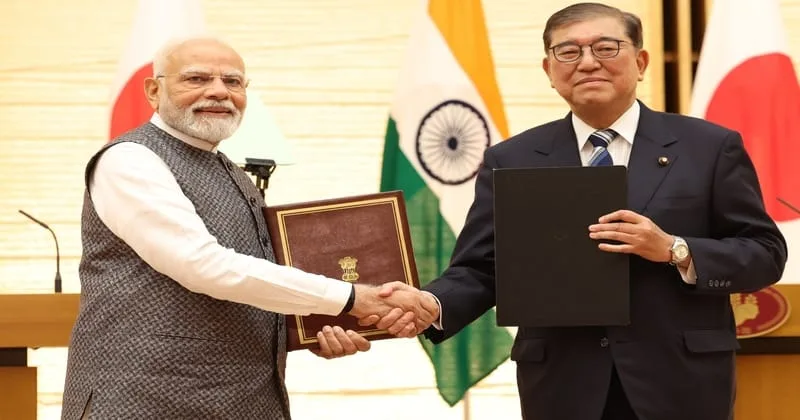
Amidst growing US pressure on trade and energy policies, India is strengthening diplomatic ties with key global partners. Prime Minister Narendra Modi’s recent visit to Japan has been hailed as a major success, paving the way for enhanced trade and strategic cooperation between the two nations.
The visit primarily focused on boosting economic and market collaboration. As part of these efforts, Modi will also travel to China shortly, signaling India’s intent to advance bilateral ties with a long-term strategic outlook grounded in mutual respect and shared interests. Speaking to Japanese media, Modi reiterated that India seeks to strengthen its relationship with China.
Modi is scheduled to arrive in Tianjin this evening for the Shanghai Cooperation Organization (SCO) Summit. His meeting with Chinese President Xi Jinping is set for tomorrow at 12 noon (Chinese time). This marks Modi’s first visit to China since the Galwan clash, and discussions are expected to include confidence-building measures such as the resumption of air services. Modi will also hold talks with Russian President Vladimir Putin, where US pressure on India’s oil imports from Russia will likely be a key agenda item.
Reached Sendai. Travelled with PM Ishiba to this city on the Shinkansen.@shigeruishiba pic.twitter.com/qBc4bU1Pdt
— Narendra Modi (@narendramodi) August 30, 2025
Modi’s visit to Japan is being described as historic. Reports indicate that it could attract private investments worth 10 trillion yen (approximately ₹5.99 lakh crore) into India over the next decade. The two nations agreed to deepen their strategic partnership across eight critical sectors, economic cooperation, economic security, visa facilitation, environmental sustainability, technology, innovation, health, and defense, for the next ten years.
A security cooperation framework was also outlined to jointly tackle global security challenges. In a significant development, Japan’s space agency JAXA will partner with ISRO on the Chandrayaan-5 mission, aimed at advancing research on the lunar surface and environment. India stands to benefit from Japan’s advanced technological capabilities and research expertise in this collaboration.
During the 15th India-Japan Annual Summit, Modi met Japanese Prime Minister Shigeru Ishiba. Modi, who arrived in Tokyo on Friday morning, was greeted with a grand welcome. Traditional Japanese dance performances and folk songs were staged, while members of the Indian diaspora showcased cultural art forms such as Mohiniyattam, Kathak, Bharatanatyam, and Odissi.
Over his two-day visit, Modi toured four factories, including the prototype manufacturing plant for the E-10 Shinkansen bullet train that India plans to procure. Additionally, an action plan was launched to facilitate the exchange of five lakh workers over the next five years, with Japan committing to issue visas to 50,000 Indian skilled professionals in various sectors.
The visit comes as part of India’s broader strategy to identify new markets amid the ongoing U.S. trade war, which has affected Indian exports. Analysts also view this initiative as an attempt to shape a new economic bloc in Asia by aligning with Japan and China. Reports suggest India assured Japanese leaders that closer cooperation with China would not undermine the Quad alliance comprising India, Japan, the U.S., and Australia.










Comments