





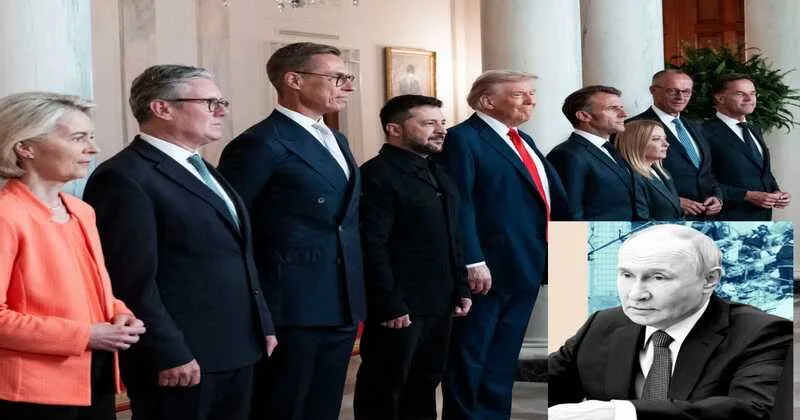
Russia carried out a fresh attack on the British Council building in the Ukrainian capital, Kiev, in what is widely viewed by the west is a clear message of hostility from President Vladimir Putin. The assault targeted both the British Council premises and the headquarters of the European Union mission in Kiev.
Nineteen people were killed in the strike, which was carried out using drones and hypersonic missiles. Among the dead were four children. The attack is seen as a significant blow to efforts aimed at peace negotiations.
The two British Council buildings in Kiev were completely destroyed. Footage of the missile strikes, which took place in the early hours of the morning, has been released. Former Conservative MP Bob Seeley, a foreign affairs expert, described the attack on the British Council facility as a deliberate act of aggression by the Putin regime.
The British Council office included a training centre for young people, with classes usually starting at 9 a.m. Officials noted that if the attack had occurred later in the day, the casualties would have been far higher. Russian citizens have been barred from working with the British Council since June, as Russia accuses the organisation of spying on behalf of the United Kingdom.
British Prime Minister Keir Starmer condemned Russian President Vladimir Putin for destroying prospects for peace. Although no European Union staff were injured in the incident, a security officer stationed at the British Council building sustained injuries.
The British Council Building in Kyiv has been destroyed by a russian missile. It’s regularly full of British government officials
russia is at war with the entire west.
If you live in the UK and think Putin wants peace then it’s time to grow up pic.twitter.com/G3m9PRuDTw
— Caolan (@CaolanReports) August 28, 2025
According to reports, Russia deployed 629 drones and missiles in the operation. Despite the devastation, the British Council has vowed to continue supporting Ukraine’s ties.
The attack marks another step in the long-standing tensions between Russia and the British Council. Over the past 17 years, the Putin administration has taken several measures against the organisation. In 2007, Russian authorities ordered the closure of its offices in St. Petersburg and Yekaterinburg, citing tax evasion. In 2018, the British Council was ordered to cease all operations in Russia. Earlier this year, in June, Putin declared the British Council an “unfriendly” organisation.
In response to the latest attack, the Russian ambassador to Brussels was summoned for an in-person meeting. Ukrainian President Volodymyr Zelensky strongly condemned the strikes, describing them as “a heinous and deliberate act of civilian murder.” He urged China and Hungary to adopt a tougher stance against Moscow.
Countries across the globe have expressed sharp criticism of Russia over the incident, which occurred as diplomatic efforts were underway to promote peace. Ukrainian President Zelensky was the first to respond, accusing Russia of opting for missile strikes instead of dialogue.
The United States, United Kingdom, and France have all condemned the attack. UK Prime Minister Keir Starmer accused Putin of undermining peace initiatives, adding that the Russian ambassador to the UK would be summoned to the Foreign Office to face a formal protest. The United States criticised Russia for showing no genuine interest in peace talks, while France described the attack as an unjustifiable act carried out during ongoing negotiations.
The Ukrainian military also issued a strong statement, accusing Russia of deliberately targeting 13 different locations, including the capital city. Military officials confirmed that both the European Union Delegation Office and the British Council Office in Kiev suffered damage in the strikes.
Germany moves to reinstate conscription amid rising Russian threat
Meanwhile, in a separate development, Germany announced plans to reintroduce compulsory military service for the first time in more than a decade. The decision comes amid growing fears that Russia could extend its aggression to NATO member states.
Chancellor Friedrich Merz stated on Wednesday that if voluntary enlistment does not meet the required numbers, the government would consider mandatory conscription. The proposal received cabinet approval the same day. Germany had abolished compulsory military service in 2011.
The move reflects mounting pressure on Berlin to strengthen its defences. Previous warnings have suggested that Russia may attempt to encroach on NATO territory in the coming years. Under the new plan, men turning 18 will be required to complete a health and readiness questionnaire for military service within the next year. Women will only need to do so if they wish to volunteer.
From 2027, medical examinations will also become mandatory for men where necessary. This step aims to ensure that conscription can be implemented swiftly if required.
Germany’s long-term goal is to expand its military strength from the current 180,000 troops to over 260,000. Since the start of Russia’s invasion of Ukraine in 2022, Germany has invested hundreds of millions of euros in modernising its armed forces. Chancellor Merz has declared that the objective is to make Germany’s army the most powerful conventional force in Europe.














Comments