





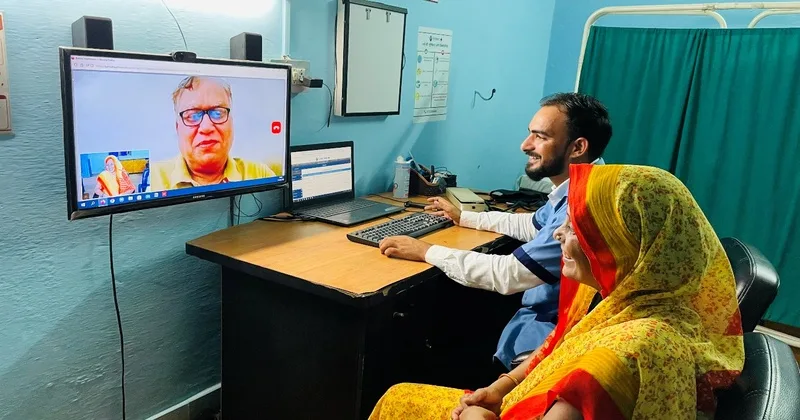
For decades Bharat healthcare story in tribal, Scheduled Caste (SC) and Other Backward Class (OBC) dominated rural areas has been neglected, poor infrastructure and failed delivery systems prevails. Despite of ambitious policies the ground reality remained dark with inaccessible sub-centres, absent doctors, broken referral systems. Communities have been left to quacks, faith healers or having long walk to district hospitals. But a decisive step of government after 2014 is underway. Through the National Health Mission (NHM) mobile medical units, new incentives for doctors and maternal-child health programmes, the government is changing the very face of rural and tribal healthcare.
In the Past: Where Rural Health Systems Failed
Bharat healthcare framework has long been structured on a three-tier model Sub Health Centres (SHCs), Primary Health Centres (PHCs) and Community Health Centres (CHCs). The government has very clear coverage norms where an SHC for every 5,000 people in plains and 3,000 in tribal/hilly areas, a PHC for every 30,000 in plains and 20,000 in tribal belts and a CHC for every 1,20,000 in plains and 80,000 in hilly and tribal regions. These numbers have rarely introduced for the real service. The problems were deep-rooted:
Geographical Isolation: Tribal belts in Jharkhand, Odisha, Chhattisgarh or Northeast Bharat meant many villages remained cut off during monsoons due to non-availability of all-weather roads. SHCs or PHCs existed only as structures, often found locked or poorly staffed.
Manpower Crisis: Doctors and nurses avoid remote postings. With no housing, schools or safety, vacancies remained unfilled. In 2020 rural areas accounted for 64% of Bharat population but had less than 40% of health workers.
Cultural Disconnect: Communities relied on traditional healers because state healthcare failed to build trust. Poor communication, language barriers and insensitivity to tribal customs has alienated people form mainstream healthcare.
Infrastructure Gaps: Lack of electricity, diagnostic equipment and referral transport crippled centres. Ambulances rarely reached on time and pregnant women were often carried on makeshift stretchers to district hospitals.
Failure of Earlier Schemes: Even when funds were allocated, corruption and poor monitoring reduced impact. Incentives to health staff rarely reached them and many schemes remained only on paper.
The result was catastrophic higher maternal and infant mortality among tribal and SC/ST/OBC communities. Rampant malnutrition’s and high rate of deaths due to diarrhoea, malaria and tuberculosis.
National Health Mission and other Schemes
The launch of the National Rural Health Mission in 2005 later expanded as the National Health Mission (NHM), marked the beginning of a structured attempt to reverse the failures. NHM recognised that universal access required flexibility for tribal and vulnerable populations. It introduced relaxed norms, allowing health facilities at lower population thresholds in tribal areas (SHC for 3,000, PHC for 20,000, CHC for 80,000). To correct manpower shortages, NHM created monetary and non-monetary incentives such as
- Hard area allowances and residential quarters for specialists in rural postings.
- Honorarium for gynaecologists, paediatricians and anaesthetists enabling C-section facilities in rural CHCs.
- Negotiable salaries under “You Quote, We Pay” for specialists.
- Preferential admission in PG courses for staff serving in difficult areas.
- Skill upgradation and multi-skilling of general doctors to handle emergencies.
One of the most successful interventions for inaccessible tribal belts has been Mobile Medical Units (MMUs). These MMU function as mobile clinics, providing preventive and curative healthcare where hospitals don’t exist.
According to NHM MIS data December, 2024, about 1,498 MMUs were operational across Bharat, with 694 exclusively serving Particularly Vulnerable Tribal Groups (PVTGs) MMU units. These MMU carries doctors, diagnostics and medicines directly to villages and building trust in formal healthcare systems.
Maternal and Child Health: A Priority Shift
Maternal and child deaths in Bharat have been high, especially among Scheduled Caste (SC), Scheduled Tribe (ST) and rural communities. To bridge this maternal death the government launched targeted schemes under the National Health Mission (NHM). Five programmes Janani Suraksha Yojana, Janani Shishu Suraksha Karyakram, Pradhan Mantri Surakshit Matritva Abhiyan, Anaemia Mukt Bharat and Kangaroo Mother Care have improved the outcomes.
Janani Suraksha Yojana (JSY)
JSY offers financial incentives to pregnant women for giving birth in hospitals. JSY’s intention was to minimize home births as well as maternal deaths. Institutional deliveries have gone up from 39% in 2005 (NFHS-3) to 88.6% in 2019-21 (NFHS-5), according to the Ministry of Health and Family Welfare (MoHFW). The scheme has immensely benefited rural and poor women, most of whom were SC and ST groups. JSY directly linked improvement in Maternal Mortality Ratio (MMR) from 254 (2004–06) to 113 (2018–20).
Janani Shishu Suraksha Karyakram (JSSK)
JSSK provides free services to pregnant women and sick newborns up to 30 days from birth. It provides cost for delivery (C-section included), drugs, diagnostics, diet in hospital and free transport to and from institutions. Reports of MoHFW 2022, shows more than 1.2 crore women every year received free entitlements under JSSK. The program removed cost barriers that previously barred poor women from accessing institutional care. Thus, leading to an increase in neonatal survival and decrease in out-of-pocket spending.
Pradhan Mantri Surakshit Matritva Abhiyan (PMSMA)
Launched in 2016 PMSMA offers free, fixed-day specialist antenatal care (ANC) on the 9th of each month. Services comprise obstetric check-ups, high-risk pregnancy screening and referral. By 2021, MoHFW records reflects that more than 3 crore antenatal check-ups were provided under PMSMA, identifying over 27 lakh high-risk pregnancies. These programs fortify early detection, preventing maternal complications and unsafe deliveries in remote areas.
Anaemia Mukt Bharat (AMB)
Anaemia is still a serious challenge in Bharat, affecting adolescent girls, women’s and children’s. NFHS-5 (2019-21) identified 57% of women aged between 15–49 and 67% of children aged under five are anaemic. Launched in 2018, AMB aims for a 3%-point annual decrease in anaemia each year. Strategies employed by the programme include iron-folic acid supplementation, deworming and fortification of food. While the most recent NFHS statistics represent limited decline, AMB has institutionalized routine anaemia screening at schools and maternal services. Thus, establishing a systematic monitoring system.
Kangaroo Mother Care (KMC) and Newborn Care Units
Premature birth and low birth weight are responsible for neonatal mortality, particularly in rural and tribal Bharat. Kangaroo Mother Care (skin to skin contact) and Special Newborn Care Units (SNCUs) provide heat, promote breastfeeding and protect against infection. There are more than 800 functioning SNCUs across the country as per MoHFW’s “India Newborn Action Plan (2020),” bringing down neonatal mortality from 39 per 1,000 live births in 2000 to 20 in 2020. KMC is advocated in the facility-based and community-based newborn care policies, and with proven improvements in survival for low birth-weight babies.
These schemes when combined with community health workers like ASHAs (Accredited Social Health Activists) reduced barriers of Rural backdrops. The Maternal Mortality Ratio (MMR) dropped from 254 in 2004–06 to 113 in 2018–20, which shows effectiveness of the services transferred from grassroot levels.
Nutrition and Preventive Care
To combat malnutrition among tribal children, programs such as Nutrition Rehabilitation Centres (NRCs) and the MAA (Mothers’ Absolute Affection) Programme for promoting breastfeeding was launched. Diarrhoea, pneumonia and malaria have been one of the silent killers in tribal regions, are now tackled through special campaigns such as STOP Diarrhoea Initiative and Universal Immunisation Programme (UIP).
The differences in the data represents the success of programme implementation
- Infant Mortality Rate (IMR) came down from 66 per 1,000 live births in 2001 to 27 in 2020, with steeper falls among rural SC/ST communities.
- Rural institutional deliveries increased from 39% in 2005 to more than 88% in 2022, primarily because of JSY and JSSK (NFHS-5).
- Immunisation coverage went up from 43% in 2005–06 to 76% in 2019–21, with focused drives in tribal pockets (NFHS-5).
These are not just figures, they represent fewer deaths of mothers during childbirth, fewer children dying from diarrhoea and pneumonia.
Ddespite of this progress and approach of central government, there are still challenges. Most SHCs have no electricity and water. Almost 25% of PHCs functions without a doctor in 2022 reports. Doctor attrition in distant postings persists, and referral transport facilities are erratic.
Cultural barriers also exist in tribal areas traditional practitioners continue to hold in certain tribal belts, while awareness regarding preventive care is limited. Malnutrition is high in tribal states such as Madhya Pradesh and Jharkhand, where more than 40% of children are under scanner of malnutrition (NFHS-5).
Government Support Towards Inclusive Healthcare
The government’s strategy now combines infrastructure and people’s trust. Increasing Ayushman Bharat Health and Wellness Centres (HWCs) among SC/ST/OBC and tribal regions community. AYUSH card and computerizing healthcare through telemedicine and e-Sanjeevani are likely to extend outreach.
Healthcare is no longer regarded as charity but as a right. By customising interventions for tribal and rural Bharat, motivating doctors and by designing mobile solutions, the government is taking its effort to remove the gaps of decades.
The health tale in Bharat tribal and marginalised areas is changing from hopelessness to guarded hope. From shut sub-centres and missing doctors to medical vans on wheels and hospital deliveries, the change is actual and happening on ground. What was once a symbol of the injustices of development is gradually becoming an example of inclusive administration. The road is long, but the direction is right. Bharat where geography, caste or community no longer decide whether one lives or dies from disease.














Comments