





Bharat’s cultural tapestry is a vibrant and intricate mosaic woven over millennia, with a living heritage that continues to shape the lives of its people. Central to this rich legacy are its festivals and rituals, which are not merely events but profound expressions of spirituality, community, and tradition. In a testament to this enduring vitality, several prominent Hindu festivals and rituals have been officially recognised on UNESCO’s prestigious Representative List of the Intangible Cultural Heritage of Humanity. This global recognition serves as a powerful acknowledgement of their universal value and the critical need to safeguard these timeless traditions.
Between 2008 and 2025, UNESCO’s inscriptions have spotlighted a diverse range of India’s cultural practices, from ancient Vedic chants to grand religious processions. These traditions encapsulate the very essence of India’s heritage, passed down through generations not on paper but through practice, memory, and performance. The inclusion of these rituals on such a distinguished list is more than an honour; it is an international commitment to their preservation and promotion. These traditions highlight the unique synthesis of art, philosophy, and devotion that defines Bharat’s spiritual landscape.
This report compiles ten prominent Hindu festivals and rituals inscribed on UNESCO’s Intangible Cultural Heritage of Humanity list between 2008 and 2025, highlighting Bharat’s rich and timeless cultural traditions.
Chhath Puja: Proposed for UNESCO recognition
On August 8, 2025, the Union Ministry of Culture forwarded a proposal to the Sangeet Natak Academy to include Chhath Puja in UNESCO’s Intangible Cultural Heritage list. This four-day festival, celebrated six days after Deepawali, is primarily observed in Bihar, Jharkhand, and eastern Uttar Pradesh. It is dedicated to the Sun God (Surya Bhagwan). Devotees perform a 36-hour fast and offer prayers in rivers and ponds using only natural products. The festival emphasises social harmony, women’s empowerment, and environmental conservation, making it a significant cultural and spiritual event.
Garba of Gujarat inscribed on UNESCO list
On December 6, 2023, Garba, the popular folk dance of Gujarat, was inscribed on UNESCO’s Representative List of Intangible Cultural Heritage of Humanity. Performed during Sharad Navratri, the dance honours Maa Durga, who is seen as a symbol of feminine energy (Shakti). Participants swirl to the rhythm of drums and folk songs around a sacred earthen pot. The dance promotes social equality, devotion, and community bonds, reflecting the rich cultural heritage of Gujarat.
Kolkata’s Durga Puja receives UNESCO recognition
On December 15, 2021, the Durga Puja of Kolkata was inscribed on UNESCO’s Representative List of Intangible Cultural Heritage of Humanity during the 16th Committee meeting in Paris. This made it the first festival in Asia to receive this honour. Held every autumn, the festival celebrates Maa Durga’s victory over the demon Mahishasura. It is a grand cultural and social event that unites communities through its elaborate artistry, music, and community-led celebrations, showcasing Bengal’s vibrant traditions.
Kumbh Mela listed as UNESCO Intangible Cultural Heritage
The Kumbh Mela was inscribed on UNESCO’s Representative List of Intangible Cultural Heritage of Humanity on December 7, 2017. Considered the world’s largest peaceful gathering of pilgrims, the mela takes place every 12 years at four different locations: Prayagraj, Haridwar, Ujjain, and Nashik. It involves ritual cleansing in holy rivers and the transmission of knowledge through the Guru-Shishya tradition. The festival promotes inclusiveness, tolerance, and cultural diversity while preserving traditions and fostering a strong sense of community.
Nat-Sankirtana of Manipur Enters UNESCO List
On December 4, 2013, the Manipuri Nat-Sankirtana was inscribed on UNESCO’s Representative List of Intangible Cultural Heritage of Humanity. This ritual, conceived in the 18th century by King Bhagyachandra Singh, involves singing, drumming, and dancing to narrate the life of Bhagwan Krishna. Performed in temples and courtyards, the ritual is central to Manipuri Vaishnavite traditions and reinforces social and spiritual unity. It fosters cultural identity and ensures the intergenerational transmission of traditional practices, with strong community participation.
Chhau Dance: From festival grounds to UNESCO list
On November 19, 2010, the Chhau dance was inscribed on UNESCO’s Representative List of the Intangible Cultural Heritage of Humanity. This dance, which originates from eastern Bharat, is a powerful blend of martial movements, folk traditions, and stories from the Mahabharata, Ramayana, and local legends. Performed in three distinct styles-Seraikella, Purulia, and Mayurbhanj-Chhau is often linked to festivals like Chaitra Parva. The performance uses masks, vibrant music, and powerful drumbeats to unite communities from diverse social and ethnic backgrounds.
Ramman festival listed as UNESCO Intangible Heritage
On October 2, 2009, UNESCO recognised the Ramman festival, a religious and cultural celebration from Saloor-Dungra in Uttarakhand. Held in late April in honour of the local deity Bhumiyal Devta, the festival includes reciting the epic of Rama, narrating legends, singing folk songs, and performing masked dances. Villagers take on defined roles, with Brahmins leading prayers and Bhandaris wearing the sacred Narasimha mask. This festival reflects deep environmental, spiritual, and cultural values, helping to preserve its founding myths and promote its heritage beyond the local region.
Ramlila: From Dussehra grounds to UNESCO list
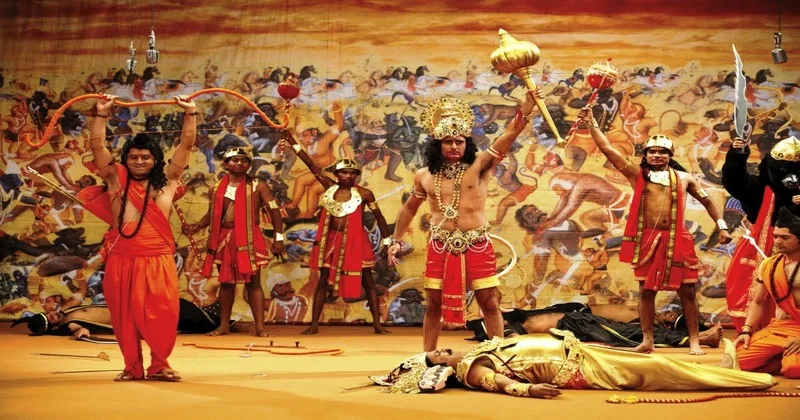
In 2008, Ramlila was inscribed on UNESCO’s Representative List of the Intangible Cultural Heritage of Humanity, symbolising cultural unity. Ramlila, which literally means “Rama’s play,” is a dramatic retelling of the Ramayana through song, narration, recital, and dialogue. Based on Tulsidas’ Ramacharitmanas, it is performed across northern India during Dussehra. While most performances last for 10-12 days, the one in Ramnagar extends for an entire month, drawing large crowds.
Vedic Chanting: An ancient oral tradition recognised by UNESCO
The tradition of Vedic chanting, one of the world’s oldest surviving cultural traditions, was inscribed on UNESCO’s Representative List of the Intangible Cultural Heritage of Humanity in 2008. Developed over 3,500 years ago by the Aryans, this heritage comprises Sanskrit poetry, philosophical dialogues, myths, and ritual chants from the four Vedas: Rig, Sama, Yajur, and Atharva. These texts were preserved through complex oral recitation techniques. Today, only 13 of over 1,000 recitation branches survive, with some schools in Maharashtra, Kerala, Karnataka, and Odisha facing an imminent threat.
Kutiyattam: UNESCO-recognised ancient Sanskrit theatre of Kerala
In 2008, Kutiyattam was inscribed on UNESCO’s Representative List of the Intangible Cultural Heritage of Humanity. With origins over 2,000 years ago in Kerala, it is one of India’s oldest living theatrical traditions. The art form blends Sanskrit classicism with local traditions, using intricate eye expressions (neta abhinaya) and hand gestures (hasta abhinaya) to powerfully portray a character’s emotions.
The inclusion of these ten festivals and rituals on UNESCO’s Intangible Cultural Heritage list is a powerful affirmation of Bharat’s enduring cultural legacy. From the ancient oral traditions of Vedic chanting to the vibrant, modern-day celebrations of Garba and Durga Puja, this recognition highlights the continuous and living nature of Bhartiya traditions. The diversity of the inscribed traditions, which span various regions and artistic forms, shows how these practices are not just religious ceremonies but also crucial expressions of community identity, social harmony, and environmental conservation. This international acknowledgement is a vital step toward ensuring these invaluable traditions are preserved for future generations, reinforcing their significance on a global stage.












Comments