





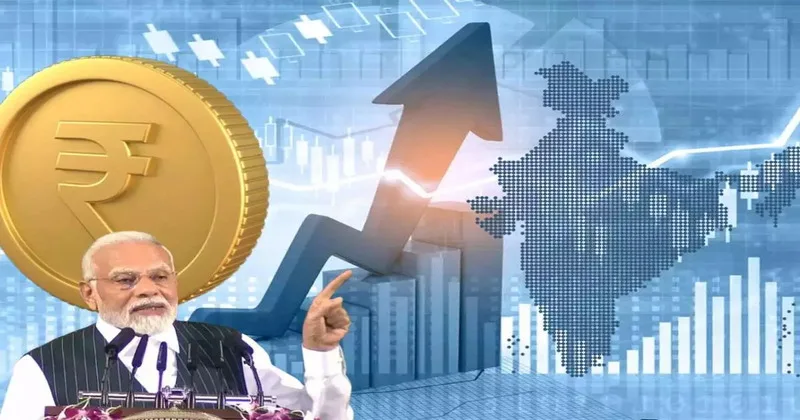
Indian markets are bracing for a volatile trading session after US President Donald Trump slapped a unjust 50 per cent hike in tariffs on Indian goods. The Union government, however, is urging calm, asserting that the tariff hike, though significant, will not snowball into the crisis many anticipate. India exported goods worth 8700 crore US dollar to the United States in 2024. With Trump’s new duties in place, earnings in 2025 are projected to slump to around Rs 5,000 crore US dollar, signaling a potential loss of over Rs 3 lakh crore for India’s export sector.
Export-dependent industries will bear the immediate brunt of Washington’s aggressive tariff move. Sectors like textiles, gems and jewelry, seafood, footwear, industrial machinery, and automobiles are being deliberately targeted under Trump’s protectionist agenda. For now, pharmaceuticals and electronics have been spared, but the US President has already signaled the possibility of extending duties to these sectors as well. This clearly reflects an attempt to pressure India and weaponize trade to serve America’s domestic interests, even at the cost of disrupting global economic stability
Recognizing the looming challenges, the Indian government is rolling out measures to cushion the blow. Strategies include expanding trade partnerships to over 50 countries to reduce dependence on the US market, exempting certain goods from GST to stimulate domestic demand, and formulating a stimulus package for companies in the export domain.
India Rejects Pressure, Upholds Energy Security and Strategic Autonomy
While Trump attributes the tariff escalation to India’s purchase of Russian oil, the broader motive appears to be opening Indian dairy and agricultural markets to American products. Prime Minister Narendra Modi has categorically stated that India will safeguard the interests of farmers and small businesses regardless of external pressure. This signals that New Delhi will not compromise on core domestic priorities despite Washington’s aggressive stance.
At the same time, the US administration is stepping up its sanctions against Russia, accusing Moscow of not conceding to Trump’s pressure during his so-called peace negotiations. Washington’s attempt to dictate global trade rules through threats and penalties is a direct challenge to the sovereignty of other nations. If these measures extend to countries purchasing Russian oil, India could face additional hurdles, yet New Delhi has made it clear that its energy security and strategic autonomy will not be compromised by Trump’s coercive tactics. Even as Trump warns of an “economic war” in the absence of a ceasefire, India continues to chart its independent course, prioritizing national interests over American pressure.
Adding to the global financial unease is Trump’s move to consolidate his influence over the US Federal Reserve. The recent dismissal of Federal Reserve Governor Lisa Cook, who faces allegations of misrepresentation in a loan application, has sparked controversy. Cook has denied the charges and questioned Trump’s authority to terminate her, vowing legal action. Reports suggest that Trump is preparing to name her replacement and could soon announce a new Federal Reserve chair. Critics worry that diminishing the Fed’s independence could hurt the credibility of both the institution and the American economy.
Meanwhile, Britain, France, and Germany, collectively known as the E3, are pushing for tighter sanctions on Iran over its continuing nuclear program. If Tehran resists Western demands, the resulting instability could rattle the already fragile Middle East, leading to a potential surge in crude oil prices.
Tariff Shock will not Break India: Resilient Economy Poised for Global Leadership
Despite these near-term headwinds, India’s structural economic fundamentals remain strong. A recent report by global auditing leader Ernst & Young predicts that India is on track to become the world’s second-largest economy by 2038, with a projected GDP of $34.2 trillion. The report emphasizes that India’s resilient economic framework, expanding workforce, and sound fiscal policies will ensure sustained growth even amid global turbulence.
The country’s demographic advantage is central to this optimism. In 2025, India’s median age stands at 28.8 years, which translates into a high proportion of working-age citizens for decades to come. This demographic dividend, coupled with a robust savings rate, will support investment and capital formation, enabling faster industrial expansion and infrastructure growth.
Another positive factor is India’s prudent fiscal approach. While several major economies grapple with mounting debt, India is working toward reducing its debt-to-GDP ratio from 81% in 2024 to 75 per cent by 2030. A lower ratio signifies greater financial stability and a stronger capacity to fund development without excessive borrowing.
Unlike countries such as China, Germany, and Japan, which are confronting the economic implications of an aging population, India enjoys a youthful demographic profile. The United States, despite being a dynamic economy, faces the challenge of ballooning debt levels. Many advanced nations remain vulnerable to disruptions in global trade, but India’s high domestic consumption provides a buffer against external shocks.
India’s trajectory toward becoming a developed nation by 2047 appears increasingly achievable. The report projects that India will overtake Germany by 2028 to emerge as the world’s third-largest economy. While the current tariff dispute with the US may shave off around 0.9 per cent of India’s GDP, the scale of domestic demand is expected to offset much of the loss.
With a large youth population, fiscal discipline, structural reforms, and rising household consumption, India is well-positioned to consolidate its place among the world’s leading economies. These fundamentals make India’s growth story one of resilience and promise, even as global uncertainties loom large.












Comments