





The anxieties of students standing at the crossroads of career choices met with thoughtful guidance at Headstart: Your Gateway to Career Clarity, a two-day online event organised by Organiser Weekly on August 19–20, 2025. Bringing together senior educationists, policy experts and university leaders, the programme sought to address the widening gap between education and employability while preparing young Indians for an unpredictable, technology-driven job market. Streaming live on online platforms, the sessions drew thousands of students from across the country who raised questions ranging from UPSC preparation to choosing the right university, and from understanding the gig economy to balancing passion with stability.
A Platform Born of Necessity
Opening the webinar, Organiser Editor, Prafulla Ketkar explained the idea behind Headstart. He noted that in his interactions he often encounters two sets of concerns: “On the one hand, students, parents and teachers are worried about the uncertainties of the future in a world transformed by technology. On the other, employers tell me, ‘Prafulla ji, we have work but we don’t find the right candidates.’” Headstart, he said, was conceived to bridge this divide by connecting students directly with experts. “This is your initiative,” he told the students. “We are only a mediator, helping you think about careers in the right direction.”
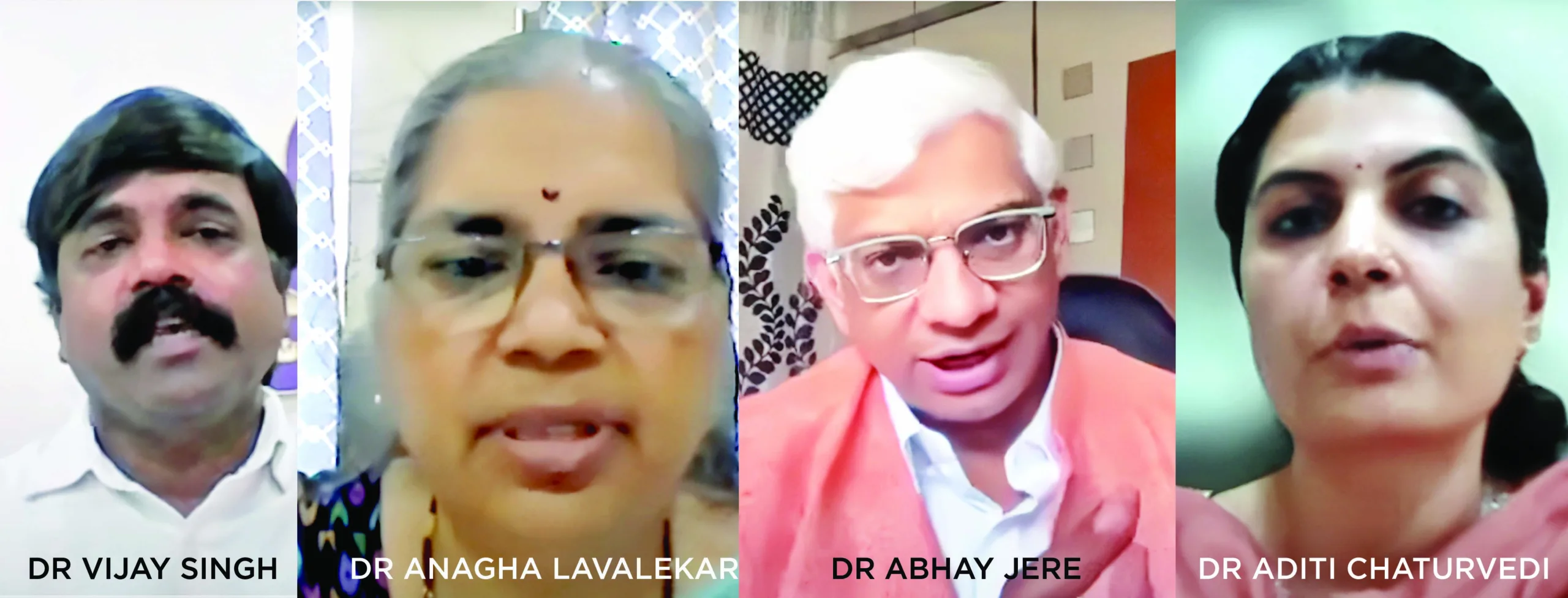
The first session on Day 1 was delivered by Dr. Abhay Jere, Vice Chairman of the All India Council for Technical Education (AICTE) and Chief Innovation Officer at the Ministry of Education. Widely known as the driving force behind the Smart India Hackathon, Dr. Jere offered a sweeping overview of how artificial intelligence, Industry 5.0, and the gig economy are reshaping professional life.
“With the advent of AI and Industry 5.0, the professional world will be considerably different from what it is today. Permanent jobs will vanish; gig-based, project-to-project work will become the norm,” he cautioned.
In a candid and interactive session, he urged students to internalise three habits. “First, ask yourself daily: what did I do today? Second, stay ahead of the curve by becoming interdisciplinary and innovative. Third, be a lifelong learner—because your degree won’t be enough; you will have to reskill yourself two or three times in life.”
Dr. Jere explained that students of this generation are likely to live into their nineties, which will stretch professional spans to 45–50 years. This makes constant learning and financial prudence essential. “Don’t fall for unnecessary brand attractions. Learn to invest and plan early, because you may need to return to study again at 35 or 45,” he advised.
Answering a student who asked whether success should be measured by a high-paying corporate job or a modest but steady income, Dr. Jere gave a grounded reply: “Financial success is important, but it is only one dimension. A successful person is one who can take care of his needs, live with morality and ethics, and sleep peacefully at night.”
From Skills to Temperament
Another session was led by Dr. Vijay Singh, Vice Chancellor of Scope Global Skills University, Bhopal. With decades of experience in management education and a university dedicated to skilling, he stressed that employability depends on aligning skills with market needs. “The parent organisation has been working in skill education for 40 years with more than 40,000 centres. This shows how much demand there is for skills that go beyond degrees,” he told students.
Another insightful session was delivered by Dr. Aditi Chaturvedi, Pro Chancellor of Rabindranath Tagore University who focused on the psychological dimension of career choices. She emphasised that career planning should not be treated merely as a technical exercise of matching degrees with jobs, but as a holistic process that includes mental well-being and adaptability. “The ability to manage stress, stay motivated, and remain flexible in uncertain circumstances is as important as technical expertise,” she observed. Drawing from her experiences with students, she advised parents and teachers to support exploration rather than impose rigid expectations, adding that “a career chosen with self-awareness and inner balance sustains longer than one chosen only for prestige or income.”
Choosing the Right Course and College
The discussion on higher education choices featured Dr. Shailesh Pandey, Director at CollegeDunia, a major platform for guiding students. Dr. Pandey highlighted the importance of making informed choices: “Choosing the right college is not about logos or brochures. It is about accreditation, faculty quality, curriculum relevance, and whether the university supports your temperament and goals.” He cautioned students against chasing fashionable courses without understanding their own aptitude.
Temperament and Personality in Careers
Another important session was led by Dr Anagha Lavalekar, Director, Jnana Prabodhini’s Institute of Psychology, who brought the discussion full circle by focusing on temperament as a cornerstone of career decision-making. She explained that while aptitude and skills are critical, they must be complemented by an individual’s inherent temperament – the natural way in which a person thinks, feels, and behaves. “Temperament is not something to be forced or artificially cultivated; it is the foundation on which sustainable careers are built,” she said. Highlighting examples from her counselling practice, she observed that many career mismatches and early job dropouts stem from neglecting this factor. Dr. Lavalekar encouraged students to introspect deeply about whether they thrive in collaborative environments or prefer independent work, whether they are naturally patient or quick decision-makers, and how these traits influence career satisfaction. Her session, reflective and deeply interactive, left the audience with a lasting message that knowing oneself is the first step toward building a meaningful professional life.
This theme resonated strongly with students, many of whom admitted to being caught between parental expectations and their own instincts. The panellists encouraged them to integrate self-awareness into career decisions, treating temperament as an anchor rather than an afterthought.
Busting Myths, Expanding Horizons
Across sessions, speakers challenged the myth that only engineering or medicine guarantee success. As Dr. Singh pointed out, India’s growth will require skilled professionals in fields ranging from biotechnology and agriculture to tourism and creative industries. “Every career has dignity if pursued with skill and passion,” he noted. Dr Jere echoed this view, recalling how companies today are willing to hire school dropouts if they can solve problems. “Degrees don’t matter as much as problem-solving skills. Industries are ready to hire anyone who delivers results,” he said.
Larger Vision
The overarching message across both days was that India’s youth are central to the national vision of becoming a developed nation by 2047. Dr. Jere urged students to embrace innovation: “You are the people who will deliver Viksit Bharat. For that, we must emerge as a knowledge economy, generating ideas and creating wealth through innovation.”
Prafulla Ketkar reiterated that Headstart was only the beginning of building a sustained platform for career guidance. The initiative, he said, would continue to provide mentorship and clarity as more students come forward with questions. As the sessions closed, one message rang clear: India’s youth must not merely adapt to change – they must drive it. And with platforms like Headstart, they now have a guide for the journey.













Comments