





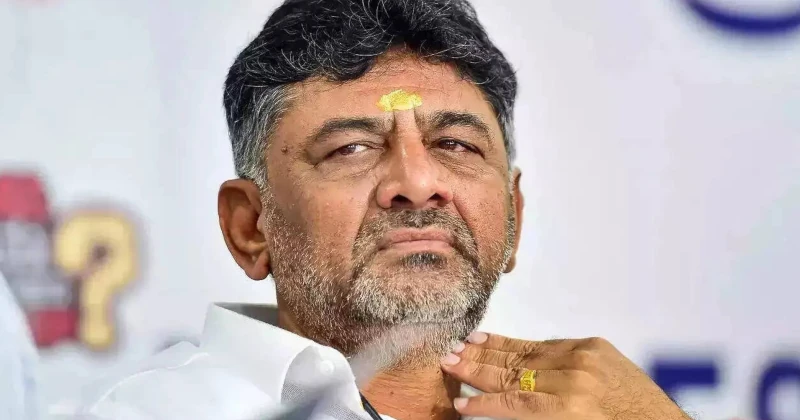
The Congress high command’s recent demand that Deputy Chief Minister DK Shivakumar apologise for singing the Rashtriya Swayamsevak Sangh (RSS) prayer song “Namaste Sada Vatsale Matrubhoome” has ignited a storm of criticism from opposition leaders and political observers. The controversy has exposed contradictions within the Congress party’s stance on patriotism and national pride, with many accusing the party of betraying India’s cultural identity.
Opposition leader R. Ashok was quick to condemn the Congress high command’s position, questioning the logic behind forcing Shivakumar to apologise for venerating Mother India. Speaking to the media and sharing his views on social media, Ashok asked a pointed question: “If Deputy Chief Minister D.K. Shivakumar should apologise for saluting Mother India by singing this prayer song, then who else should Indians applaud? Mother Italy? A woman from Italy?” His remarks highlighted the absurdity of the Congress’s demand and underscored the deep respect and affection the song expresses for the motherland.
If saying “Namaste Sadaa Vatsale Maatrubhoome” – a humble salutation to Mother India – requires an apology, then who exactly does the @INCIndia party expect Indians to hail? Mother Italy? Or the Madam who came from Italy?
The very first line of the RSS prayer means this:… https://t.co/Hzo5hfVM6y
— R. Ashoka (@RAshokaBJP) August 26, 2025
The RSS prayer song begins with the line, “My salutations to Mother Bharat, who is like a mother who nurtures us all with affection,” capturing a sentiment deeply ingrained in Indian culture. Ashok challenged the Congress leaders, asking, “Is it wrong to have this feeling about the motherland that gave birth to us? Is it wrong to salute the motherland?”
The incident has laid bare a glaring double standard in the Congress party’s approach to patriotism. While it has been accused of defending individuals who shouted slogans like “Pakistan Zindabad” inside the Vidhan Soudha, the party has simultaneously condemned those expressing pride in India. Ashok has labelled this stance a “treasonous mentality,” questioning who in the Congress hierarchy ordered Shivakumar’s apology, be it Sonia Gandhi, Rahul Gandhi, K.C. Venugopal, Randeep Surjewala, or B.K. Hariprasad.
Ashok argues that Shivakumar should have shown courage and refused to apologise, even resigning from the Congress if pressured. “He who loves not his country can love nothing,” they said, lamenting that Congress seems to prioritise political survival over patriotism.
The controversy has sparked a broader debate on political leadership and ideology in India, with many lamenting that some leaders prioritise personal power over national honour. The Janata Dal (Secular) (JDS) in Karnataka also condemned the Congress high command for forcing Shivakumar to kneel and apologise to retain power. In a social media post, they described Shivakumar as “a tiger in the House, a rat in front of the high command,” criticising the party’s hypocrisy.
JDS also pointed to discriminatory practices within Congress, highlighting how ministers from the Nayaka community were dismissed without a chance to apologise. “In the high command, there is one justice for the Dalits, and another for the powerful,” they said, exposing internal party inequities.
ಉಚ್ಛಾಟನೆಗೆ ಹೆದರಿ ಕ್ಷಮೆಯಾಚಿಸಿದ ಉಪಮುಖ್ಯಮಂತ್ರಿ @DKShivakumar
ಸದನದಲ್ಲಿ ಹುಲಿ, ಹೈಕಮಾಂಡ್ ಮುಂದೆ ಇಲಿ.
ವಿಧಾನಸಭೆಯಲ್ಲಿ #RSS ಗೀತೆ ಹಾಡಿ ಇಟಲಿ ಕಾಂಗ್ರೆಸ್ ನಾಯಕರ ಕೆಂಗಣ್ಣಿಗೆ ಗುರಿಯಾಗಿದ್ದ ರಣಹೇಡಿ ಡಿಕೆಶಿ ಅಧಿಕಾರ ಉಳಿಸಿಕೊಳ್ಳಲು, ಉಚ್ಛಾಟನೆಯಿಂದ ಪಾರಾಗಲು ಮಂಡಿಯೂರಿ ಕ್ಷಮೆಯಾಚಿಸಿದ್ದಾರೆ.
ನಾಯಕ ಸಮುದಾಯದ ಸಚಿವರನ್ನು… pic.twitter.com/7DjnshcWc4
— Janata Dal Secular (@JanataDal_S) August 26, 2025
This episode reflects a growing disconnect between India’s political leadership and the aspirations of its people. The backlash against the Congress high command symbolises widespread dissatisfaction with political parties that prioritise internal politics over national unity.
D.K. Shivakumar’s forced apology is viewed by many as a humiliating capitulation that undermines the dignity of public office and patriotism. It raises questions about the ability of political leaders to stand firm on national values.













Comments