





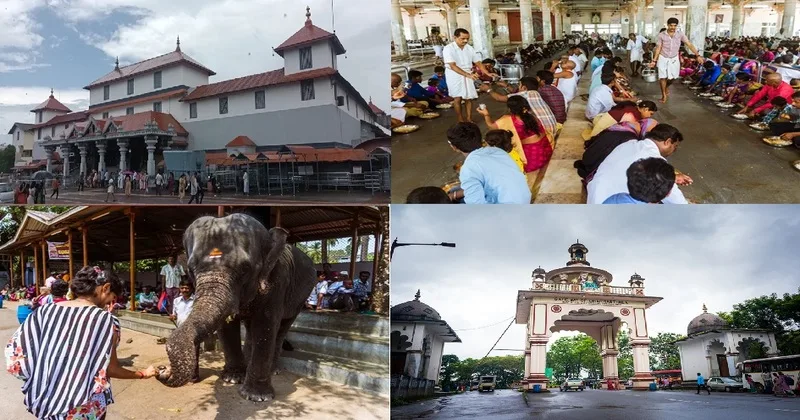
The controversy surrounding the Dharmasthala temple in Karnataka’s Dakshina Kannada district has, for the past several months, been at the centre of national debate. This is the very place where lakhs of devotees visit every year, participating in traditions of service, devotion, and religious discipline. But suddenly, news spread that corpses had been buried and burned within the mandir premises for years. As soon as these allegations surfaced, outrage spread through society, raising serious questions about the sanctity of Sanatan Mandir culture. However, as investigations progressed and layers of the case unravelled, it became increasingly clear that this was not a mere rumour but part of a well-planned disinformation campaign and conspiracy.
The beginning of allegations and the whistleblower drama
The roots of this controversy trace back to a former sanitation worker, Chenna (C.N. Chinnayya). He alleged that between 1995 and 2014, he was forced by the temple administration to bury and cremate bodies. According to him, many of these bodies were of women and minor girls, some allegedly showing signs of sexual abuse. He even recorded statements before a magistrate. These shocking claims shook all of Karnataka. Chenna offered to testify under security and even appeared in the media as a masked witness. Yet, the SIT investigation found his statements false and contradictory.
The flip-flopping testimony of Sujata Bhat
The controversy was further fueled by an older woman, Sujata Bhat. Initially, she claimed her daughter, Ananya Bhat, was missing and might be among the buried corpses. But soon after, she retracted, saying she never had a daughter. Later, in yet another reversal, she admitted that a YouTuber, M.D. Sameer had coerced her into lying. These U-turns complicated the case but also revealed that sensationalist strategies were at work behind the scenes. The SIT has now summoned Sameer for questioning.
SIT’s investigation and the reality
The SIT, headed by DGP Pranab Mohanty, ordered excavations within the mandir premises. Some bones were found, but they largely belonged to male bodies, whereas the allegations centred on young girls. This casts serious doubts on the credibility of the accusations. Scientific tests and cross-checks of witness statements led the SIT to conclude that the charges did not align with reality. No concrete evidence surfaced against the temple administration or the Dharmadhikari family.
Congress government’s attempt to tarnish mandir culture
The BJP has accused the Congress-led government under Chief Minister Siddaramaiah of conspiring to malign temple culture. BJP IT cell chief Amit Malviya sharply attacked the Congress government, stating on social media platform ‘X’ that the state allowed a masked individual to hold the entire system hostage for over a month, which was extremely troubling. According to him, the real objective of this conspiracy was to defame the Dharmasthala mandir, one of the foremost pillars of the Sanatan tradition. He alleged that the Congress government fabricated baseless claims, formed an SIT, and conducted excavations at 16 sites in an attempt to falsely label them as “graveyards.”
The real mastermind still at large
Malviya further said that weeks of digging yielded only a few skeletons and bones linked to natural deaths, with no connection to the temple. A woman named Sujata Bhat was pushed to file a false complaint about her “missing daughter, Ananya Bhat,” a fictitious person. Later, she admitted she never had a daughter, and that fake images created using AI were presented as evidence. Malviya noted that while some people, including the masked man, have been arrested, the real mastermind is still at large. According to him, the Congress government is trying to suppress this fact.
Dharmasthala: A symbol of faith and service for over 800 years
He asked: “Who instructed the masked man to do this? Who paid him? Who benefits from defaming Dharmasthala? These are the questions the Congress government is desperate to bury.” For over 800 years, Dharmasthala has stood as a symbol of faith and service. Today, it is being punished for being a Hindu stronghold resisting Islamic influence and the coastal Karnataka’s mafia networks. This continuing attack, Malviya argued, is part of the Congress “toolkit operation,” masterminded, he suggested, by none other than a close confidant of Rahul Gandhi.
He claimed: “Based on his knowledge of Dakshina Kannada’s social fabric as a former senior government official, this mastermind is orchestrating a systematic assault on Hindu institutions. The plan is clear—fabricate issues, exploit administrative loopholes, deploy radical elements, and internationalise the disinformation with the help of friendly outlets like Al Jazeera.” Malviya also suggested that while senior Congress ministers in Karnataka are uneasy, Chief Minister Siddaramaiah has only intensified this strategy, allegedly under orders from Delhi. The agenda, he said, is to defame Hindu institutions, break their credibility, and weaken Hindu strength; Dharmasthala being just the beginning.
Conspiracy’s stench and the assault on Sanatan Mandir culture
India’s soul resides in its sanatan culture. Mandirs are not merely sites of worship but also centres of social harmony, education, art, and community life. This is why, whenever someone seeks to attack the roots of Indian society, mandirs are the first targets. In the Sanatan tradition, a temple symbolises life and energy. Entry of dead bodies is strictly forbidden. Hindu tradition mandates cremation by fire at cremation grounds, with the rare exception of ascetics taking “samadhi” (burial), and that too outside mandir premises at designated sites. Therefore, the claim that corpses were buried inside the temple was, from the very beginning, contrary to tradition and highly suspicious—a suspicion now proven correct.
The Real Intention: To defame Sanatan
The way the issue of “buried corpses” at Dharmasthala was sensationalised makes it clear that the intention was always to defame the Hindu Sanatan culture. That is why these allegations collapsed under scrutiny. It is evident that this controversy was not local but part of a larger conspiracy. The goal was to sow distrust in mandir culture. The guilty parties? Chenna, the self-styled whistleblower who fabricated charges and dragged a sacred site into controversy. Sujata Bhat and YouTuber Sameer, who fueled the fire with false claims and coercion. Certain media outlets and political forces amplified unverified allegations and tarnished the image of mandir culture.













Comments