





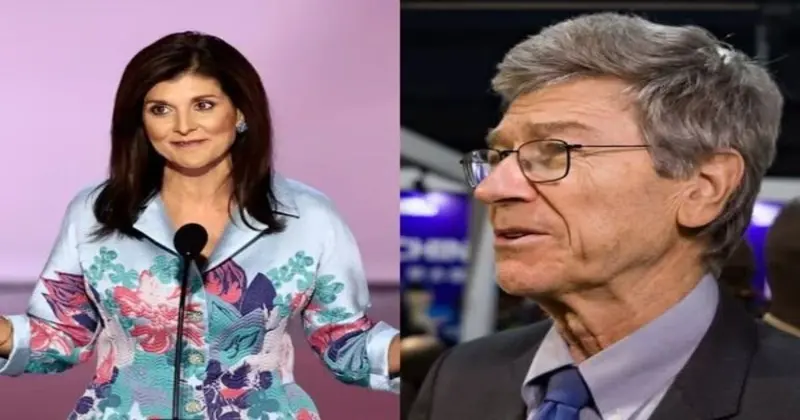
Renowned economists and subject experts of the United States who have a deep understanding on the India-US strategic partnership have severely condemned the massive tariffs imposed by the Trump administration on India. They have asserted the tariff tussle with India as a ‘strategic blunder’ by the US and have called for an immediate course correction by the Donald Trump’s political camp, as India is a vital partner in the Asia and Indo-Pacific policy of the US. Apparently, the strong message to the Trump administration regarding its ‘flipped India policy’ is emanating from the US experts itself, which can be deemed as a crucial strategic signal for the Trump administration to rectify its blunders for the sake of a long-term and lasting geopolitical benefit, instead of chasing the short-term and false rhetoric.
“Stupidest tactical move”: Economist Jeffrey Sachs
Renowned American economist Jeffrey Sachs has outrightly criticised the US tariffs on India as a ‘stupidest tactical move in the US foreign policy’. He asserted that this is a ‘self-defeating’ and ‘risk damaging’ act, because India is one of the most important and valued relationships of America in Asia. He also reiterated that US shouldn’t have taken such an adverse position on India given its geopolitical vitality in an era where the global alliances are already under strain.
Jeffrey Sachs, who is a professor at the Columbia University has been an advisor to the governments across the globe. While speaking in an interview on Krystal Ball and Saagar Enjeti’s Breaking Points show, said, “These tariffs on India are not strategy. They are sabotage”. He also opined that the illogical and reckless tariffs imposed on India did nothing beneficial to the US economy, but only helped to unify the BRICS nation as never before. He further added that within 24 to 48 hours there were a series of phone calls among the BRICS nations, as an impact of Trump tariffs. The tariffs imposed by the US administration have only yielded such counter feats, but no economic yield as forecasted by the Trump administration.
“Donald Trump was the great unifier of the BRICS. I like the BRICS by the way. So, I have no problem with that. But it was the opposite of what Lindsey Graham(Senator of South Carolina) conceivably could have been thinking”, said economist Jeffrey Sachs.
Economist Sachs also spoke about the damage inflicted to the prospects of the long-term India-US relations, because of these irrational tariffs. He said that these tariffs have practically rendered zero advantage to the US, instead only strengthened anti-American alliances and has harmed the India-US strategic relationship that was stable and prosperous since decades.
“Zero practical impact on getting anyone to any negotiating table. But it completely undermined one strand of US foreign policy built over years. Trump has ended the strategic and diplomatic relations of India overnight that the US has been cultivating for years. Even if this 25% tariff penalty is removed, the Indians have learnt a lesson that you cannot trust the United States”. The statement by economist Sachs means that India will take a strategic caution while dealing with the US in the future, as an impact of the illogical tariffs imposed, leading to an irreparable trust deficit among two key global powers.
“India is crucial to counterweight China in Asia”: Nikki Haley
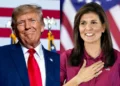
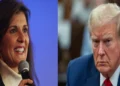
Former US Ambassador to the United Nations, Nikki Haley has written a sharp article on the adverse impacts of US tariffs on India. “Scuttling 25 years of momentum with New Delhi would be a strategic disaster”, said Nikki Haley. She asserted that India is a ‘prized free and democratic partner in Asia and the Indo-Pacific’ which is crucial to counter the Chinese dominance. She sent a strong strategic message to Washington and Donald Trump to treat India not as a rival, because New Delhi is important for the US’s long-term strategy in Asia.
Nikki Haley also criticized the Trump administration for punishing a ‘democracy’ like India for purchasing the Russian oil while excluding the authoritarian regimes like China from the US sanctions who also apparently has highest oil purchases from Russia. Nikki Haley has unequivocally scolded this hypocrisy of the Washington, as a ‘strategic disaster’.
Ms. Haley also explicated the geostrategic vitality of India in the US foreign policy. “the only country that can serve as a counterweight to Chinese dominance in Asia”, says Haley thus highlighting the importance of India to redraw and sustain the global balance of power. She says that if the US unmindfully allows the latest tariff tussle to further deepen, it will mark a long-term fissure in the US-India relations, which will be disadvantageous to the geopolitical ambitions of the US itself and the balance of power will tilt against the US.
Nikki Haley took a further dig at the Trump administration and underlined the importance of India in consolidating the global supply chain. “With its vast workforce and cost advantages, India stands as the only viable alternative for large-scale production of goods like textiles, smartphones and solar panels”, says Ms. Haley. “This is not just about economics, it’s about resilience. By deepening trade and investment ties with India, US can reduce its dependence on Chinese supply chain credentials. Destroying this opportunity through tariff wars would weaken America’s position at the very moment when strategic diversification is most urgent”, added Nikki Haley.
Nikki Haley also schooled Washington DC on the importance of partnership with India in order to champion the cause of free, liberal and open societies, in an era where authoritarian powers are gaining a strong foothold. Ultimately, Nikki Haley suggests the Trump administration “to reverse the downward spiral” of the India-US strategic partnership through high-level dialogue and diplomacy and asserts that punitive escalation is not the solution.
Jeffrey Sachs and Nikki Haley thus represent the conventional thinking in the US, who realizes the strategic importance of India for the US in order to seek both geopolitical and economic interests of Washington in short and long-term. Its high-time even the Trump administration also discerns this fact and engages with New Delhi in a credible way, rather than escalating the rift, especially when the strategic messaging comes from the US experts. However, India has been consistent, rational and prudent in its engagement with the US, despite the illogical tariffs from the other side. New Delhi has neither initiated reciprocal tariffs on US nor outrightly criticised Trump tariffs, but has only advocated ‘dialogue and diplomacy’ as the lasting solution.











Comments