





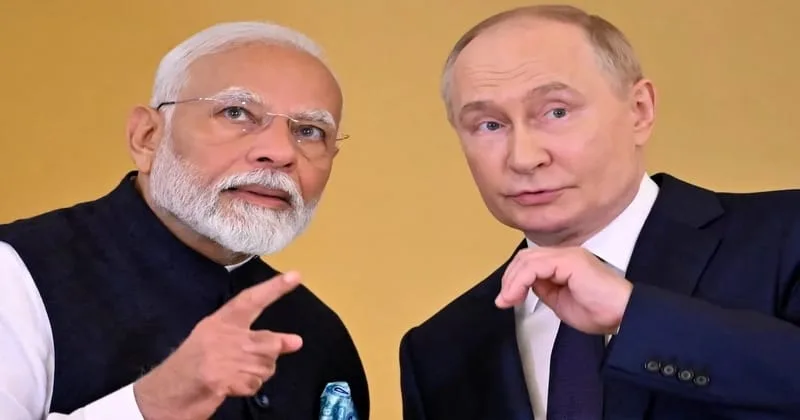
The United States has accused Indian refiners of making substantial profits by processing Russian crude oil and selling refined products to markets, including Europe. In response to Washington’s warning of additional tariffs on Indian oil imports, Russia has announced a five percent discount on crude supplies to India, signaling that energy cooperation between the two countries will continue despite mounting political pressure.
US Treasury Secretary Scott Besant alleged that Indian companies, particularly Reliance Industries and Nayara Energy, are purchasing Russian crude at heavily discounted rates and selling refined petroleum products at higher prices to nations that have imposed sanctions on Moscow. According to Besant, this practice has allowed Indian refiners to significantly benefit from the global energy market volatility caused by the Ukraine conflict.
Bloomberg and Kepler report that Reliance Industries and Nayara Energy together exported petroleum products worth US$60 billion during the fiscal year 2024–25. Of this, exports valued at US$15 billion went to the European Union alone, highlighting the growing footprint of Indian refiners in Europe’s energy market even as the EU maintains sanctions on Russia.
The deepening India-Russia oil relationship is evident in major deals signed recently. In December 2024, Reliance Industries inked a 10-year agreement with Russia’s state-owned Rosneft worth US$12–13 billion annually. The deal envisages importing up to 500,000 barrels of crude per day. Similarly, Rosneft-backed Nayara Energy has dramatically increased its dependence on Russian oil. Kepler estimates that by 2025, 72 percent of Nayara’s crude imports will come from Russia, up from just 27 percent in 2022.
The Trump administration has expressed displeasure over these developments and threatened an additional 25 percent tariff on Indian oil imports linked to Russia. This move is part of broader Western sanctions imposed on Moscow following the Ukraine crisis. However, Moscow has made it clear that supplies to India will not be disrupted. Russia’s trade representative, Evgeny Griva, confirmed that crude shipments will continue with an additional discount of around five percent, reinforcing the resilience of India-Russia energy ties.
However, New Delhi has not only rejected all Western arguments but has also increased its imports of Russian oil since the import duty came into effect on August 1. According to data from global real-time analytics firm Kepler, Indian oil companies significantly ramped up their purchases from Russia in August. Of the 5.2 million barrels of crude oil imported daily during the first half of August, about 38 percent came from Russia. While daily imports from Russia stood at 1.6 million barrels in July, they rose to 2 million barrels in August. India has sent a clear message that its sovereignty and national interests will not be compromised by any external threat.
India’s continued import of Russian oil underscores New Delhi’s strategy to secure affordable energy amid global uncertainties. With the US pressing for stricter compliance on Russian sanctions and Moscow offering more attractive terms, the geopolitical energy contest appears far from over.














Comments