





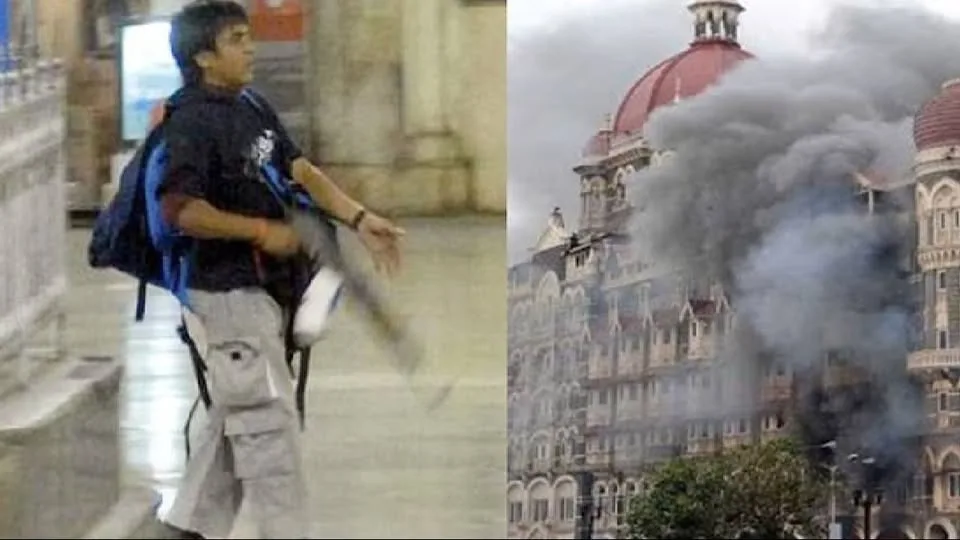
Terrorism represents a persistent and multifaceted challenge to global as well as national security and stability, transcending geographical boundaries and ideological divides. Its impact reverberates across political, social, economic, and psychological dimensions, demanding a comprehensive and nuanced understanding. From its historical roots to its contemporary manifestations, the phenomenon of terrorism has continuously evolved, adapting tactics, leveraging new technologies, and exploiting societal vulnerabilities.
Bharat’s struggle with terrorism spans multiple decades and encompasses various forms of extremist violence, from cross-border terrorism to domestic militancy, creating one of the world’s most complex counter-terrorism challenges.
Emergence of terror in Bharat by foreign invaders
The attacks of radicals such as Mahmud of Ghazni and Muhammad Ghori, particularly their systematic plunder of temples and institutions and attacks on civilians to instil fear, exemplify this. The desecration of deeply revered religious spaces was a deliberate strategy aimed at demoralizing the civilians, undermining their religious identity, and demonstrating the invaders’ overwhelming power and contempt for local beliefs.

Centuries later, the British presence in Bharat, initially through the East Bharat Company and subsequently under the British Raj, also utilized terror, although through different mechanisms. The British rule employed systematic economic exploitation and political suppression. The tragic and historical events like the Jallianwala Bagh massacre further solidified this environment of dread ultimately falling into the ambit of ‘Terrorism’. The “terrorizing locals by other means,” as described in the initial query, refers to the institutionalized violence, economic strangulation, and racial subjugation that relentlessly instilled fear and enforced compliance. This represented a long-term, systemic form of state terror, meticulously designed to maintain colonial control and extract resources.
The actions of both the Islamic invaders and the British Evangelicals in Bharat illustrate that terror is a consistent tactic employed by invading or occupying powers to establish and maintain control over conquered populations. The nature of these acts, were designed to inflict psychological damage, dismantle social cohesion, and demonstrate absolute power. The destruction of temples, for instance, was not solely about loot; it was about breaking the spiritual and cultural backbone of a society, instilling deep fear and helplessness.
Major acts of terrorism inspired by Radicalis before the Independence
Moplah Riots (1921): The Moplah Riots in 1921 began after the British Coalition force toppkled the Islamic Caliphate in Turkey, by Muslims against Hindus in Kerala’s Malabar, Kerala. What initially appeared to be a socio-economic uprising rapidly evolved into a violent campaign targeting Hindus only. The Moplah Muslims did not merely target state authorities; they used violence against non-combatant Hindu populations as a form of ideological intimidation and coercion and frustration against the Fall of Islamic Caliphate in Turkey.

Anti-Hindu Massacres in Bengal: Bengal witnessed repeated anti-Hiindu atrocities in which Hindus were systematically targeted by radicalized Muslim mobs. Incidents such as the 1946 Great Calcutta Killings and Noakhali massacre involved large-scale murders, sexual violence, destruction of property, and forced religious conversions. These were not spontaneous riots but well-coordinated attacks designed to instil fear and force demographic and political concessions ahead of the partition.
Evolution of terrorism post-independence
Early Phase (1947-1980s): The partition of Bharat in 1947 created the foundation for future terrorist activities, with communal violence and the Kashmir dispute establishing patterns that would persist for decades. The 1971 Bangladesh Liberation War saw the emergence of cross- border terrorist activities, while the 1980s witnessed the rise of Separatist movement in Punjab (Pakistan Sponsored Terrorism), marking Bharat’s first major encounter with the terrorism. This malicious effort by Pakistan can be clearly understood from the statement of Prime Minister Zulfiqar Ali Bhutto, which later became the doctrine of the Pakistan military under General Zia-ul-Haq — famously articulated as the official policy to ‘bleed India with a thousand cuts’.

Escalation Period (1989-2001): The late 1980s marked a dramatic escalation with the beginning of the terrorism in Kashmir in 1989 that later led to the exodus of local Kashmiri Hindus, fundamentally changing Bharat’s security landscape. This period saw the emergence of Pakistan-backed terrorist groups like Lashkar-e-Taiba and Jaish-e-Mohammed, transforming cross-border terrorism into a sustained campaign.
From 1989 to 2024, the insurgency has claimed 44,729 lives: 6,413 security personnel, 14,930 civilians, and 23,386 militants. These stark numbers represent not just casualties but entire communities devastated by decades of violence. The conflict has also resulted in the forced displacement of lakhs of Hindus Hindus and Sikhs, creating a refugee crisis within Bharat’s own borders.
Northeast Bharat: The northeastern states have faced multiple militancy movements with different ethnic and separatist motivations. Groups like the United Liberation Front of Assam (ULFA), National Socialist Council of Nagaland (NSCN), and others have employed terrorist tactics while pursuing independence or autonomy. The region’s complex ethnic composition and porous international borders have sustained these conflicts for decades.
Left Wing Extremism: The Naxalite-Maoist militancy affects 90 districts across 11 states, with Chhattisgarh, Jharkhand, and Maharashtra being most severely impacted. This internal security challenge demonstrates how socio-economic grievances can fuel sustained terrorist campaigns.
Terror attacks that happened after the Independence of Bharat
Air Bharat Flight 182 Bombing (1985), Bombay Bombings (1993), Indian Parliament Attack (2001), Mumbai Train Bombings (2006), 26/11 Mumbai Attacks (2008), Dantewada Maoist attack (2010), Uri Attack (2016), Pulwama Attack (2019), Pahalgam Attack (2025)
Islamic Terrorism: Organizations, Networks, and Threats
Islamic terrorism has posed one of the most persistent and deadly challenges to the security of the World, with both domestic and international dimensions involving complex networks of state and non-state actors.
In the Middle East and North Africa, early Arab conquests (7th–8th centuries) involved mass killings and forced tribute from local populations in Syria, Egypt and Persia who refused to accept the new religious-political order. The Sack of Rome (846) by Arab raiders involved the plundering of churches and slaughter of civilians, shocking Christian Europe.
In Eastern Europe, the Mongol invasions (13th century) devastated Russia, Poland and Hungary. Cities such as Kiev (1240) and Sandomierz were razed and entire populations exterminated to discourage resistance—an explicit use of terror as a military tool. Likewise, the Viking raids (8th–11th centuries) in Britain and France targeted monasteries, towns and villages; their brutality—mass slaughter, enslavement and torture—was intended to intimidate local populations into compliance or tribute.

The Ottoman Empire’s expansion (14th–15th centuries) into the Balkans included forced population displacement, mass conversions and the establishment of the devşirme system (child-levy), which deliberately terrorised Christian communities. In Spain, the final phase of the Reconquista saw Muslim and Jewish civilians expelled or forcibly converted under threat of state violence.
The Ottoman Empire carried out a series of brutal campaigns against its Christian minorities, especially the Armenians, during the late 19th and early 20th centuries. The Hamidian massacres (1894–96) resulted in the killing of an estimated 100,000–300,000 Armenians and other Christians, with villages razed and churches desecrated. During World War I, the Ottomans escalated these attacks into what is widely called the Armenian Genocide (1915– 1917). Under the guise of “relocation” and “internal security”, Armenian men were summarily executed, while women and children were forced into death marches across the Syrian desert. Thousands died from starvation, disease, and systematic massacres. International observers at the time described these atrocities as a deliberate attempt at ethnic cleansing and extermination of an entire people. The Ottoman state used terror not only to eliminate perceived internal enemies, but also to send a psychological message of absolute power to remaining minority communities.
The origins of modern Islamic terrorism can be traced back to the early 20th century with the rise of various Islamist movements, but its contemporary form gained significant momentum following the Afghan-Soviet War (1979-1989). This conflict served as a crucible for the emergence of a global jihadi movement, attracting thousands of foreign fighters and fostering transnational networks. Figures like Osama bin Laden, who founded Al-Qaeda (AQ) in the late 1980s, capitalized on this environment to articulate a global jihadist ideology, initially focusing on expelling foreign forces from Muslim lands and later shifting to the “far enemy” (the United States and its allies).

The September 11, 2001 attacks in the US, orchestrated by Al-Qaeda, dramatically escalated the global perception of Islamic terrorism. The subsequent “War on Terror” and the Iraq War (2003) inadvertently created new vacuums and grievances, contributing to the proliferation of new jihadi groups. The most significant development in this regard was the rise of the Islamic State of Iraq and Syria (ISIS) in the 2010s. ISIS distinguished itself from Al-Qaeda by its ambition to establish a physical caliphate, its extreme brutality, and its sophisticated use of propaganda and social media, attracting thousands of foreign terrorist fighters globally. The ideological evolution moved from a focus on specific grievances to a broader, transnational vision of a global caliphate, demanding allegiance from Muslims worldwide.
Modern-day Islamic Terrorism
The Soviet-Afghan War (1979-1989) created a generation of trained Islamic militants and established networks that would later target Bharat.
Several major organizations define the landscape of Islamic terrorism:
Al-Qaeda (AQ): Founded by Osama bin Laden, Al-Qaeda’s core ideology revolves around global jihad against the West and “apostate” Muslim regimes. It operates as a decentralized network of affiliates and franchises across the Middle East, Africa, and South Asia (e.g., AQAP, AQIM, Al-Nusra Front). Its notable attacks include the 1998 US embassy bombings in Africa, the USS Cole bombing in 2000, and the 9/11 attacks.

ISIS (Islamic State of Iraq and Syria): Emerging from Al-Qaeda in Iraq, ISIS proclaimed a caliphate in 2014, controlling vast swathes of territory in Iraq and Syria. Its ideology is characterized by extreme Salafi-Jihadism, brutal violence against perceived enemies (including other Muslims), and a global franchise model (e.g., ISIS- Khorasan, ISIS-West Africa Province). ISIS’s sophisticated propaganda and online recruitment led to a surge in foreign fighter recruitment.
Lashkar-e-Taiba (LeT): A Pakistan-based Islamist terrorist organization primarily focused on Kashmir. Founded by Hafiz Saeed, LeT seeks to integrate Kashmir into Pakistan and establish Islamic rule. It has been responsible for numerous attacks in

India, most notably the 2008 Mumbai attacks, which demonstrated its capacity for complex, multi-pronged assaults on urban centers.
Jaish-e-Mohammed (JeM): Another Pakistan-based jihadi group, founded by Masood Azhar. JeM also primarily targets India, particularly in Kashmir, with the objective of liberating Kashmir and establishing Islamic rule. It has been implicated in the 2001 Indian Parliament attack and the 2019 Pulwama attack, showcasing its continued operational capability.
Students Islamic Movement of India (SIMI): An indigenous Indian Islamist organization, initially formed as a student body but later banned as a terrorist organization. SIMI advocates for the establishment of Islamic rule in India and has been linked to numerous low-intensity blasts and alleged ties with other jihadi groups like LeT and JeM.
Other Regional Groups: Groups like Boko Haram (Nigeria), Al-Shabaab (Somalia), and Jemaah Islamiyah (Southeast Asia) illustrate the global reach of Islamic terrorism, often exploiting local grievances and aligning with global jihadi narratives. Modern Islamic terrorist organizations are highly adept at utilizing technology for communication, propaganda, and funding.
Church-backed terrorism in Bharat
Church-backed terrorism in Bharat represents a complex intersection of religious conversion activities, separatism, and foreign funding, primarily concentrated in the northeastern states.
The Tripura Case: Tripura became the epicenter of allegations concerning church-backed terrorism. The National Liberation Front of Tripura (NLFT) has been accused of receiving support from certain Baptist Church organizations. According to various intelligence reports and testimonies, the Baptist Church of Tripura allegedly provided not only ideological mentorship but also material support to the NLFT.

NSCN separatist movement in Nagaland: The Church played a significant ideological and logistical role in sustaining the NSCN separatist movement in Nagaland. Through its widespread influence across Naga society, it provided moral legitimacy to the insurgency and promoted the idea of a distinct Naga Christian identity. In several instances, Church leaders acted as intermediaries between rebel groups and civilians, and their continued support contributed to the mobilisation, funding, and consolidation of separatist sentiment across the region.
Marxist Terrorism: Naxalism and Global Comparison
Left Wing Extremism (LWE), commonly known as Naxalism, represents Bharat’s longest- running internal security challenge and one of the world’s most persistent Maoist insurgencies.
Historical Origins and Ideological Foundation
The Naxalbari Uprising (1967): The movement originated in Naxalbari village, West Bengal, under the leadership of Charu Majumdar, Kanu Sanyal, and Jangal Santhal. What began as a peasant revolt against landlord exploitation evolved into a broader communist insurgency inspired by Maoist ideology and the Chinese Cultural Revolution.
Ideological Development: The Communist Party of India (Marxist-Leninist), formed in 1969, provided the ideological framework for the movement. The party’s philosophy emphasized armed revolution, rejection of parliamentary democracy, and establishment of a “people’s government” through protracted armed struggle.
The Red Corridor: The Naxalite influence zone, extending from Nepal’s border through eastern and central Bharat to parts of southern states, encompasses approximately 90 districts across 11 states. This area covers some of Bharat’s most mineral-rich but economically backward regions.
As of 2025, Chhattisgarh remains the most severely affected with 4 districts in the highest threat category, followed by Jharkhand, Maharashtra, and parts of Odisha. The movement’s strongholds are concentrated in heavily forested, tribal-dominated areas with limited government presence.

Global Terrorism Landscape: Trends and Patterns
The global terrorism threat has evolved significantly in recent decades, with new actors, methods, and geographic concentrations reshaping the international security environment.
Current Global Statistics and Trends
2024 Global Terrorism Index Findings: According to the latest Global Terrorism Index, deaths from terrorism increased by 22% to 8,352 in 2023, representing the highest level since 2017. Despite this increase in lethality, the number of terrorist incidents decreased by 22% to 3,350, indicating that attacks are becoming more deadly with an average of 2.5 deaths per attack compared to 1.6 in 2022.
As Bharat reflects on the International Day of Remembrance and Tribute to the Victims of Terrorism, it reaffirms solidarity with survivors and families. Honouring their resilience strengthens the nation’s resolve to defeat terrorism in all forms, ensuring justice, peace, and security for future generations.
















Comments