






India, the world’s fourth-largest economy and currently the fastest growing, is projected to clock a real GDP growth rate of 6.5 percent in FY 2024-25. While services, manufacturing, and agriculture together helped the economy rebound with 15.3 percent growth between 2021 and 2023, it is logistics that has now surfaced as the most critical enabler of sustainable expansion.
Notably, now stronger and smarter supply chains will determine how resilient India becomes in the coming decades. From inventory management to distribution networks, logistics is no longer just a support service, it is the engine powering every sector.
What is the Indian logistics industry?
Think of logistics as the system that helps move goods from where they are made to where they are needed. It’s not just about trucks on the road, it includes:
1. Transportation: Moving products by road, rail, air, or water.
2. Storage and Warehousing: Safely keeping goods until they are ready to be sold.
3. Inventory Management: Keeping track of what’s available, what’s needed, and where it is.
4. Distribution: Making sure products reach shops, markets, and customers efficiently.
In short, logistics connects businesses with customers, both within India and globally. This not only helps businesses grow and compete globally, but it also creates jobs, reduces costs, and strengthens India’s economy as a whole.
How big is the sector?
Value in 2021: The Indian logistics sector was worth USD 215 billion and it is expected to grow at around 10.7 percent every year until 2026, meaning it will get bigger and create more opportunities.
The Indian government treats logistics as very important for the country’s growth.
Here’s how:
Infrastructure: The government has given logistics the same importance as roads and railways. This means logistics businesses can get long-term loans at lower interest rates, helping them expand.
Dedicated division (2017): A separate team was created under the Department of Commerce to make sure all aspects of logistics are developed in a coordinated way.
This shows logistics is no longer “in the background”; it is a key part of India’s growth strategy.
Government reforms and policies
The government has launched several initiatives to make logistics faster, cheaper, and more efficient:
National Logistics Policy (NLP) in 2022: It aims to simplify the logistics system, cut unnecessary costs, and make it more efficient. It also helps India compete better with other countries in trade and business.
PM GatiShakti master plan in 2021: Focuses on connecting different modes of transport, roads, trains, waterways, and airports into one smooth network. It reduces delays and ensures goods can move faster across the country.
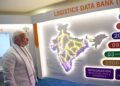
Unified Logistics Interface Platform (ULIP): It is a digital system that combines information from multiple government departments. From this, businesses can track shipments, plan routes, and manage inventory more effectively. In March 2025, ULIP achieved 100 crore API transactions, showing that digital technology is rapidly transforming India’s supply chains.
Goods and Services Tax (GST) in 2017: Before GST, moving goods from one state to another was complicated due to multiple taxes. GST simplified this, reducing border delays and lowering costs. This made logistics faster, cheaper, and more efficient across India.
The Green Push
Logistics in India is no longer just about speed, it is also about sustainability. The government is introducing green initiatives to align with India’s climate commitments and Net Zero vision:
1. Freight GHG Calculator: Helps businesses track both costs and carbon emissions from transportation.
2. Rail Green Points: A scheme by Indian Railways encouraging freight operators to shift cargo to railways, reducing road emissions.
3. Coal Logistics Plan: Promotes rail-based coal transportation, cutting carbon footprints while ensuring energy security.
These measures reflect India’s commitment to building a future-ready, green logistics ecosystem.
Logistics as road to Viksit Bharat
Logistics today is not just about moving goods but about connecting aspirations with opportunities. With rising consumer demand, e-commerce penetration, and industrial growth, the sector is poised to create millions of jobs across rural and urban India, strengthen supply chains for both domestic and export markets and enable balanced regional development, linking Tier-2 and Tier-3 cities to growth hubs.
As India advances towards its $5 trillion economy target and the vision of Viksit Bharat 2047, logistics will remain the driving force of growth, innovation, and sustainability.













Comments