






US President Donald Trump will host Ukrainian President Volodymyr Zelensky at the White House today in a meeting that has already drawn unusual international attention. Following Trump’s Alaska talks with Russian President Vladimir Putin, where Moscow’s demand for the cession of Donbass was tabled, European leaders are now flying to Washington to stand with Zelensky, signalling unease with what they see as an increasingly undiplomatic and unstable American approach to the war.
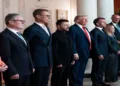
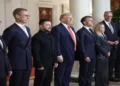
British Prime Minister Keir Starmer, French President Emmanuel Macron, NATO Secretary General Mark Rutte and other senior European leaders are set to join the talks. Their presence is not merely symbolic. European capitals fear that Trump’s insistence on quick concessions to Russia, including recognition of Moscow’s hold on Crimea and denial of Ukraine’s NATO aspirations, could leave Kyiv exposed. Europe’s unusual collective move underscores the concern that Washington’s shifting stance risks undermining Western unity.
The context is tense. Reports from the Alaska summit indicated that Putin demanded full control of the Donbass region in return for peace. Trump, who has cast himself as a dealmaker, has repeatedly suggested that Zelensky could end the war “immediately” if he accepts territorial losses. On Truth Social, Trump reiterated his position bluntly: “The Crimea that Obama gave us will not be returned… Ukraine will not join NATO. Some things will never change.” Such remarks have been viewed in European capitals as dismissive of Ukrainian sovereignty and far removed from diplomatic balance.
For Zelensky, this White House visit is also about personal credibility. His last encounter with Trump in February ended abruptly after the American president reportedly treated him with open rudeness, prompting Zelensky to walk out. European leaders are determined to prevent a repeat of that humiliation, with Macron stressing that their united front is meant to ensure Ukraine is not cornered into an inequitable settlement. “No country can accept the loss of its territory,” Macron declared, warning that Europe would pay “a heavy price tomorrow if Ukraine is weakened today.”
The Trump administration’s approach contrasts sharply with European insistence on security guarantees for Ukraine’s remaining territory. NATO, while wary of full membership for Kyiv, has backed continued aid and training. By excluding NATO membership and affirming Russia’s claim to Crimea, Trump has departed from years of US policy and echoed Moscow’s talking points, raising questions about Washington’s reliability as a partner.
European leaders’ presence in Washington is a direct response to Trump’s undiplomatic and unstable conduct, both in tone and substance. Where past US administrations sought to manage differences behind closed doors, Trump has chosen public ultimatums and social media declarations. That style undermines trust among allies.
Today’s White House meeting will therefore serve not only as a negotiation over Ukraine’s future but also as a test of transatlantic cohesion. Zelensky, backed by his European allies, is expected to reject any settlement that legitimises Russian territorial gains. Whether Trump will moderate his stance under the weight of European pressure remains uncertain. For now, Washington is the stage of a widening divide between diplomacy and deal-making, one that could decide the trajectory of the Russia-Ukraine war.











Comments