





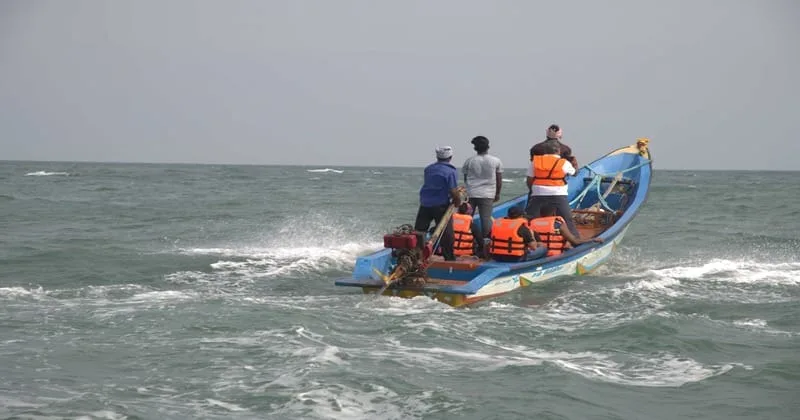
The Underwater Archaeology Wing (UAW) of the Archaeological Survey of India (ASI) has restarted its exploration of submerged archaeological remains off the coast of Mahabalipuram.
The current initiative builds on studies conducted nearly two decades ago. In 2001, the Underwater Archaeology Wing of the Archaeological Survey of India began archaeological investigations off the Mahabalipuram coast, followed by systematic excavations and diving operations in 2004–05. These efforts revealed evidence of submerged structures beneath the sea.
Mahabalipuram, a UNESCO World Heritage Site, is renowned for its rock-cut temples, monuments, and sculptures from the Pallava period (7th–8th century CE). While its architectural marvels on land are well documented, the site has also been linked to historical records and local legends, suggesting the presence of ancient structures beneath the ocean surface.
The Underwater Archaeology Wing has launched a new phase of fieldwork at Mahabalipuram, building upon earlier discoveries. The team is using a newly acquired Remotely Operated Vehicle (ROV) that captures high-resolution images and videos of submerged remains without disturbing the site. This technology allows exploration of deeper and more challenging underwater areas while improving safety and accuracy.
The project began a few days ago, with the ASI team including Alok Tripathi, Additional Director General; Aprajita Sharma, Head of the Underwater Archaeology Wing; P.T. Nagarajan, Assistant Epigraphist; Sanjay Kumar Sharma, Senior Photographer; and archaeologists from the ASI’s Chennai Circle.
Diving into history!
ASI’s Underwater Archaeology Wing is exploring submerged remains off Mahabalipuram coast to solve the riddle of the ancient past built during the 7-8th cen. Pallava dynasty which served as a landmark to the sailors for hundreds of years.
The team is using… https://t.co/FbB3lQzGWc
— Archaeological Survey of India (@ASIGoI) August 16, 2025
In a recent post on X, the ASI stated that the UAW is “exploring the submerged remains off the Mahabalipuram coast to unravel the mysteries of the ancient past built during the 7th-8th century Pallava dynasty, which served as a landmark for sailors for centuries.”
Union Minister of Culture and Tourism, Gajendra Singh Shekhawat, shared on X that the team is being guided by a woman diver-archaeologist. He expressed pride in the Underwater Archaeology Wing’s work off the coast of Mahabalipuram, saying, “Thanks to their dedication, the treasures beneath the waves will be preserved just like the monuments on shore—for generations to discover and cherish.”
The first underwater exploration at Mahabalipuram took place in 2001, focused east of the Shore Temple. Further investigations in 2004–05 were carried out north of the Shore Temple. A systematic study north of Mahisasura Rock uncovered submerged archaeological remains, including three walls and several carved architectural elements from ancient temples, ASI officials reported.















Comments