





As the world’s largest democracy charts its future amid geopolitical churn and economic ambition, Bharat finds itself grappling with a war not waged with bullets or bombs, but through borders breached by stealth. The unchecked tide of illegal infiltration, particularly from Bangladesh, is not merely a question of immigration. It is a calculated demographic offensive that imperils the very cultural and civilizational fabric that holds this ancient nation together. While debates rage in television studios and Parliament over the economy and electoral arithmetic, a quieter but far more dangerous transformation is unfolding in districts across Assam, West Bengal, and even parts of Bihar and Uttar Pradesh. Entire villages have changed character within decades. Demography, once a neutral data point, has turned into a political weapon.
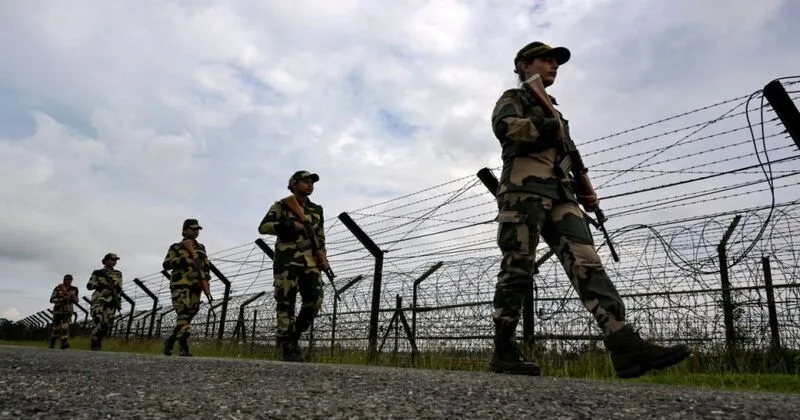
Infiltration from Bangladesh is neither accidental nor incidental. The porous 4,096-kilometre border that India shares with Bangladesh is exploited not only by desperate economic migrants but also by well-organised syndicates backed by political patronage. The aim is simple yet sinister: to alter the religious and cultural demography of border states, destabilize local governance, and create vote-banks rooted not in loyalty to Bharat but in communal allegiance and separatist sentiment.
What is happening in Bengal, Assam, and parts of Delhi and Karnataka is more than illegal migration, it is demographic jihad, a term that makes our liberal commentariat uncomfortable. The apprehension is understandable. The truth, after all, is deeply unsettling.
The 2011 Census (our last full one) revealed a sharp rise in the Muslim population in border districts, with specific pockets registering a demographic imbalance that has far-reaching consequences. For example, in several districts of West Bengal like, Murshidabad, Malda, North Dinajpur, the Muslim population has crossed 50%, with some blocks witnessing near-total transformation. This trajectory spells an increasingly perilous future for Bengali Hindus. The recent violence in Murshidabad serves as a grim reminder of the volatility simmering in West Bengal’s border districts. Preliminary findings, now in the knowledge of the Union Ministry of Home Affairs (MHA), point towards the suspected involvement of Bangladeshi miscreants in the unrest. Such developments pose a serious threat to the fragile communal fabric and security of these sensitive frontier regions.
In a crucial move against illegal immigration and identity fraud, Kolkata and West Bengal Police have recently apprehended several Bangladeshi nationals. Among them is a woman, Shanta Paul (28), arrested from a rented flat in Bikramgarh under Golf Green Police Station, in connection with Park Street Police Station Case No. 124/2025. Her case, filed under multiple sections of the Bharatiya Nyaya Sanhita, highlights the growing concerns over forged documents and long-term illegal stay. Additionally, arrests include a man who lived in India for over 15 years under a false identity and a group intercepted while trying to cross the Nadia border back into Bangladesh. These incidents are undoubtedly alarming for national security.
Now questions may come, why does this matter? Because demography dictates destiny. As we saw in Kashmir and are now seeing in Sandeshkhali or Murshidabad, unchecked demographic shifts bring political instability, social fragmentation, and even radicalisation. When infiltration combines with identity politics, the result is ghettoisation, parallel economies, and the rise of anti-national elements who operate freely under the radar of vote-seeking regimes.
What makes this threat even more alarming is the active complicity or deliberate inaction of political parties who see illegal migrants as captive voters. In West Bengal, the ruling party has built an entire ecosystem based on appeasement. The issuance of ration cards, voter IDs, and even Aadhaar to infiltrators has become a normalised practice. This is not governance, it is slow treason. The Congress, with its legacy of appeasement since the Nehruvian era, has historically brushed aside concerns about infiltration. The Communists, obsessed with class struggle, facilitated settlement of Bangladeshi Muslims in West Bengal as part of their anti-Hindu, anti-national project.
It was only under the leadership of Prime Minister Narendra Modi and Home Minister Amit Shah that the issue was brought to the national forefront. The NRC process in Assam, though imperfect in some cases, was a step in the right direction. The passage of the Citizenship Amendment Act (CAA), 2019, was a historic correction, a civilizational imperative to protect persecuted Hindus, Sikhs, Jains, and Christians of Indic origin from Pakistan, Afghanistan, and Bangladesh. Yet, even this was met with howls of protest from the so-called secular intelligentsia, who conveniently ignore the plight of Hindus being lynched in Bangladesh or raped in Sindh but weep copiously over imagined fears of ‘discrimination’.
Parallel to the Bangladeshi infiltration is the silent settlement of Rohingya Muslims, particularly in Delhi, Jammu, and parts of Hyderabad. Despite the Supreme Court categorically recognising them as illegal immigrants, some state governments and NGOs continue to provide shelter, jobs, and even benefits. What is the consequence? In Jammu, the Rohingya settlements have cropped up near military installations. Intelligence reports have flagged the possibility of ISI-backed networks using them as foot soldiers for terror. Is this mere negligence or wilful sabotage?
Beyond numbers, the civilisational question is even more alarming. Bharat is not just a country, it is a sanskriti, a living civilization rooted in shared memories, sacred geographies, and dharmic values. When areas turn into ethnic or religious ghettos, this continuity is broken. Temples are attacked, women feel unsafe, and the idea of India as a spiritual homeland for Indic people comes under siege. This is not alarmism, it is the lived experience of lakhs in Bengal, Assam, and parts of Delhi. When Durga Puja is banned, when Ram Navami processions are attacked, when temples are desecrated in border districts, it is not just an assault on religion, it is an attack on Bharat itself. Illegal migrants do not assimilate into Indian society; they recreate the same societal and religious structures from which they claim to flee. Worse, they are often radicalised, economically subsidised, and politically weaponised.
If Bharat is to endure as a civilisational nation-state, decisive and unapologetic action is non-negotiable. The government must rise above political hesitation and international pressure to implement measures that secure both our borders and our identity. First, a nationwide rollout of the NRC is imperative especially in high-risk states like West Bengal, Bihar, and Uttar Pradesh. Identification is the first step toward rectification. Simultaneously, the Citizenship Amendment Act (CAA) must be implemented swiftly and fully, ensuring that persecuted Hindu, Sikh, Jain, and Christian refugees find safe refuge in their civilisational homeland.
Civilisations do not collapse in a day. They are eroded from within, one compromise at a time, one appeasement at a time, one illegal settlement at a time. Bharat today stands at such a civilisational crossroad. It is time to reclaim the original promise of this nation not just as a secular democracy, but as a Dharmic Rashtra, rooted in justice, order, and cultural continuity. The infiltration crisis is not just a political challenge; it is a spiritual test. We must choose: between a fractured nation of competing ghettos or a unified Bharat anchored in its civilisational ethos.
















Comments