





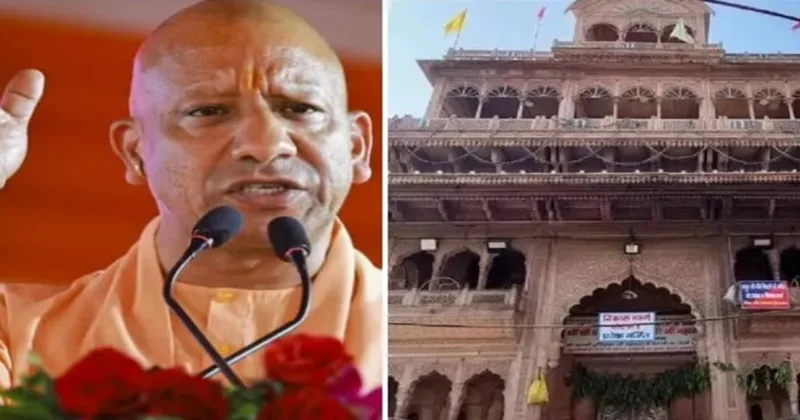
In a significant move to streamline the administration and management of one of Uttar Pradesh’s most revered temples, the CM Yogi Adityanath-led government tabled the Sri Banke Bihari Temple Nyas Bill in the state assembly. The bill was presented to create a statutory trust responsible for overseeing the operations, assets, and offerings of the famous Sri Banke Bihari Ji Temple in Vrindavan, Mathura.
This legislative proposal follows an earlier ordinance issued by the state government titled Sri Banke Bihari Nyas Adhyadesh which outlined the structure and powers of the proposed trust. The ordinance, however, faced legal challenges and was temporarily stayed by the Supreme Court last week, with directions for the petitioner to approach the Allahabad High Court for resolution.
The legislation aims to bring the temple’s governance under a structured body capable of handling the rising influx of devotees and the large volume of offerings received. This encompasses all assets associated with the temple, including idols, jewellery, grants, and items of religious significance. Offerings whether made in cash, kind, or through bank instruments like drafts and cheques will come under the trust’s jurisdiction.
Composition and Governance of the Trust
The proposed trust will include 11 nominated representatives and 7 ex-officio members. Every nominated representative must be a practicing follower of Sanatan Dharma and may belong to the Vaishnav tradition, other branches of Sanatan practice, or come from social, academic, or professional fields.
Importantly, two nominated members will be chosen from the temple’s Goswami tradition, descendants of Swami Haridas, specifically the Raj-Bhog Sevadar and Shayan-Bhog Sevadar.
- The ex-officio members will include:
- The District Magistrate of Mathura
- The Senior Superintendent of Police
- The Municipal Commissioner
- The CEO of the Uttar Pradesh Braj Teerth Vikas Parishad
- The CEO of the Banke Bihari Temple Trust
- One additional government nominee
- Another senior official as required
If an ex-officio member is either not a Hindu or is unable to perform their duties, a junior official will be designated to take their place.
Trustees will serve three-year terms and will hold quarterly meetings, with at least 15 days’ prior notice. While the trust will be empowered to conduct property transactions independently for amounts up to Rs 20 lakh, any transaction exceeding that limit will require approval from the state government.
The Sri Banke Bihari Ji Temple, an iconic shrine dedicated to Lord Krishna, has been a centre of devotion for centuries. Situated in the heart of Vrindavan, it draws lakhs of devotees annually, especially during Janmashtami, Holi, and other major festivals. The path to formalising the trust has not been without obstacles. Shortly after the ordinance was promulgated, a petition challenging its provisions was filed in the Supreme Court. The petitioner argued that the ordinance undermined the traditional management structure of the temple, which has historically been overseen by hereditary priests. Concerns were raised that UP government involvement could dilute age-old customs and alter the spiritual character of the institution.
However, the government insists that the creation of the trust will not interfere with established traditions but will instead provide the infrastructure, resources, and oversight needed for smooth operations. Provisions have been included to ensure that ritual practices remain under the supervision of authorised religious functionaries, even as the trust takes charge of financial and administrative matters.
By consolidating authority over these assets, the government aims to eliminate disputes over ownership and reduce the scope for mismanagement. Officials have hinted that the trust will maintain audited accounts, publish annual reports, and ensure compliance with heritage preservation norms.
Balancing Tradition and Modern Governance
In the case of Sri Banke Bihari Ji Temple, the government has assured stakeholders that the trust will respect and preserve the temple’s unique devotional customs, while also introducing systems to handle the pressures of contemporary pilgrimage. Consultations with priests, devotees, and local bodies are expected to shape the final structure of the trust.
Next Steps in the Legislative Process
With the bill now tabled, it will undergo discussion and debate in the Uttar Pradesh Legislative Assembly. Lawmakers will have the opportunity to examine its provisions, propose amendments, and address concerns raised by various stakeholders. If passed, the bill will replace the earlier ordinance, giving the trust a firm legal foundation.
Establishing the Sri Banke Bihari Temple Trust could serve as a model for managing other prominent temples in Uttar Pradesh. It mirrors similar arrangements in states like Tamil Nadu, Andhra Pradesh, and Karnataka, where government-backed trusts manage world-famous shrines such as Tirumala Tirupati and Srirangam. While each case is unique, the underlying principle remains the same: combining tradition with professional management to safeguard heritage while serving the needs of modern devotees.















Comments