





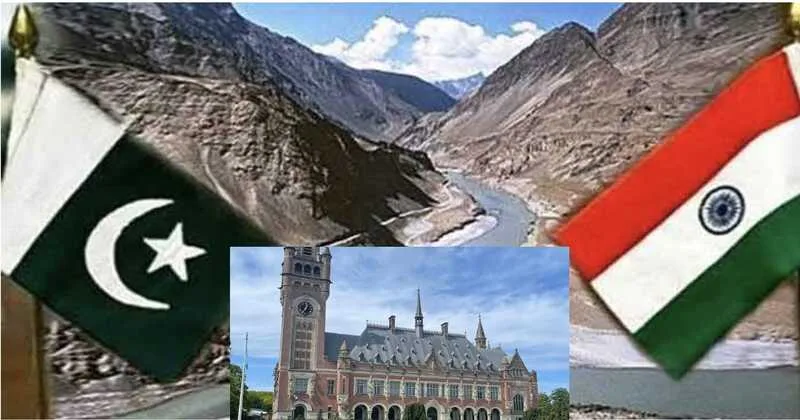
India has firmly rejected the August 8, 2025, ruling of the Permanent Court of Arbitration (PCA) on the Indus Waters Treaty (IWT), declaring it has never recognised the court’s jurisdiction over the Kishanganga and Ratle hydropower projects. India clearly underlined the position that New Delhi does not recognise the court’s jurisdiction and will not resume treaty implementation until Pakistan takes verifiable action against cross-border terrorism. The strong stand comes shortly after India defied US demands to cut Russian oil imports and imposed retaliatory tariffs, signalling New Delhi’s growing strategic autonomy in the face of external pressure.
India’s official position underscores that the arbitration was unilaterally initiated by Pakistan in violation of the IWT’s dispute resolution mechanism, undermining the scope for bilateral settlement. The government reiterated that the World Bank’s 2022 move to simultaneously activate both a neutral expert and the Court of Arbitration, at Pakistan’s insistence, created “practical and legal challenges” and was unacceptable under the treaty framework. New Delhi remains clear that the IWT, placed in abeyance after the April 22 Pahalgam terror attack, will not be reinstated until Pakistan takes credible, verifiable action to dismantle cross-border terror networks.
India Rejects External Imposition on Hydropower Design
The PCA’s award sided with Pakistan’s interpretation of the IWT, stating India must strictly adhere to treaty provisions in designing run-of-river hydropower projects on the western rivers, Indus, Jhelum and Chenab, without imposing its own engineering standards. Pakistan alleged that Indian projects reduce downstream flows, a claim India has consistently dismissed as unfounded and politically motivated. The court reportedly directed India to “let flow” the waters for Pakistan’s unrestricted use, with only limited exceptions for hydropower generation as outlined in the treaty.
Despite the ruling, India’s position remains unwavering, the PCA’s jurisdiction is not recognised, and the award holds no legal standing for New Delhi. Officials have reportedly stressed that legitimate technical issues under the IWT should be addressed through the neutral expert mechanism, not through politically charged arbitration.
BIG BREAKING NEWS 🚨 India REJECTS Hague Court Verdict on Indus Waters Treaty.
UNPRECEDENTED MOMENT 🔥🔥
Permanent Court of Arbitration in The Hague ruled that India must comply with the Indus Waters Treaty and allow western river flows to Pakistan.
India responded that it… pic.twitter.com/aVH0EF2kPY
— News Algebra (@NewsAlgebraIND) August 13, 2025
Pakistan’s Escalatory Rhetoric Undermines Dialogue
The ruling comes amid increasingly hostile rhetoric from Pakistan’s top leadership. Army Chief Gen Asim Munir, speaking in the United States, issued a nuclear threat, declaring: “We are a nuclear nation. If we think we are going down, we’ll take half the world down with us.” He further warned of destroying Indian infrastructure if water flows were reduced. Prime Minister Shehbaz Sharif, in a separate speech, accused India of plotting to “snatch” Pakistan’s water and vowed retaliation, calling the rivers Pakistan’s “lifeline.”
Such aggressive posturing reinforces New Delhi’s stance that Pakistan’s use of the IWT as a diplomatic tool is inseparable from its continued sponsorship of terrorism. The Pahalgam terror attack, which prompted India to suspend treaty implementation, remains a stark reminder that cooperation on water sharing cannot be divorced from security realities.
Historical Context and India’s Strategic Position
Signed in 1960 after nine years of negotiations mediated by the World Bank, the IWT allocates the western rivers to Pakistan and the eastern rivers, Ravi, Beas and Sutlej, to India, while allowing limited usage rights across both sides. The treaty has survived wars and diplomatic freezes, but Indian officials have long maintained it disproportionately favours Pakistan despite its unrelenting support for cross-border militancy.
The latest PCA decision is being treated in New Delhi as part of a broader pattern of attempts by Pakistan to internationalise bilateral issues. India’s recent policy actions, from strategic trade autonomy to tariff impositions, underscore its unwillingness to accept externally imposed restrictions, particularly from a country that refuses to act against terror operatives targeting Indian civilians and infrastructure.
By decisively rejecting the PCA ruling and linking any future engagement to Pakistan’s verifiable action against terrorism, India has sent a clear message, its water rights, security interests, and sovereignty will not be subjected to politically motivated arbitration or coercive diplomacy. The government’s firm position reflects a broader strategic doctrine that India will defend its rights under international agreements on its own terms, while ensuring that no engagement with Pakistan proceeds without concrete guarantees for peace and security.












Comments