






Behind the clickbait headlines reporting the gaiety and celebrations of Independence Day every August 15, lies a human and civilisational tragedy of unprecedented proportions, which successive Indian regimes have sought to sweep under the carpet. A day before the historic day, a timeless nation was vivisected, resulting in the creation of an Islamic country, called Pakistan. The immediate months preceding and following Partition witnessed mayhem, unravelled in history, for its ferocity and cruelty. Millions of innocents were uprooted from their ancestral homes, lakhs lost their lives, leaving collective scars spanning over generations. Countless families were separated and forced to start afresh in unfamiliar places. And all this in the name of religion!
Partition Horrors Remembrance Day
Only since 2021 has this tragic day been observed in India as ‘Partition Horrors Remembrance Day’. Nationwide events occur on this day, including photo exhibitions, panel discussions, silent marches, and cultural performances in public areas and various universities. The day commemorates the suffering of millions during the 1947 Partition and aims to instil historical awareness among citizens, especially youth.
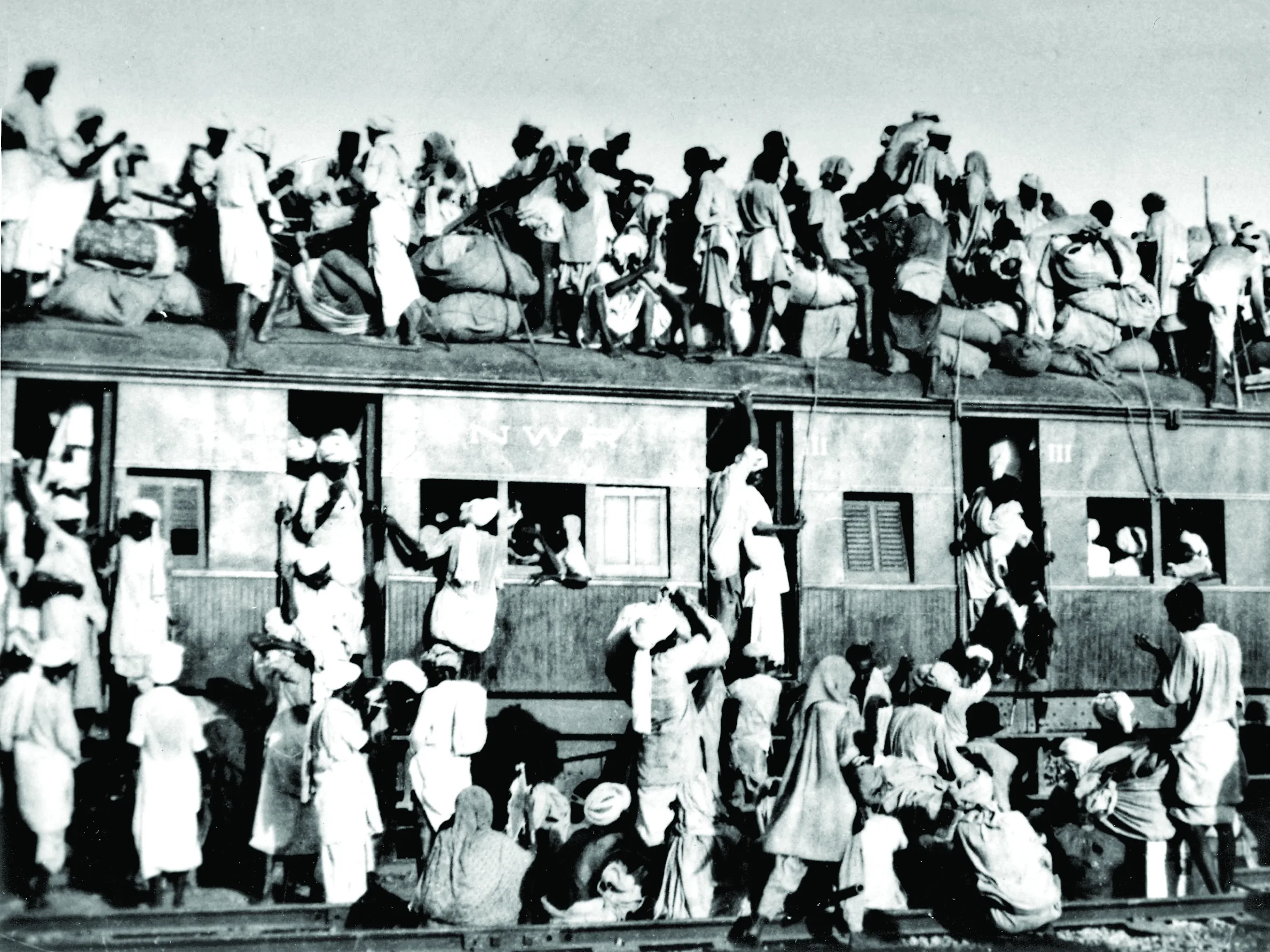
On August 14, 2021, Prime Minister Narendra Modi said, “Partition pains can never be forgotten. Millions of our sisters and brothers were displaced, and many lost their lives due to mindless hate and violence…. May the Partition Horrors Remembrance Day keep reminding us of the need to remove the poison of social divisions and disharmony and further strengthen the spirit of oneness, social harmony and human empowerment.”
It compels us to ask how a civilisational nation that had stood united for centuries suddenly split into two. Why does Pakistan harbour such deep-seated hatred for residual India that it continues to be obsessed with India’s destruction since its inception? Indeed, Pakistan was formally born on August 14, 1947, but can the same be said for India? Whom does Pakistan truly represent— Islam, or the vested interests of colonial powers, or both? Answers to these questions would shape our present and influence our future.
Why does Pakistan harbour such deep-seated hatred for residual India that it continues to be obsessed with India’s destruction since its inception?
Between 1930 and 1947—in a mere span of 17 years—not only was the idea of Pakistan conceptualised, but it became a reality as well, slicing off one third of India, an area adding to 881,913 square kilometres. In contrast, the Shri Ram Janmabhoomi temple at Ayodhya, which needed only 2.77 acres of land, took nearly five centuries of struggle (including seven decades in independent India) to materialise. The sub-continent Muslims got Pakistan because the British wanted to give it to them for their reasons. The then colonial rulers used all the machinations at their command to widen further the historical chasm that existed between the two communities (Hindus & Muslims) and then manipulated the resulting situation to achieve their divisive end. Did the overwhelming pre-Partition Indian Muslims living in the present-day Pakistan want an Islamic nation? No, they didn’t. The crafty British, through their stooges, paid proxies, and agent provocateurs and avaricious Muslim leadership lusting for power, manipulated the Muslim masses. The then leadership (consisting mainly of Mahatma Gandhi, Pandit Nehru, Sardar Patel and Acharya Kripalani….) lacked the resolve and strategy to combat the scheming British colonisers, hooliganism and strong-arm tactics of a ruthless Muslim League.
No Support for Pakistan
Contemporary Pakistan comprises Sindh, Punjab, Khyber Pakhtunkhwa (formerly North-West Frontier Province), and Baluchistan. Ironically, during the years before Partition, the political leadership of these provinces—and all Muslims—strongly rejected the idea of a separate state based on Islam.
In Sindh, Allah Bux Muhammad Umar Soomro (1900–1943), twice Chief Minister and founder of the Sindh Ittehad Party, denounced the two-nation theory as “un-Islamic.” Advocating for composite nationalism, he proclaimed, “No power on earth can rob anyone of his faith and convictions, and no power on earth shall be permitted to rob Indian Muslims of their just rights as Indian nationals.” He was assassinated on May 14, 1943, with contemporary press reports suggesting possible involvement of Muslim League sympathisers.
Punjab’s dominant Unionist Party, a cross-communal alliance, similarly opposed Partition. Its leader, Sir Sikandar Hayat Khan (1892–1942), Premier of Punjab from 1937 until his death, refused to accept the Lahore Resolution as a blueprint for Pakistan, viewing Partition as a disruption to both Punjab’s unity and the Unionist Party’s secular ethos. His successor, Malik Khizar Hayat Tiwana (1900–1975), remained staunchly anti-Partition. Tiwana, a Punjabi Muslim landlord of over one lakh acres, famously told Jinnah, “There are Hindu and Sikh Tiwanas who are my relatives… How can I possibly regard them as coming from another nation?”
However, Mohammad Ali Jinnah’s orchestrated boycotts led to Tiwana’s resignation on March 2, 1947, after which Sir Evan Jenkins assumed direct rule of Punjab until August 14, 1947. Pakistan’s regime confiscated Tiwana’s properties post-independence. He eventually migrated to the United States, where he reflected that a Punjabi Muslim shared more cultural affinity with Punjabi Hindus and Sikhs than with Bengalis—an assertion vindicated by the secession of East Pakistan in 1971.
Resistance by Frontier Gandhi
Khyber Pakhtunkhwa, formerly NWFP, also resisted Partition. Khan Abdul Ghaffar Khan, or ‘Frontier Gandhi’, a devout Muslim and Gandhian ally, upheld Hindu-Muslim unity. Disillusioned by the Congress’s unilateral acceptance of Partition, he lamented: “You have thrown us to the wolves.”Baluchistan remains restive even today. Historically sidelined in the Pakistan project, the province has witnessed multiple insurgencies by groups like the Baluchistan Liberation Army (BLA), demanding autonomy or Independence. The conflict has been characterised as a nationalist and self-determination struggle.
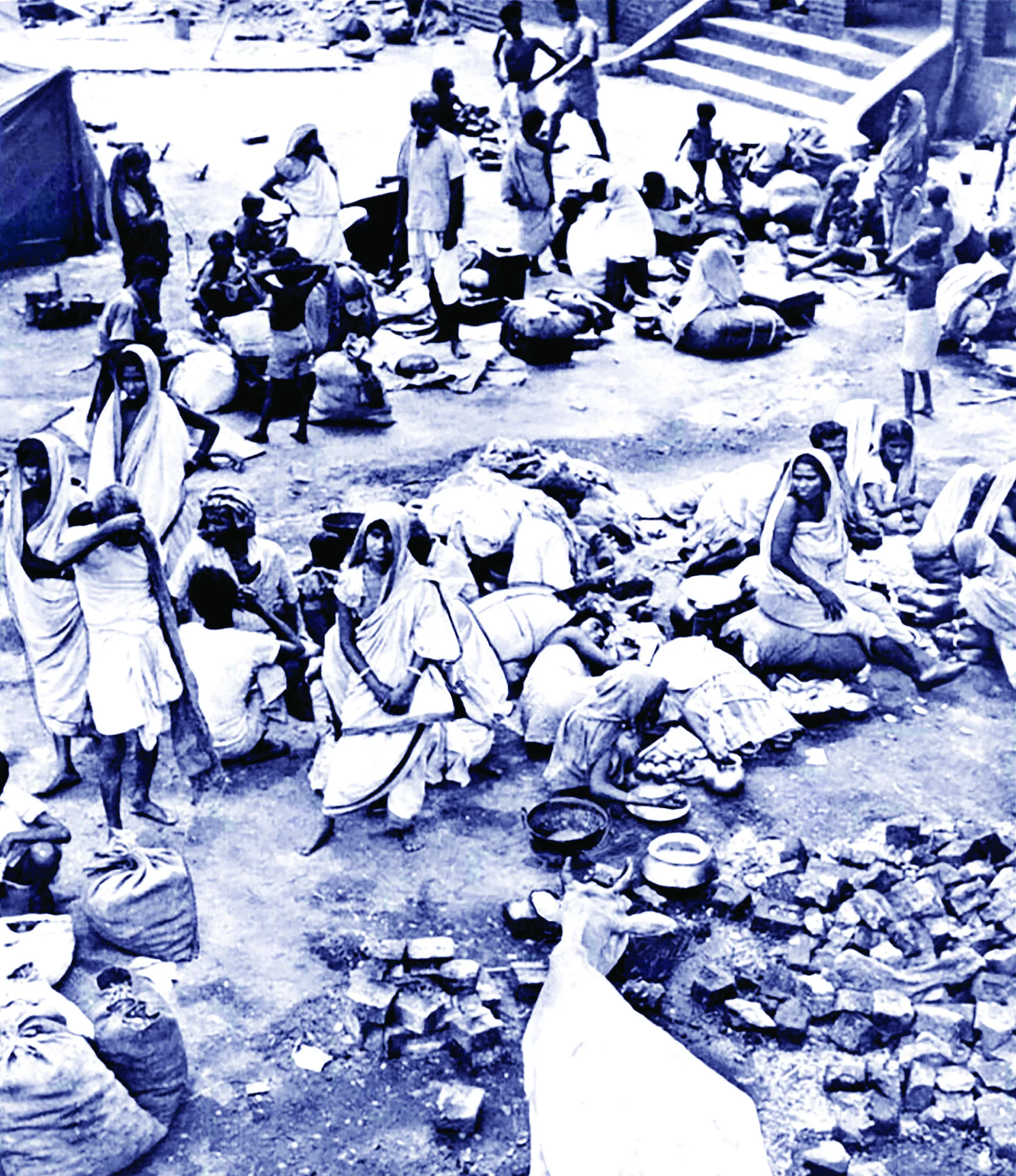
These voices—marginalised in mainstream narratives—underscore that Pakistan’s creation was not a unanimous Muslim demand but was contested within the very provinces that today constitute its territory.
The main driving force for the idea of an exclusive Islamic state was the Muslims of Uttar Pradesh, Bihar, and Bengal. The League got massive support from a section of Muslims in the areas that are now a part of residual India: Madras: 100 per cent, Bombay: 100 per cent, Orissa: 100 per cent, Assam: 91 per cent, Bengal: 95 per cent, Bihar: 85 per cent, Central Provinces: 93 per cent, Undivided Punjab: 86 per cent, United Province: 82 per cent.
At that time, Jinnah did not contest elections from Lahore, Rawalpindi, Peshawar, Sindh, or his birthplace, Karachi. Instead, he fought the election from the Byculla seat in Bombay province (now part of Mumbai) and won comfortably. This indicates that the Muslims of Bombay then had chosen Pakistan over undivided India.
However, most of the Muslims, who had actively worked for Pakistan, did not go to their cherished dreamland and stayed back. Most of them, donned Khadar, joined Congress, which they had previously hated on religious grounds. They were welcomed into the Congress fold, adding to its newly defined ‘secular’ sheen. Congress, under Pandit Nehru, worked as a magical washing machine. It transformed rabid bigoted Muslims into ‘secular’ icons overnight.
A former civil servant, Yuvraj Krishan, has documented this shocking change in the Congress profile in his incisive work Understanding Partition: India Sundered, Muslims Fragmented. Among them were 28 Muslim leaders— such as Ahmad Ibrahim Sahib, Pokar Sahib, Tahir Mohammad, and Tajammul Hussain—who were later included as members of the Constituent Assembly that drafted the Constitution of India. One of the members was Begum Aizaz Rasul, a leader of the Muslim League Legislative Party in United Province (Now Uttar Pradesh) before Partition. She became a member of the Constituent Assembly, then a Congress MLA & Cabinet Minister!
Diabolical Plan by Jinnah’s Supporter
One such leader was Muhammad Ismail, a staunch supporter of Jinnah and the idea of a communal Partition of India. He was one of the principal leaders of the All-India Muslim League in the Madras Presidency from the mid-1930s. In 1945, he became the President of the Madras Presidency unit of the All-India Muslim League. In the elections to the Madras legislature, the League won all but ten reserved seats in 1936 and all in 1946. The League emerged as the second largest party in the Assembly after the 1946 elections, and Ismail served as the Leader of the Opposition in the Legislative Assembly.
After Partition, Muhammad Ismail didn’t migrate to the country of his dreams and opted to stay back and recreate the League. He was also a member (1948—50) of the Constituent Assembly. He was also a member of the Rajya Sabha (1952—58) and the Lok Sabha (3rd, 1962—67, 4th, 1967—70 and 5th, 1971—72). Only fools would think that his agenda or goals would have changed with a change in the organisation’s nomenclature.
Another glaring case was Syed Ahmad Mehdi, son of the Raja of Pirpur and author of the infamous Pirpur Committee Report, which built a paradigm that Muslims couldn’t get justice in a Hindu-dominated India and were justified in seeking a separate Islamic state. He became a Member of Parliament during the 1957-62 and 1962-67 periods and later became a Union Cabinet Minister and a Congress leader. Of course, the then Deputy Prime Minister and Home Minister, Sardar Vallabhbhai Patel, was wary of such a neo-Congressman. Speaking in Calcutta on January 3, 1948, the veteran leader said, “The Muslims who are still in India, many of them helped in the creation of Pakistan… Has their nation changed overnight? I don’t understand how it changed so much.”

Three days later (Jan 6, 1948), in Lucknow, he added, “I am a true friend of the Muslims although I have been described as their greatest enemy……I believe in plain speaking. It is your duty now to sail in the same boat with other Indians and sink or swim together.”
AMU— An Important Part Of The Divisive Toolkit
Pakistan was neither the result of any historical inevitability nor the expression of civilisational continuity or geographical necessity. Pakistan is a wholly artificial state—conceived by the British as a geopolitical instrument, capitalising on the Muslim community’s entrenched notions of ‘kafir-kufr’, which fosters animosity towards non-Muslims. With ideological support from Communists, the British used this religious exclusivism to their strategic advantage.
Syed Ahmad Khan’s Separatist Agenda
How did Muslim separatism take root in this region of the world? In the closing decades of the 19th century, Sir Syed Ahmad Khan sowed the seeds of this separatist thought through his speeches.
Sir Syed’s speech delivered at Meerut on March 16, 1888, holds significant relevance. Excerpts: “Now, suppose that the English community and the army were to leave India, … who then would be the rulers of India? Is it possible that under these circumstances, two nations – the Mohammedans and the Hindus – could sit on the same throne and remain equal in power? Most certainly not. It is necessary that one of them should conquer the other….
To counter the Soviet Union, the U.S. built an entire jihadist ecosystem, for which Pakistan served as the ideological and logistical incubator
“God has said that no people of other religions can be friends of the Mohammedans except the Christians. ..Therefore, we should cultivate a friendship with them and adopt the method by which their rule may remain permanent and firm in India and may not pass into the hands of the Bengalis”. Sir Syed expressed his disdain for the Congress leaders by dismissively referring to them as ‘Bengalis’.
During the last 13 years of his life, Sir Syed established educational institutions for Muslims, including Madrasatul Uloom Musalmanan-e-Hind and Muhammadan Anglo-Oriental College. These institutions eventually evolved into AMU, 22 years later, after his demise in 1898.
Has AMU lived up to Sir Syed’s expectations?
In October 1939, AMU Students’ Union passed a resolution condemning the “fascist policies” of Congress-led provincial governments. Then, in January 1941, the Students’ Union resolved that “the best way to achieve India’s freedom and to bring about lasting peace in the country is to strive for the establishment of independent states in the regions of Hindu and Muslim majorities.”
On March 10, 1941, Muhammad Ali Jinnah described AMU as the “arsenal” of Pakistan. “I appeal to you to prepare yourselves and be ready for any emergency which may arise. Aligarh is the arsenal of Muslim India (Pakistan) and you are its best soldiers”, he told the students of the University.
This sentiment was echoed by Liaquat Ali Khan, Pakistan’s first Prime Minister, when he addressed AMU students on August 31, 1941, stating, “We look to you for every kind of ammunition to win the battle of independence for the Muslim nation.”
The Muslims, who opposed the demand of the Muslim League for Pakistan, were vilified and even physically assaulted by AMU Students. In 1941-42, Maulana Azad was physically attacked while passing through Aligarh on a railway train by the AMU students. Another Muslim leader, Prof. Humayun Kabir, had his three teeth knocked out. In his convocation address to the AMU in 1949, Maulana Azad traced AMU’s anti-Indian and separatist role to its founder, Sir Syed. Azad observed that in the last quarter of the 19th century, the Indian Muslims opposed or kept aloof from the country’s struggle for emancipation, “The Aligarh Party… continued his policy… to keep the Muslims out of the Indian National Congress “at Sir Syed’s instance.
FAA Rehmaney, biographer of Fakhruddin Ali Ahmed (fifth President of India), has this to say about Aligarh’s role in Partition, “…from 1940 and onwards, the Muslim League made this University a convenient and useful media for the spread of its political ideology, of sowing the seeds of the venomous two-nation theory…. teams of students and teachers of the University spread all over the country explaining the virtues and aims to the Muslims in case Pakistan was formed….”
Britain’s Strategic Imperatives Behind Partition
In essence, the Partition of India on religious lines was part of Britain’s long-term imperial strategy. This is well-documented in former Indian diplomat Narendra Singh Sarila’s seminal work, The Shadow of the Great Game: The Untold Story of India’s Partition, and in economic historian Prasenjit K. Basu’s celebrated work, Asia Reborn. In his book, Sarila cites classified correspondence among British officials. On May 5, 1945, then British Prime Minister Winston Churchill commissioned a secret report recommending Britain retain a military presence in India’s North-West (now Pakistan) to check the growing Soviet threat. The same report advocated detaching Baluchistan from India to safeguard British interests in the Gulf and West Asia.

“Its value as a base from which forces located there could be suitably placed for deployment both within the Indian Ocean area and in the Middle East and the Far East; a transit point for air and sea communications; a large reserve of manpower of good fighting quality; and from the northwest of which British air power could threaten Soviet military installations.”
On June 3, 1947, British Foreign Secretary Ernest Bevin stated at the British Labour Party conference: “The division of India would help to consolidate Britain in the Middle East.”Another 1947 British military report clearly said, “The area of Pakistan [West Pakistan or the northwest of India] is strategically the most important in the continent of India and the majority of our strategic requirements could be met…by an agreement with Pakistan alone. We do not, therefore, consider that failure to obtain the agreement with India [Hindustan] would cause us to modify any of our requirements…”
Britain & America Nurtured Pak
According to Prasenjit K. Basu, Britain’s strategic ambition was to retain control over North-West Frontier Province (now Khyber Pakhtunkhwa) and Baluchistan, to safeguard its influence over the oil-rich regions of Iran, Iraq, and the Gulf. In one interview, Prasenjit said, “The creation of Pakistan was integral to Britain’s grand strategy… Britain’s military planners had made it clear that they needed to retain a foothold in the NWFP (North West Frontier Province) and Baluchistan, because that would provide the means to retain control of Iran…, Iraq… and …Kuwait, the Trucial States (now the UAE), Bahrain and Qatar.”
Hence, it was no surprise that post-Partition, Pakistan became a key ally in the Cold War military blocs— joining both SEATO and CENTO (the Baghdad Pact). With Britain’s backing, the United States utilised Pakistani soil to counter Soviet expansion. At one point, the CIA operated out of the Peshawar airbase. In the 1970s, under Pakistan’s tacit support, the U.S. opened a diplomatic channel with China. During the 1971 war against India, America unequivocally sided with Pakistan.
Just as the British had deftly weaponised Islam for their political and strategic goals in India, the same formula was replicated by the United States during the Cold War—most notably in Afghanistan. To counter the Soviet Union, the U.S. built an entire jihadist ecosystem, for which Pakistan served as the ideological and logistical incubator. Post-9/11, Pakistan became even more indispensable to American geopolitical designs. What is the raison d’être of Pakistan? Is it love for Islam? Or does it have more to do with its disowning and hating its pre-Islamic past and culture? The origin of Pakistan within the Indian subcontinent is best understood through its official websites and educational curriculum. Successive Pakistani governments trace the conceptual beginnings of Pakistan to the year 712 CE, when the Arab invader Muhammad bin Qasim defeated the Hindu ruler Dahir of Sindh. The Islamic invaders who followed—Mahmud of Ghazni, Muhammad Ghori, Alauddin Khilji, Babur, Aurangzeb, and Tipu Sultan—are all hailed in Pakistan not only as heroes but as ideological forerunners – because they worked ceaselessly to destroy the pre-Islamic civilisation of the subcontinent.
Alarmingly, a segment of Indian society, including some historians, political leaders, Bollywood filmmakers and actors, continues to project these very invaders as nation-builders. This is, although their court historians and contemporary chroniclers well document the brutality of these Islamic conquerors. Does this self-proclaimed Islamic nation represent the aspirations of the subcontinent Muslims? Notwithstanding its pretensions of being a nation wedded to the faith, in reality, Pakistan seldom stands by Islamic causes. Persecution of its Hindus/ Buddhists and Sikh citizens, who couldn’t migrate to India and were unfortunately left behind and visceral hate towards residual India and its pre-Islamic traditions, continue to shape its policies and world view.
How does one explain the close relationship between the US and Pakistan? Or the strategic ties between the Islamic nation and China? The US recently bombed Iran. Most of the Islamic world (particularly the sub-continent Muslims) were enraged over it. But not the Pakistani establishment. A telling example of this self-serving, subservient attitude was witnessed in June this year, when, amid US-backed Israeli airstrikes on Iran, Pakistan’s Army Chief, Asim Munir, was in Washington formulating a forward strategy with US President Donald Trump. This episode again revealed the hollow rhetoric of Islamic unity—or the so-called Ummah. Pakistan is not only campaigning for a Nobel prize for President Trump; there are strong hints that it provided its territory to the American planes that pulverised the Iranian nuclear arsenal. Pakistan has a strategic association with China, a country known for working systematically to obliterate the Islamic identity of its Uyghur Muslim population and make it invisible in its homeland, the Xinjiang province. Since 2017, over a million Uyghurs have been detained in so-called “re-education camps,” where reports suggest forced indoctrination, torture, and suppression of religious practices. Islamic customs such as fasting during Ramadan, wearing hijabs, or even possessing the Quran are penalised. Mosques have been demolished, and Uyghur culture has been erased through forced assimilation. Surveillance is pervasive, with facial recognition, checkpoints, and home intrusions.
Flawed Perception of Neighbouring Nation
Despite all this, a significant section of the Indian Subcontinent’s Muslims continue to perceive Pakistan as a symbol of Islamic aspirations and religious identity. However, this perception is deeply flawed. In practice, Pakistan has never been a genuine custodian of Islam or global Muslim concerns. Instead, it is a construct of the military, feudal elites, and a class-based oligarchy that exploits religion to manipulate public sentiment. The Pakistani state operates with two fundamental objectives: One, to perpetuate hatred towards India’s ancient Sanatan tradition and undermine the cultural unity of the Indian subcontinent. Two, to function as a proxy for global imperial powers, serving their geopolitical interests in return for survival, strategic relevance and collecting generous handouts to fund the lavish lifestyles of the ruling junta, at home and abroad.
Remembrance, A Civilisational Necessity
We must stop imagining Partition as a historical anomaly. It was the logical conclusion of politics unmoored from humanity — of theories spun in distant drawing rooms that spilled blood in dusty fields. It was the day the masses paid for the ambitions of a few. Hindus, Muslims, Sikhs — all bled, all wept, all lost something they could never reclaim. And what is most terrifying is not how it happened, but how easily it happened. How quickly the sacred turned to ash. How thin the veil is between civilisation and savagery. To remember this is not to divide — it is to warn. It is to understand that when we forget who we are to each other, we risk becoming what we fear the most. Remembrance is not a political act. It is a civilisational necessity. The critics who fear that remembrance will reopen old wounds are mistaken. The wounds were never closed. They bleed every time a child learns exclusivist hatred before history. They bleed not because we remember — but because we have refused to. A day of national remembrance will not erase the pain. But it will give it form. It will give it dignity. It will place memory at the heart of citizenship and ensure that the sins of history are never sanctified by forgetting. It will compel schools to teach what they have long omitted. It will make remembrance part of patriotism — not separate from it. It will be a mirror held up to the nation, saying: “This too is us.” Because the dead do not ask for revenge. They ask only to be remembered.
Freedom came wrapped in barbed wires. The birth of a nation also meant the burial of a people. Independence was not only about a flag — it was a civilisational funeral of the cohesiveness of Bharat. They ask us to tell their stories, because they never got the chance to; they ask us to honour them — not with slogans, but with silence, reflection, truth; and they ask us, most of all, not to let their fate become our future. As survivors pass away and memory fades into myth, the clock is ticking. We have a choice: we can either let Partition become a story no one tells, or we can make it the story we vow never to repeat. Partition Horrors Remembrance Day is not just about the past. It is a referendum on our national character. A test of our moral maturity.















Comments