





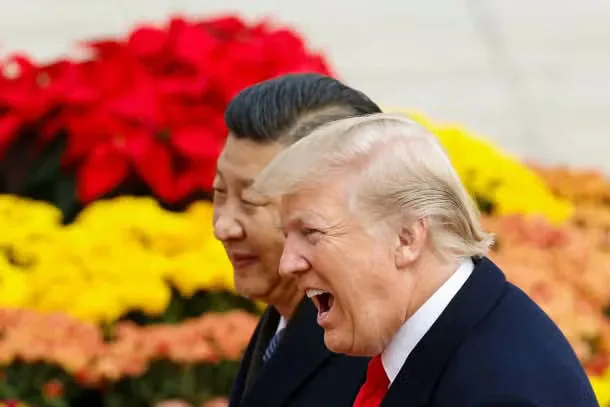
US President Donald Trump has extended a 90-day tariff truce with China, delaying renewed duties until November 10 and offering Beijing critical breathing space just weeks after imposing a 25 per cent tariff on Indian goods over New Delhi’s purchases of Russian oil, a move underscores Washington’s double standards in global trade policy.
The extension, signed through an executive order late on August 11, keeps the existing 10 per cent tariff on Chinese imports in place but halts an escalation that was due to take effect within hours. Trump justified the decision by citing China’s “significant steps” toward addressing US concerns over trade reciprocity and national security.
The move followed two weeks of mixed signals from Washington and came after the third round of negotiations between US and Chinese trade envoys in Stockholm last month, during which Beijing agreed to suspend non-tariff countermeasures. Had the ceasefire expired, tariffs would have reverted to the punitive levels seen during the height of the trade war in April, when Washington’s duties on Chinese goods peaked at 145 per cent and Beijing retaliated with levies of up to 125 per cent, alongside curbs on strategic raw materials.
The timing of Trump’s concession to China stands in sharp contrast to his August 1 decision to impose a 25 per cent tariff on Indian goods in retaliation for New Delhi’s continued imports of discounted Russian oil. While Vice-President J.D. Vance has warned that China could face similar penalties, the administration has given no timeline for such action.
The US-China Business Council called it “critical” for giving negotiators time to secure meaningful market access concessions. However, analysts caution that Beijing holds significant leverage through its rare earth exports, crucial to US high-tech manufacturing and may use the next three months to extract concessions without making substantial compromises.











Comments