





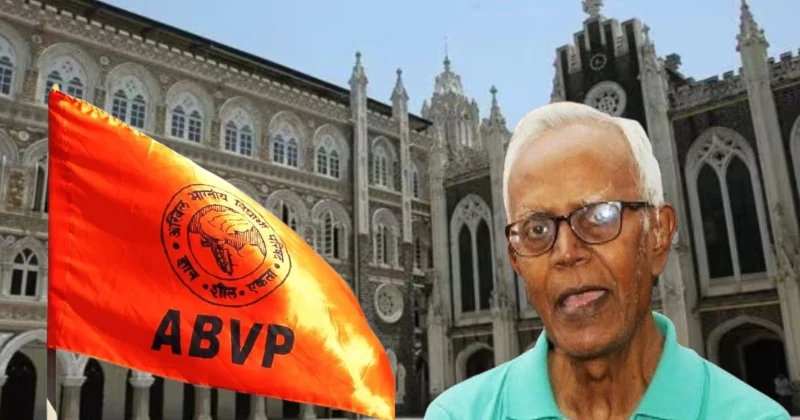
St Xavier’s College in Mumbai has cancelled its annual Stan Swamy Memorial Lecture after strong objections from the Akhil Bharatiya Vidyarthi Parishad (ABVP), which accused the institution of attempting to “glorify” a man charged under India’s toughest anti-terror laws in connection with the Elgar Parishad–Bhima Koregaon case.
The event, organised by the college’s Department of Inter-Religious Studies (DIRS), was scheduled for August 9 with World Indigenous Day. The planned lecture “Migration for Livelihood: Hope Amidst Miseries” was to be delivered virtually by Fr. Prem Xalxo, Associate Lecturer at the Pontifical Gregorian University in Rome.
In a formal letter to the college principal earlier this week, ABVP Mumbai stated that holding a memorial in Stan Swamy’s name on campus “sends a dangerous message” given the serious nature of the charges against him.
“ABVP firmly believes that organising a lecture in memory of a person accused in the Elgar Parishad–Bhima Koregaon case, facing UAPA charges for links with banned Maoist groups, is an attempt to glorify urban Maoism on campus,” the statement read. The organisation also urged the Maharashtra government to “take strict action” against academic events that, in its view, legitimise individuals linked to extremist networks.
The ABVP pointed to Swamy’s designation by the National Investigation Agency (NIA) as a main accused in the 2018 Bhima Koregaon violence conspiracy, which authorities claim was orchestrated by members of the banned Communist Party of India (Maoist).
Who was Stan Swamy?
Stan Swamy, an 84-year-old Jesuit priest and tribal rights activist from Jharkhand, had a long history of working with Adivasi communities. However, his activism came under scrutiny when the Pune Police and later the NIA accused him and 15 others of fomenting caste violence at Bhima Koregaon on January 1, 2018.
The violence left one person dead and several injured after clashes between Maratha and Dalit groups during the bicentenary celebration of a historic battle. Investigators alleged that the Elgar Parishad event held the previous day attended by various Left-leaning activists was used as a platform to incite unrest and further a Maoist agenda.
Swamy was arrested in October 2019 under the UAPA, a law designed to tackle terrorism and insurgency. He remained in judicial custody at Taloja Jail, where his health deteriorated. He suffered from Parkinson’s disease, contracted COVID-19 in prison, and died on July 5, 2021, without facing trial.
In December 2022, a US-based digital forensics firm claimed that incriminating evidence found on Swamy’s computer had been planted through hacking. This finding became a rallying point for activists who argued that the Bhima Koregaon case was built on fabricated evidence.
However, the NIA has consistently maintained that its investigation is based on credible intelligence and that the accused were part of an urban Maoist network working to destabilise the Indian state.
Five years on, the case has seen prolonged delays, with nine of the 16 accused—among them activists Gautam Navlakha, Sudha Bharadwaj, and Anand Teltumbde—granted bail. The others remain in custody as trial proceedings inch forward.
College officials acknowledged that while this year’s lecture topic was focused on migration and livelihood issues, the naming of the series after Stan Swamy was the flashpoint. They emphasised the Jesuit view that Swamy was accused but never convicted, invoking the principle that Indian law presumes innocence until proven guilty.











Comments