





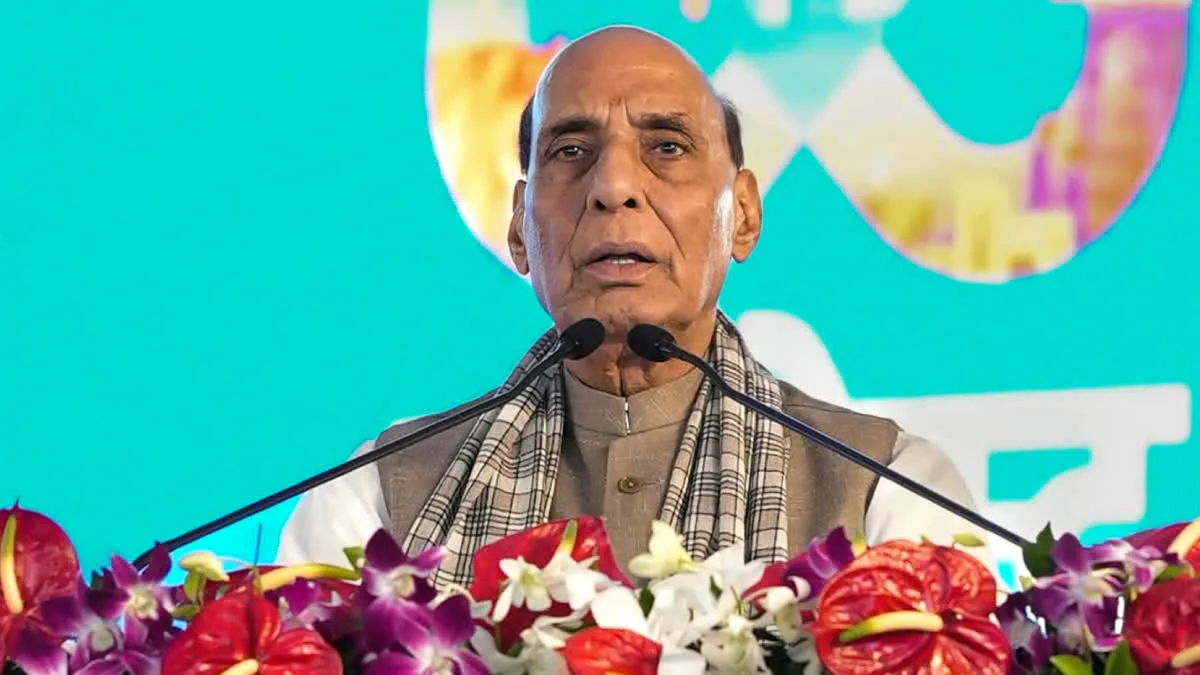
Defence Minister Rajnath Singh on August 10 delivered a sharp rebuttal to United States President Donald Trump after Washington imposed an additional 25 percent tariff on Indian goods, accusing some global players of being uncomfortable with India’s economic ascent.
Speaking at a public gathering in Raisen, Madhya Pradesh, Singh referred to the US administration as “sabke boss”, questioning why India’s fast-paced growth was being targeted.
“There are some people who are not happy with the speed at which India is developing. They are not liking it. ‘Sabke boss toh hum hain’, how is India growing at such a fast pace?” Singh said.
Singh alleged that efforts were being made to artificially inflate the prices of Indian goods in foreign markets to curb their competitiveness.
“Many are trying to make things made in India more expensive than the things made in those countries so that the world will not buy them. This effort is being made,” he said.
Despite these challenges, the Defence Minister expressed full confidence in India’s future, stating: “No power in the world can stop India from becoming a big power of the world.”
Highlighting achievements in the defence sector, Singh revealed that India now exports defence equipment worth more than Rs 24,000 crore, a record figure that continues to grow.
“This is the strength of India, this is the new defence sector of the new India,” he said, noting that indigenous manufacturing and innovation were driving exports to new heights.
The 25 percent tariff, along with an additional penalty of 25 percent, came into effect on August 7. Trump justified the move by citing India’s continued import of Russian oil, warning of secondary sanctions if New Delhi did not halt such purchases.
In a controversial remark, the US President reportedly referred to India’s economy as “dead”, saying: “I don’t care what India does with Russia. They can take their dead economies down together.”
The comments have drawn strong responses from Indian leaders, who see the move as an attempt to pressure India economically over its independent foreign policy.













Comments