





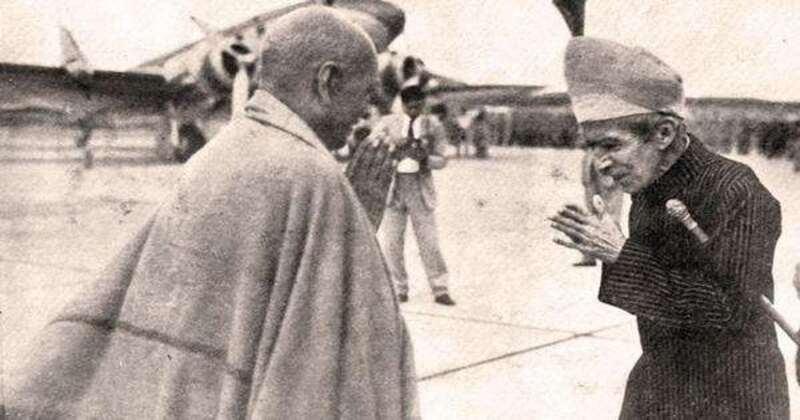
At independence, India was not a ready-made nation. Apart from the provinces directly administered by the British, nearly 40 percent of the subcontinent, territories as large as modern nations and as small as single talukas, were ruled by princes who owed their authority to treaties with the Crown. On paper, each enjoyed the right to accede to India, accede to Pakistan, or try to exist as an independent state. Overnight, treaties lapsed; the British “let go,” and what remained was a dizzying array of potential mini-states, each with its own army, customs, tariff, and flag.
This was not merely an administrative nuisance. It was an existential threat. Partition had already torn Punjab and Bengal apart, millions were displaced, and the landmass was fragmented into over 565 princely states. A patchwork India would have been vulnerable to internecine conflict, foreign interference, and economic fragmentation. The clock was ticking: a divided Bharat could not stand.
Strategy and statecraft: Menon, the Instrument of Accession and Patel’s will
Patel’s genius lay in converting a near-impossible political problem into a legal and administrative path to unity. The Instrument of Accession, a compact that surrendered defence, foreign affairs and communications to the Union while leaving internal matters to the ruler, became the primary legal instrument. But law alone would not be enough.
Working through files, telegrams and face-to-face negotiations, Patel built a dual strategy: persuasive diplomacy backed by a credible readiness to use force if necessary. V. P. Menon, his indefatigable secretary, compiled the maps, the options, and the detailed plans. Menon’s pen recorded accession after accession; his energy and administrative skill were Patel’s indispensable asset. As the narrative from those months often recalls, Menon would place another signed Instrument on Patel’s desk and report: “All signed, sir.” Patel’s response, measured and firm, was to keep pushing until the map of India was whole.
Patel rarely sought public glory. He believed in paperwork and pressure, not speeches and ceremonies. “A divided house will not stand,” he said, a principle that guided every negotiation and every tough decision.
The critical cases: Travancore, Jodhpur, Junagadh, Bhopal, and Hyderabad
Every princely state presented a unique problem, and a different strategy.
Travancore: A near-miss with independence
Travancore, flush with mineral wealth and a powerful Diwan in C.P. Ramaswami Iyer, flirted with independence. The Diwan’s declaration provoked mass protests in the streets of Trivandrum; an assassination attempt on the Diwan after a public concert underscored the depth of popular opposition to secession. Patel’s calm but relentless diplomacy, combined with public unrest, forced Travancore to shelve its independence and accede to India.
Jodhpur: Temptation and temper
The young Maharaja of Jodhpur, Hanwant Singh, was courted by Pakistan with promises of grain, ports and arms. Tense meetings with V.P. Menon reportedly turned dramatic; the prince even brandished a pistol at one encounter. Menon came prepared with rail plans, economic assurances and the political argument for integration. By morning, Jodhpur’s signature appeared on the accession papers.
Junagadh: The will of the people
The Nawab of Junagadh chose to accede to Pakistan despite his overwhelmingly Hindu population. The ensuing popular revolt, economic blockade, and mass agitation forced the Nawab to flee to Karachi. A plebiscite followed: an overwhelming majority voted to join India. Junagadh showed Patel’s willingness to use political pressure and legal mechanisms to ensure that a principality did not remain an isolated outpost contrary to the will of its people.
Bhopal: Student unrest and quiet capitulation
Bhopal’s ruler, Nawab Hamidullah Khan, toyed with the idea of a federation of princely states to preserve monarchic prerogatives. But as students and citizens took to the streets, and public sentiment hardened, the Nawab found himself isolated. By January 1949, Bhopal’s accession was complete.
Hyderabad: The festering wound and Operation Polo
Hyderabad presented the gravest challenge. The Nizam, Mir Osman Ali Khan, presided over a rich and populous state yet chose neither accession to India nor to Pakistan. His private militia, the Razakars, unleashed terror on dissenters and communal tensions flared. Patel viewed Hyderabad as a festering wound that threatened the nascent Union’s integrity. In September 1948, the Centre ordered a police action, Operation Polo. Within five days Indian forces entered and Hyderabad surrendered. The action was swift, decisive and controversial; reports later spoke of communal violence and excesses in the aftermath. Patel had chosen the hard path: where diplomacy could not secure unity without risking national disintegration, force, narrowly applied and bounded by authority, was used as a last resort.
Method: a measured mix of moral suasion & constitutional instruments
Patel’s approach was not simply the bully’s logic of force. He combined moral suasion, appealing to the rulers’ sense of legacy and legitimacy, with clear legal frameworks and the credible threat of coercion. He framed accession not as the stripping of status but as enrollment into a greater future where monarchs retained cultural and ceremonial dignity while the political life of the nation moved under one roof. He used pensions, privy purses and guarantees as bargaining chips; where public opinion and spontaneous revolt forced the issue, the Centre supported popular will; where delay threatened to become permanent secession, the government acted decisively.
This pragmatic, layered strategy is what converted over five hundred princely states into parts of a single polity within a remarkably short span.
The results: a map remade and a nation stabilised
By the close of 1948, more than 550 princely states had acceded to India. Tiny jagirs and large kingdoms alike entered the Union. Borders that could have become permanent fault lines were instead folded into one sovereign territory that would soon adopt a Constitution and become a Republic. Patel’s work was not merely territorial; it was foundational to India’s political coherence, economic planning, and the functioning of democracy across linguistically and culturally diverse regions.
Yet the process was not free from moral ambiguities. The Hyderabad action, questions over the treatment of minorities in the immediate aftermath, and the use of political leverage over erstwhile rulers have been debated by historians. Patel’s answer, in his style, was practical: to secure a future for millions, the present sometimes required hard choices.
Legacy: Iron Man’s place in public memory
Patel’s contribution is etched on the physical and mental map of modern India. His motto of unity over division has been memorialised, in statuary, in public discourse, and in the institutional memory of the state. The Statue of Unity stands as a literal monument; more important is the intangible unity that allowed democratic institutions to take root across formerly sovereign domains.
Patel did not crave the limelight. He preferred files to fanfare. His leadership offers a model of statecraft that marries administrative rigour with the spine of a realist. As many historians and statesmen have noted, he “won peace” not by surrender but by forging a political order strong enough to permit parliamentary democracy to flourish.
Why Sardar Patel matters in today’s Bharat
The map of Bharat is not just a collection of borders drawn with ink, it is the living testament to courage, conviction, and sacrifice. Every contour, every connection between distant corners of our land, carries the imprint of decisions made in moments of great uncertainty. In those turbulent months after Independence, when the dream of freedom still trembled on fragile ground, it was Sardar Vallabhbhai Patel who stood as the unshakable pillar.
Patel knew that freedom without unity was hollow, a flag without a pole. For him, 15th August 1947 was not the end of the struggle; it was the beginning of a greater mission, to knit together 562 princely states into one Bharat. With a steady hand, a clear vision, and an unwavering heart, he used dialogue where possible, firmness where needed, and action when unavoidable, all guided by one principle: the nation’s good above all.
“A divided house will not stand,” he declared and he made sure Bharat would never be that house. His integration of railways, communication lines, and governance systems did not just link territories; they bound together the hopes, dreams, and destinies of millions.
Today, when we travel from Kashmir to Kanyakumari, send a message in seconds across states, or feel the pride of a united flag, we are walking in the corridors of the nation Patel built brick by brick.
In an age when forces, both within and outside, still try to fracture us, by caste, creed, language, or politics, Patel’s life is not just history; it is a call to action. His iron will reminds us that unity is not a gift; it is a responsibility. Bharat today stands strong because the Iron Man once refused to let it stand divided.










Comments