





“भई प्रगट कुमारी भूमि-विदारी जनहितकारी भयहारी।
अतुलित छबि भारी मुनि-मनहारी जनकदुलारी सुकुमारी”
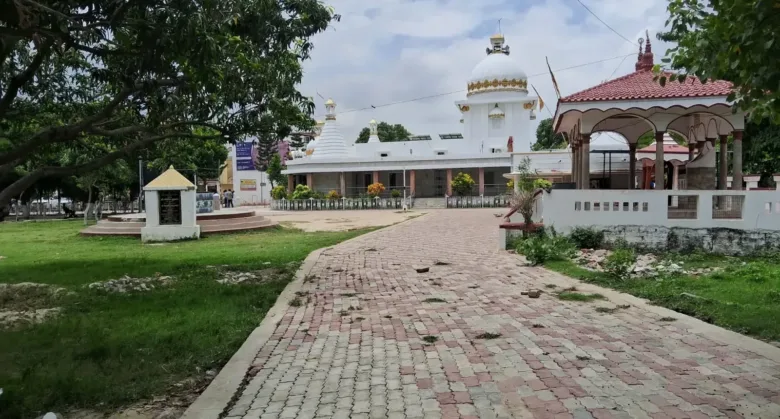
Above are the hymns (Strotas) that first caught the attention of the Organiser correspondent when he entered the temple premises at Punaura Dham (renowned for being the birth place of Maa Janki) after navigating through a semi-narrow lane just meters away from the proposed Ram-Janki path (connecting Ayodhya to Sitamarhi) on an overcast morning of Shravan month.
The strotas quoted above from the ‘Janaki Stuti,’ (authored by renowned medieval era author and poet Goswami Tulsidas) stands inscripted on the outer walls of the sanctum sanctorum of the ‘Janmsthali temple’ at Punaura Dham in Sitamarhi of Bihar and relates to events linked with the incarnation of Maa Janki when she first appeared in a clay pot near the ashram of Rishi Pundrik at Punaura in Treta Yuga.
The incarnation of the mother according to Vedic texts was followed by showering flowers accompanied with pouring rain, marking an end of a severe ‘drought’ in Mithila, an ancient kingdom encompassing parts of modern day Bihar and Nepal.


Located on the outskirts of the noisy town of Sitamarhi, ‘Punaura Dham’ is a place filled with purity. As the devotees walks freely inside the temple dedicated to Janki, the mother goddess worshipped by billions of Sanatanis across the globe, what prevails in the surroundings is a sense of divine calmness.
Inside the sanctum sanctorum are installed the murtis of Maa Janki and Bhagwan Ram with devotees getting glimpses of the mother and offering their gratitude from an encircled area separated by a railing.
At the backyard of the temple lies the renowned ‘Urwaja Kund’ which according to the Vedic scriptures was the very place where Raja Janak, the king of Mithila recovered the clay pot while ploughing the field.

The incarnation of mother
According to legends, the devastating drought in Mithila started after Ravan, the devil king of Lanka (Srilanka) ordered his lieutenants to bury a clay pot filled with blood of sages (collected as tax money) in Mithila to cause misfortunes to people largely due to a personal grudge with Raja Janak.
The drought lasted for over a decade, worrying the noble king who on advice of priests and ministers walked into the mid of his kingdom to perform the ‘Haleshthi Yajna’ at ‘Haleshwar’ at a distance of around 5 kilometres from Punaura.
As the king walked to change the fortunes of his people, thousands and thousands follow suit. Following the Yajna which according to the locals were attended by nearly 88000 people, the king started ploughing the fields in the direction advised by the priests, anticipating rains.
As per the Vedic accounts, the king Janak continued with the ploughing till he was halted by a divine intervention at around a distance of 1.5 Kos (around 4-5km) from Haelshwar. What followed next was unearthing of a clay pot with Maa Janki in it as a girl child.
Astonished by the sequence of events that followed the Yajna, Raja Janak rushed to the Ashram of Rishi Pundrik, pleading for his guidance. The king eventually adopted the girl child as his daughter on instructions of the sage.
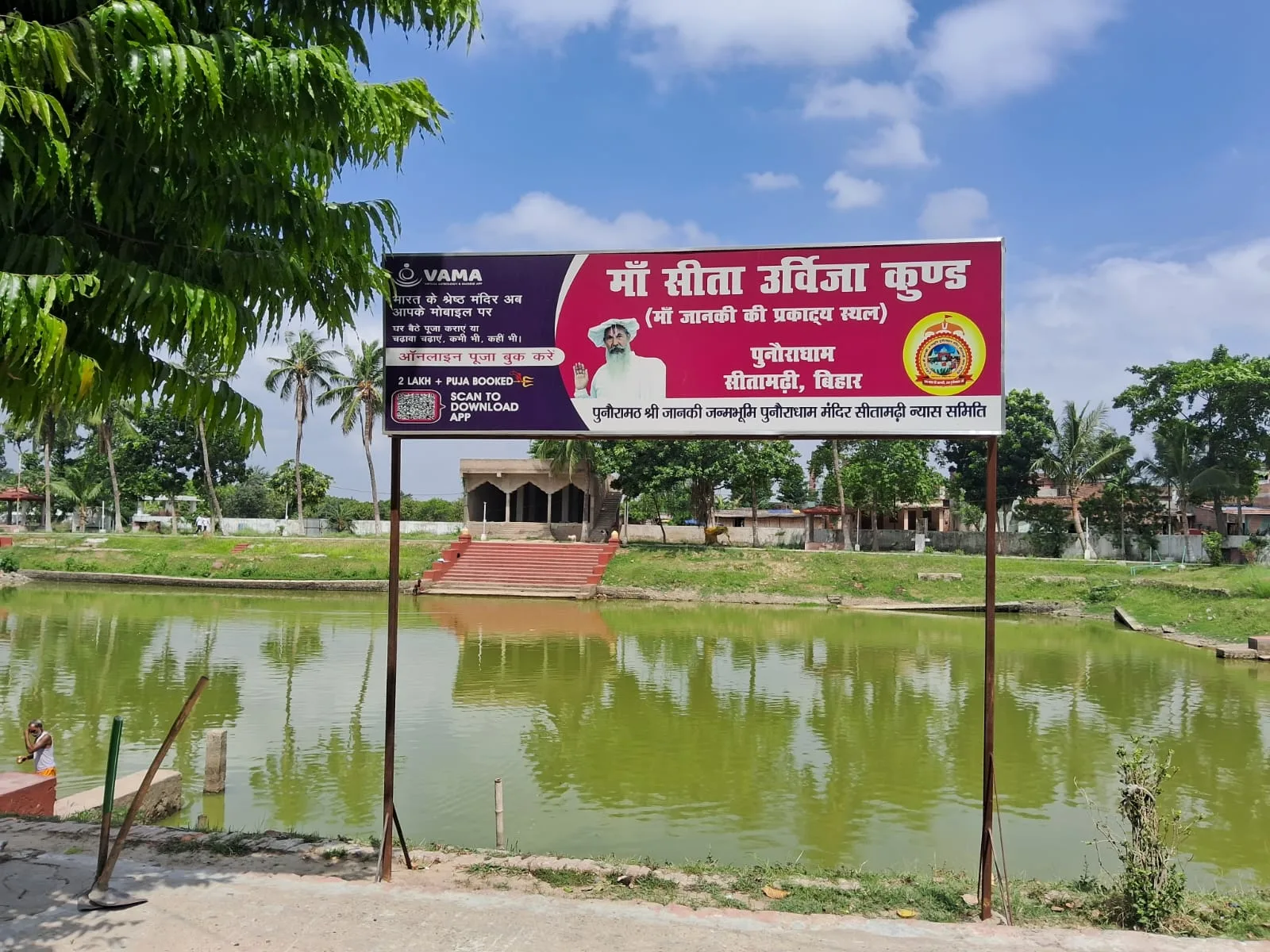
The ‘Urwaja Kund’
The place where Raja Janak unearthed the very clay pot now renowned as the Urwaja Kund and stands at the backyard of the main temple. The Kund holds utmost significance for the devotees from the nearby areas who can be found taking a holy dip here before praying to the mother for their wellbeing.
The natives opine that taking a dip here fills them with divine energy, with many believing the water inside the sacred Kund has emptied never and stands as it is since the time unknown. Locals inform that ‘Poornima’ of each month is usually a special occasion here with pool of devotees visiting the sacred place for a holy ‘Snan’.

“We are coming here since childhood, there is a divine energy here which fills you with positivity. Mata Sita (Janki) was incarnated here and she protects Mithila till date,” said one of the devotee who hails from a nearby village, while the others in her group nodded in agreement in a chorus voice from behind.
When informed that the government has announced to build a magnificent temple here, they replied with a smile stating that the announcement was on expected lines as Bhagwan Ram has already found its home in Ayodhya. “Jab Bhagwan Ram ka ghar ban gaya to ab Mata apna ghar sawarengi hi,” said one of them as a satisfactory smile appears on her face.

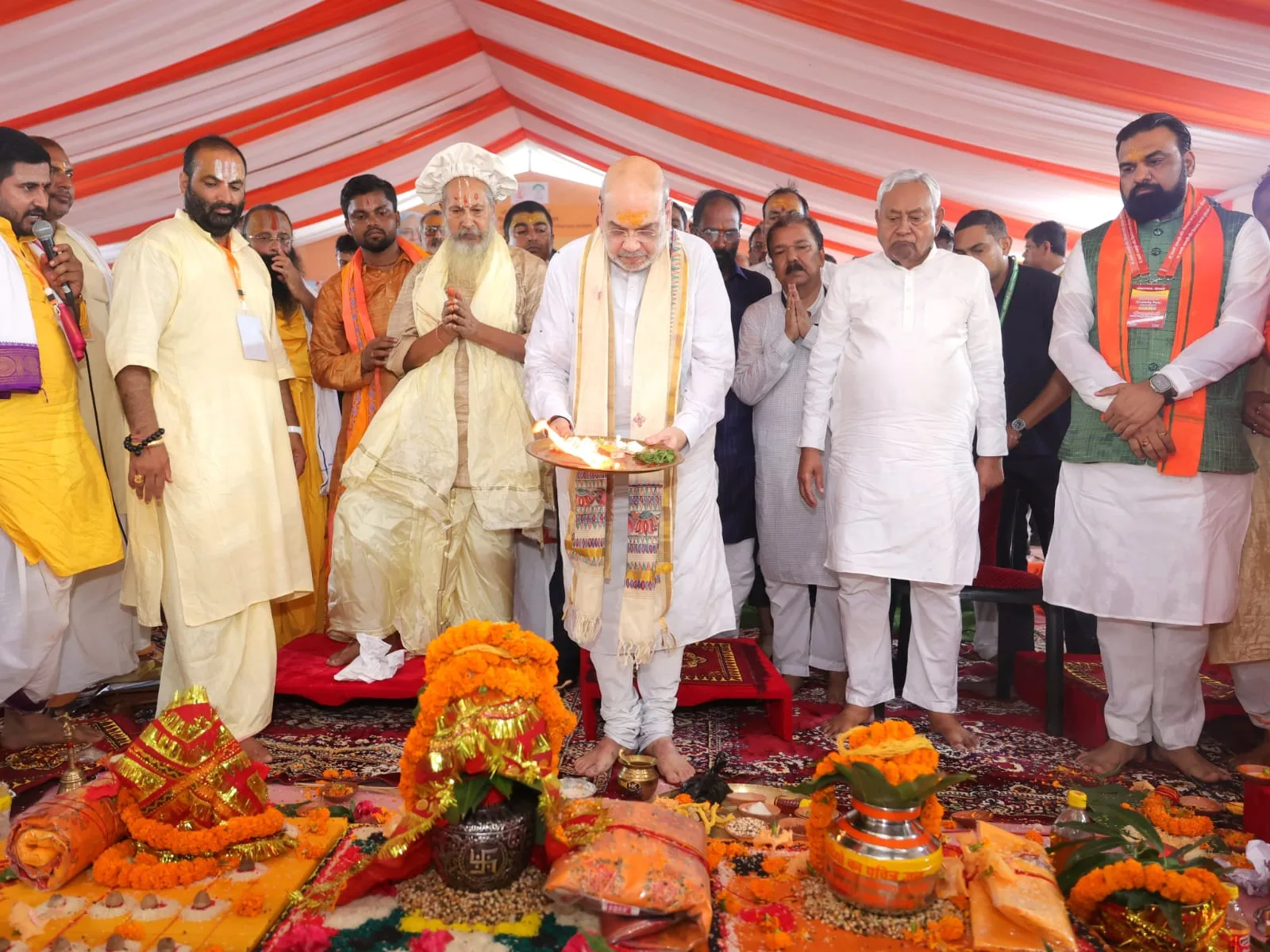
The message of restraint, courage, and sacrifice that Mother Sita conveyed during her lifetime will be kept alive for ages through this temple: Union Home Minister Amit Shah

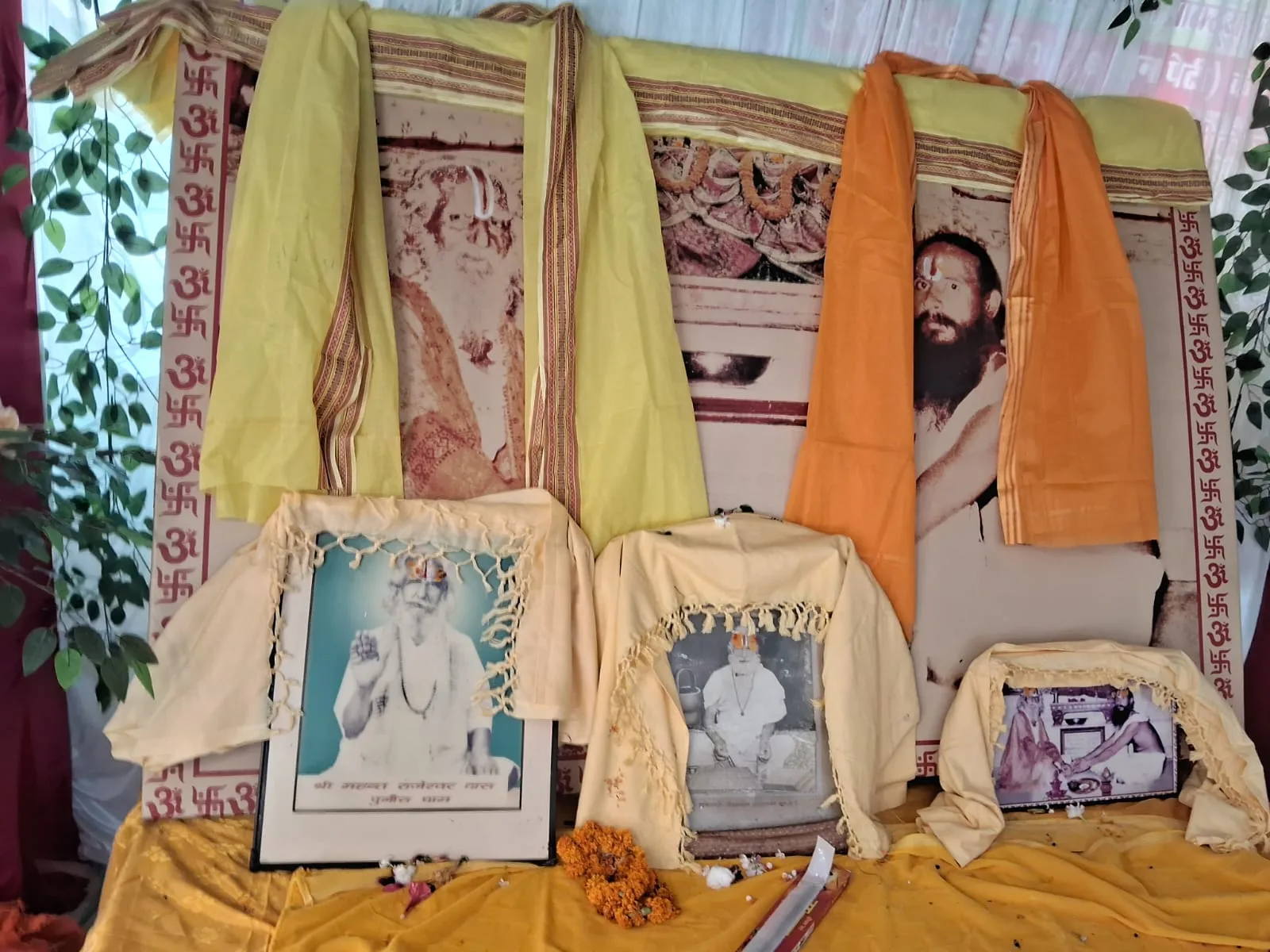
The Punaura Math
At the right corner of the Kund stands 6 small temples, all dedicated to the Mahants who served as chief priests at the Punaura Dham since the late sixteenth century.
The modern day ‘Math’ (Monestry) according to locals, was established somewhere around the end of the sixteenth century by the revered Sant Aasharam Das Ji who acted as the chief priest at Punaura till1724.
The disciples of Mahant Aasharam Das since then have been serving the mother goddess one after the other, taking forward the Guru-Gaddi Parampara (tradition) established by the Guru with the incumbent Mahant Kaushal Kishore Das serving as the head of the Math since 1995.

Walking through the lanes adjoining the Kund and the temples dedicated to Mahants, the representative met Saryu Das, a native of Punaura who has been a regular attendee at the temple complex for the past three decades.
Das informed that things are changing for the good at Punaura and the government has already commenced the process to overhaul the sacred site.
“A number of structures have been built here in recent years and the land acquisition process has already in advanced stages,” said an elated Das while pointing out the government building erected on the South-West corner of the Urwaja Kund separated by a boundary wall, and a Katha Sthal on the opposite end.
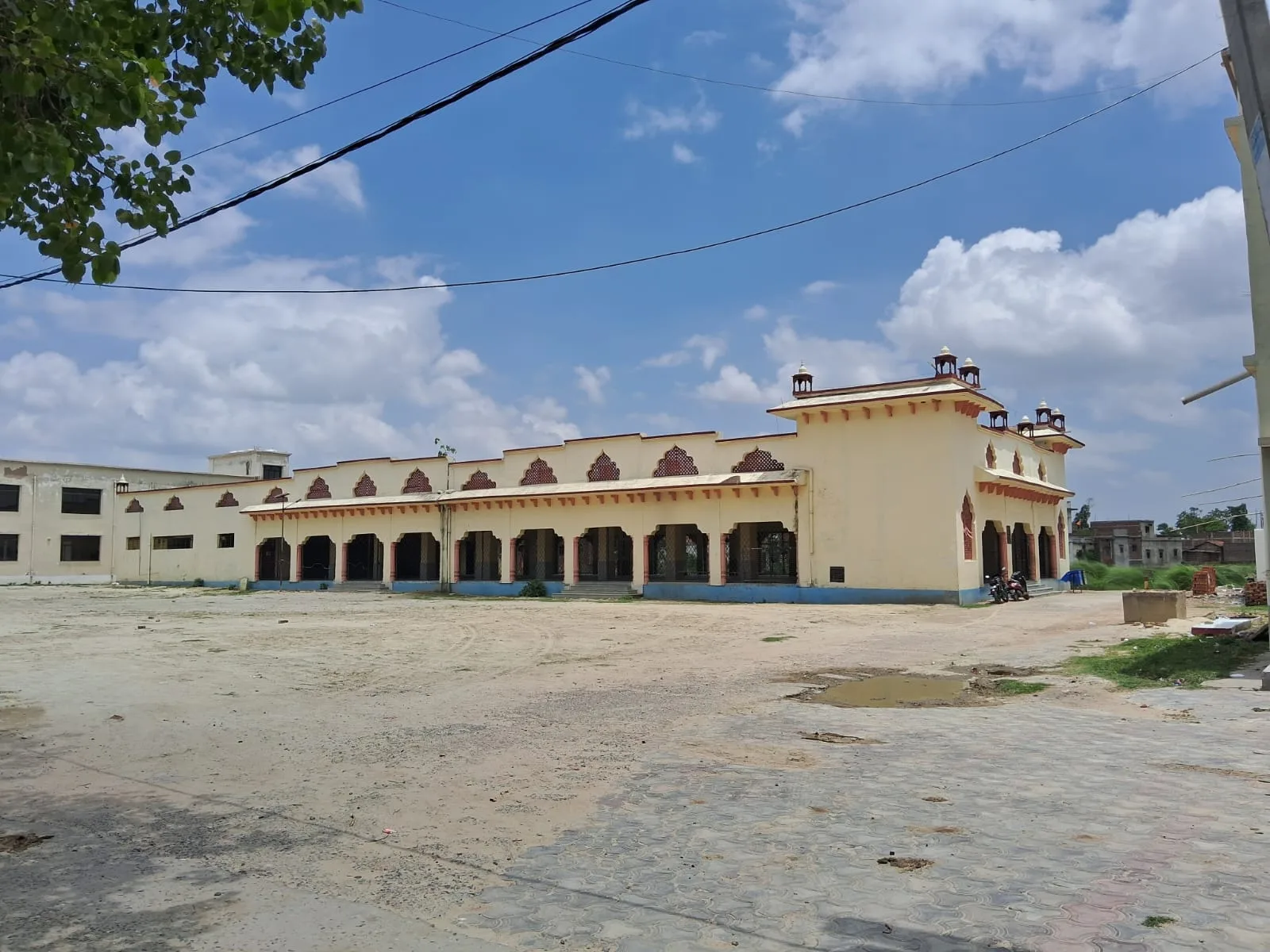
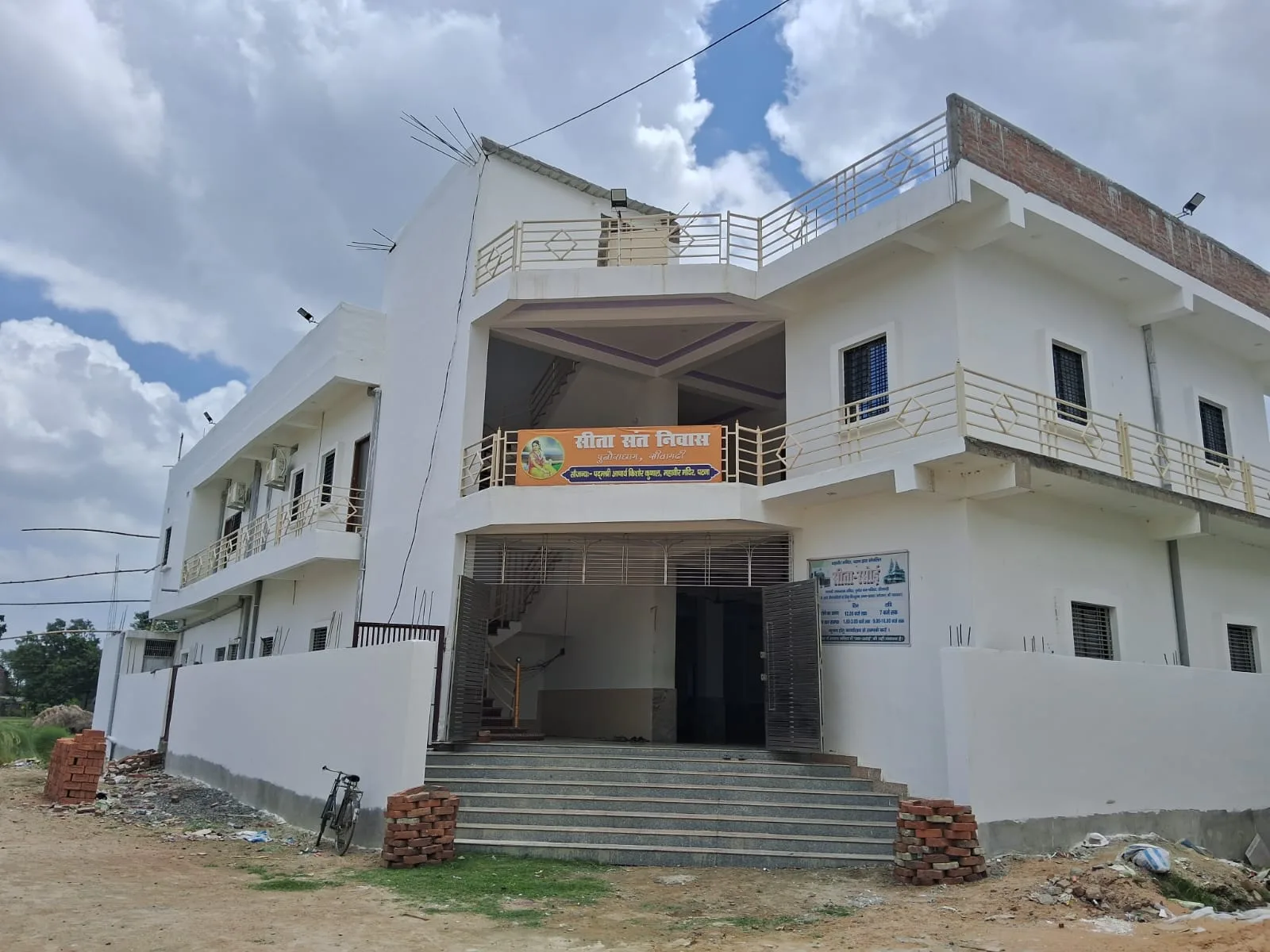
Das also informed about the ‘Sita Rasoi’ adjoining the Katha-Sthal on the northern side of the main temple, stressing that it provide free meal to devotees twice a day. The Rasoi has been functional since last year and was inaugurated none other than the Padma Shri Kishor Kunal, a former administrative official and a notable figure in the Ram Janmabhoomi movement.
On an average day, over 100-150 people are served here with free meal twice a day, informed S. Paswan who looks after the management at the Rasoi. “Our focus is to serve those who arrives here from distant locations,” he added.
What changed in the last decade?
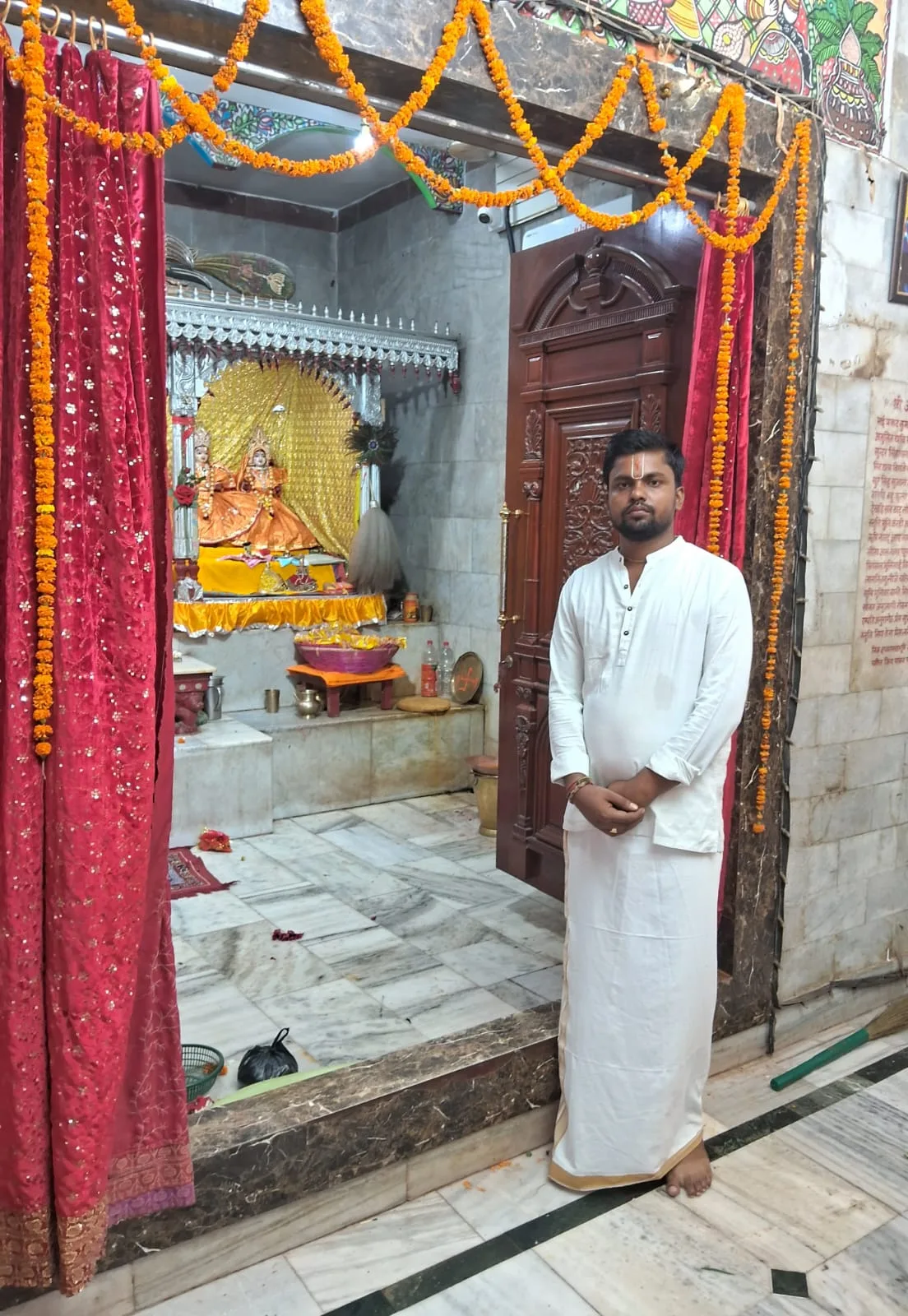
Back at the temple premise, the representative met the about to successor of Mahant Kaushal Das, Shri Ram Kumar and temple priest Sanjay Sharma who informed Organiser that the number of devotees visiting the sacred land has increased significantly in recent years.
Sharma noted that at pick (On Sita Navami, Rang Panchami and in winters) there are 100-150 buses of devotees arriving here in a single day with many visiting the Janmabhoomi from distant land as far as Bangladesh, Pakistan, Srilanka, Thailand and even from Europe.
“Dakshin se yahan dheron shradhalu aate hain,” said Sharma who looks after the traditional rituals related to the temple.
Kumar who is in early 30s and residing in the temple premises since his childhood expresses hope that a lot will change once the grand temple will come up here.
He happily pointed out to the wall featuring the list of people whose land (around 50 Bighas) were acquired by the government stating “It’s a matter of happiness that a grand temple of Maa Janki will come up here. Our only request to the government to keep our Guru-Gaddi tradition intact.”
When asked that whether the government could have taken this initiative before, Kumar replied instantly “Ap bataiye Jab tak Prabhu ka ghar na bana ho Maa apna ghar kaise thik kar sakti hain“.
“Jab v wahan kuch vishesh aayojan hota hai yahan se samagri aadi bheji jati hai” he added while highlighting the historic connect between the two sites since the ancient time.
Listening to the conversation quietly were three Sadhus who had arrived at the Math on the very morning. When approached one of them Rajinder Das who hails from Rajasthan’s Tonk district emphasised “There is some sort of Dharmic rejuvenation at every significant pilgrimage site, one can feel it, a lot has changed in the last one decade.”
“Be it Kedarnath or Ayodhya or Kashi or Ujjain, you name it, just go to any of these places you will feel it (Bahut Parivartan Huwa Hai),” said Das who is in his late 60s, while the fellow Sanyasis nodded their heads in agreement.

When confronted that a few people claim that renovating or developing religious places will not do any greater good to the society, one of them replied with a smile “This is all politics isn’t it? If you develop a pilgrimage, will it not provide the natives with employment opportunities? Look nobody is against development but why pointing fingers on the development of Hindu pilgrimage sites only, is it not selective?” he asked as the representative slowly walks out of the premises with thoughts of the glorious heritage of the site crossing through his mind unabatedly.
Janki Sthan or the Sita-Madai
As we walked through the lanes of Punaura exploring about the legacy of the place till the Sun centred itself slight in the west, one place which was common in every conversation was ‘Sita-Madai’. Once back on the narrow lane, the representative instantly approached a young rickshaw driver asking for the way to the place.
In a casual conversation that started with Sita-Madai, he happily informed about the change that has been taking place at both Punaura and Janki Sthan in recent years, pointing that the numbers of visitors to the sacred site is on rise since the “Pran-Pratistha” at Ayodhya.
“We take great pride in the fact that the mother was incarnated here, it’s a matter of pride. Now our locality is also getting the attention it deserves, we are thankful to Maa Janki,” he added.
When enquired that will the renovation work will affect the natives and their businesses? “Jo v hoga sab thik hi hoga, hame to garv hai ki yeh mata ka sthan hai aur ab yahan bada mandir banega,” he said while we wrapped up the conversation and moved to our next destination in the town.
“Pratiksha kewal Ram Ji ki hi thodi thi, Sita Maiya ki v to thi, ham apne jivankal me yeh subh samay dekh rahe hain”: Prime Minister Narendra Modi
It took 10-15 minutes to reach the Janki-Mandir or the ‘Sita-Madai’ located at the heart of the noisy town with the temple complex buzzing with devotees.
While interacting with natives at Punaura, we had a brief idea about the religious significance of the place, which according to the Vedic texts is the very place where Raja Janak and his caravan of ministers and priests took shelter for six days’ till the sky cleared itself from the pouring rain.

According to the locals, there was a large Madai (hut) installed for the king and his priest and ministers. As the rain obstructed their movement to the north towards Janakpur, the capital of Mithila, the birth-related ceremonies of Maa Janki was also performed at the very place.
It was here, that Janaki got her name ‘Sita’ which literally means the front panel of a plough. The town’s name itself had stemmed from the mother’s name Sita and the very Madai she rested in for six days, later to be known as Sitamarhi.
The representative entered the premises and found it to be filled with devotees. Unlike Punaura, the temple premise here was overly filled with devotees, performing traditional rituals with chants of mantras prevailing in the surroundings.
As per locals, the murtis installed in the sanctum sanctorum was unearthed after one of the Mahants had a dream of it. The murtis were then excavated from a place and placed inside the sanctum sanctorum.

As the representative moves out of the premise to return to his place after spending a day visiting the glorious history of Punaura and Sita-Madai, he met with another native who runs a Pooja Samagri store managed by his ancestors since generations at the temple complex.
Upon enquiring that whether he see any changes that unfolded at the site in recent years? he smiled and replied in a quite manner “Of course there is a positive change in the way people looks to their Dharmic beliefs and the pilgrimages in the past few years.”
“People now looks more inclined towards visiting places which holds religious significance and the same is being noted here as well. “Jaisa Raja hota hai waisa prabhav praja pe nischit hai,” he added while stressing that this should not be seen in a political prism but as rejuvenation of our ancient cultural heritage.
“A few people give it political colour but this is purely a rejuvenation period for Sanatan and its great that the government has announced to make a grand temple here as well,” he quoted as the sun positioned itself firmer in the western corner on the sacred land of Janki.











Comments